Feeds:
Posts
Comments

Archive for the ‘Recipes’ Category

gello orangegello red above2


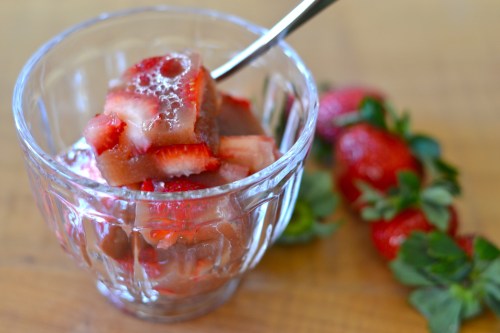
Do you remember eating finger Jello during your childhood? I loved the stuff, and despite the fact that my mother normally fed us healthy food, she seemed to think the benefits of Jello outweighed all the white refined sugar and food coloring it contained. We would regularly make finger Jello as a snack or treat, and on special occasions, particularly holidays, she would make a pretty layered dish with green Jello. This dish was eaten with relish by even the most sophisticated foodies in our lives during that time. One layer contained sliced pears in the green translucence, the other had cream cheese blended in, which made a dreamy pale green color. And my mother always added a few drops of peppermint extract, so the whole dish had a wonderfully light, minty taste.

Several decades passed by in which flavored, colored Jello did not make an appearance. But I did think fondly of it from time to time. Then I started making my own coconut milk yogurt, and found that natural, unflavored, unsweetened gelatin thickened my yogurt nicely. Seeing that creamy, slightly gelled thick yogurt got me thinking more and more about the beloved finger Jello of my childhood. On a side note, I have also been making bone broth regularly–not stock from leftover bones that you use as a soup base, but specifically broth from gelatinous bones that I order and buy from the local farmers market. It is quite gelatinous once it’s cooled, and I swear it has greatly improved my overall digestion and well being. (I will speak about all the virtues of bone broth in another posting.)
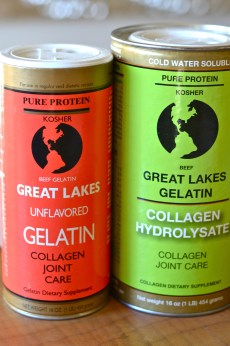
gello containersSometimes, I forget to place my order for gelatinous bones, and the farmer sells out before I arrive at the market. This made me wonder if I could find an off-the-shelf product. Luckily, I quickly discovered a great product, Great Lakes Gelatin, derived from pastured animals. It comes in two forms, regular unflavored gelatin and “Collagen Hydrolysate.” Gelatin is an excellent source of protein, boasting 6 grams per tablespoon with zero carbohydrates. The hydrolyzed version is intended to help regulate your body’s metabolism by giving you pure protein that is easily absorbed by the body. (It can be used as a weight loss aid.)  It’s the same collagen found naturally in the bones, skin and cartilage of animals, and is thought to lubricate joints and help build connective tissue. By age 25, our bodies begin losing the ability to repair supporting connective tissue (and we begin to see those annoying wrinkles forming). Natural gelatin is also chock full of amino acids like lysine, glycine and proline which the body needs to regulate cell function.

Growing up, my fingernails were as tough as, well, nails–the carpentry kind. I could pick things off, pull things apart, scrape things up and generally do anything with my fingernails without a chip or split. However, in recent years, I noticed my fingernails becoming more brittle. If I accidentally jammed one into the car door, the door won. If I picked a sticker off my kids’ dresser using my nails, one or two might chip a little, and my nails generally seemed thinner.

I report with glee that I’ve been using the natural gelatins for a couple of months now, and my nails are, once again, nearly indestructible! Of course, I’m also waiting to see if some of my wrinkles fade away, but that might be wishful thinking. I also expect my hair will grow thicker, although I might not notice it for some time.

I use the natural gelatin in the red container for making yogurt and finger “gello” or gelatin dessert, and I use the hydrolyzed version in my smoothies (it dissolves easily in cold water). I love that I can make something for me and my family that is fun to eat, feels like a dessert but yet contains no sugar except what’s naturally in fruits and their juices. And the possibilities are endless… I recently made coconut finger gello using my favorite coconut milk. It’s delicious with fresh berries on top.

gello orange closegello red above


Ingredients for basic “gello”

1/4 cup cold water

2 rounded tbsp natural gelatin*

1/4 cup hot water (near boiling)

1 1/2 cups fruit juice

1 cup berries or chopped fruit, such as pear

*Use more if you want your “gello” really firm and easily held in the hand


Preparation

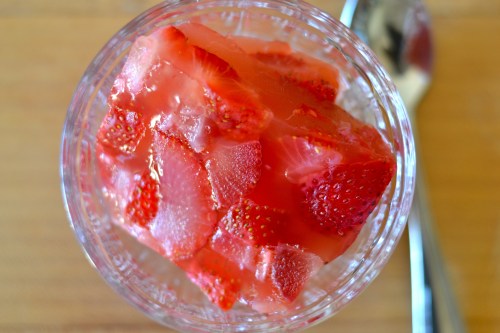
Arrange the cut fruit or berries on the bottom of an 8×8-inch pyrex or ceramic square pan.

In a medium bowl, pour in the cold water. Sprinkle the powdered gelatin evenly over the water and allow to “bloom” for about 10 minutes. Whisk in the hot water until all the gelatin is dissolved. Whisk in the juice. Pour the mixture over the fruit, cover the pan with plastic film wrap and chill in the refrigerator for 2-3 hours or until fully set. Cut into squares when ready to serve.


Variations

Coconut finger “gello” – Skip the fruit and juice and whisk in one can of coconut milk along with 1-2 tbsp maple syrup.

Pureed fruit “gello” – Puree fruit in a high-powered blender until smooth and use approximately 3 cups in place of the juice and chopped fruit. I used ripe persimmons (peeled and cored) from our tree!


Enjoy!
 

gello orange abovegello red close


Read Full Post »

banana muff bakedbanana muff above


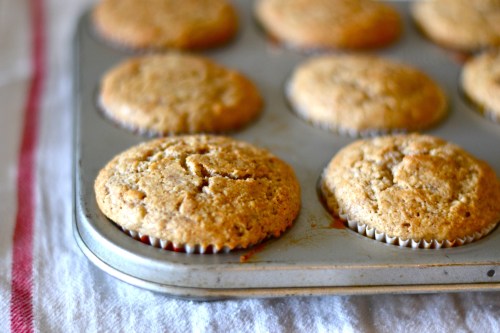
These muffins will please even the most stubborn anti- gluten-free individual. Deliciously moist with a cake like texture, they will get devoured in minutes, and you’ll find yourself waiting impatiently for the remaining bananas on your counter to ripen so you can make another batch. In fact, I plan to put three or four of my bananas in the sun tomorrow to help speed up the process. Bananas are perfect for baking when their peels are speckled brown (see photo below).

The natural sweetness of banana combined with the coconut milk and almond flour means you only need to use a little added sugar in these muffins. I wrote the recipe for 1/2 cup since I’m often accused of taking out too much sugar, but I make this recipe with 1/3 cup sugar and my family considers them plenty sweet. Feel free to experiment and finds what works for your taste. And last weekend, I only wanted chocolate chips in a few of the muffins to surprise the kids, so instead of mixing the chips into half the batter, I simply sprinkled a few chips in each cup after spooning the batter in, and the chips sunk down and baked in nicely. I ate mine with scrambled eggs and sauteed tree oyster mushrooms–the perfect balance of sweet and savory!


Ingredients

1 cup all-purpose gluten-free flour

1/2 cup almond flour (I like Honeyville)

1/2 cup sugar

3/4 tsp baking powder

1/2 tsp baking soda

1/4 tsp sea salt

1/2 tsp ground cinnamon

1/8 tsp cardamon

2 eggs

3/4 – 1 cup ripe banana, mashed (about 2-3 bananas)

1 tsp pure vanilla extract

1/2 cup coconut milk

1/4 cup coconut oil, melted or olive oil

1/2 cup finely chopped walnuts, optional

Other options: 1/3 cup currants or vegan chocolate chips


banana muff ripe

banana muff fill


Preparation

Preheat oven to 350F.

Line a standard 12-cup muffin pan with paper liners.

Whisk the first six ingredients together in a medium-size bowl.

In a large bowl, gently whisk the eggs until pale yellow in color. Whisk in the mashed banana, followed by the vanilla, milk and oil. Using a spatula, fold the dry ingredients into the wet and stir until just combined. Fold in the nuts and/or currants or chocolate chips if using. Spoon evenly into the 12 cups of the muffin tin.

Bake for 25-30 minutes or until a toothpick inserted in the middle of a muffin comes out clean.

Allow muffins to cool for 5 minutes before serving. Serve warm, plain or with a little butter.


Enjoy!
 
banana muff meal

Read Full Post »

pear tart abovepear tart slice


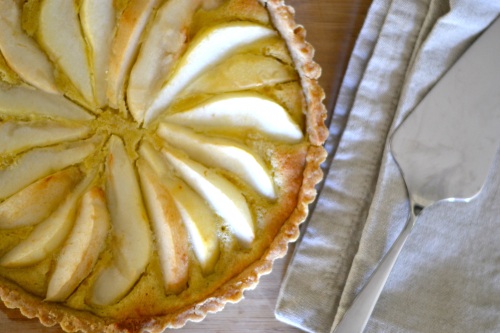
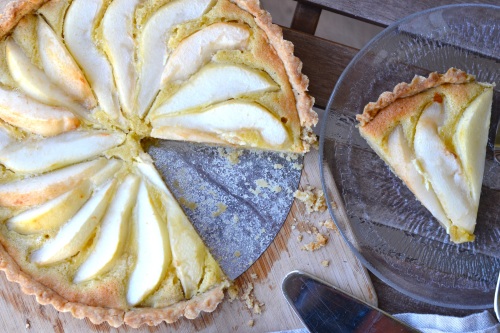
I panicked the other day when I saw that I had several pears in the fruit bowl, each very ripe or on the verge of turning to brown, mealy mush. I feel badly throwing out food anytime, but particularly when something has gone bad just because I didn’t get around to eating or cooking with it. I quickly used one pear as the base of a smoothie. But what to do with the remaining pears? They wouldn’t last a day longer in the extraordinary heat of the unusually late summer we’re experiencing here in Northern California. And the warm temperatures don’t exactly call for a pear crisp–although fruit crisps are normally one of my favorite things to eat! So I turned once more to the oddly sensible French, and chose to make a pear and almond tart. I love the combination, and what’s more, I love that ripe pears and almonds are naturally very sweet, enabling me to use very little added sugar–less than a third cup in the whole tart!!

Of course, my mother–who was an amazing cook during my childhood, constantly chastises me for cutting too much sugar out of desserts. She must own a sweeter tooth than me, and can immediately tell if I’ve made one of her dishes using only half the sugar called for in the recipe. So when I made this tart, I assumed I would get an earful from her once she tasted it. (And naturally, I had to have her taste it.)

The kids and I finished dinner late, and tucked into the tart–I for one, fully expecting to find it needed more sugar. However, we all loved it as is and promptly had seconds. We jumped in the car to drive a large slice of tart–while the bathtub was filling, to my mother (who conveniently lives quite close).

I didn’t hear the verdict until the next day, but my mother actually called to say she thought the tart was delicious. For added emphasis, she repeated her rendered verdict.

So without further ado, and with the hope you’ll enjoy it just as much as my family…


Ingredients

Crust

1 1/4 cup gluten-free flour blend*

1 heaping tbsp granulated sugar

1/4 tsp sea salt

1/2 cup (1 stick) chilled butter

2-3 tbsp ice water


Frangipane

1/4 cup sugar

1 large egg

A pinch of sea salt

1/2 tsp pure vanilla extract

1/2 tsp almond extract

2/3 cup almond flour (I like Honeyville)

2-3 pears, cored, skin removed, sliced

*I typically use 1/2 cup all-purpose gluten-free flour, 1/2 cup sweet sorghum flour and 1/4 cup almond flour/meal for my all-purpose gluten-free flour blend.


Preparation

Preheat oven to 400F.

In a medium bowl, whisk the gluten-free flour blend, 1 tbsp sugar and salt until blended. Using a pastry cutter, two knives or whatever technique you like, cut in the flour until it’s evenly incorporate. Sprinkle a tablespoon or two of ice water and continue mixing, adding a little more water if necessary until there is no more dry flour on the bottom of the bowl, but the mixture should still seem quite dry.

Dump the contents into a 9-inch tart pan and press the crumbly mixture into the bottom and sides of the pan, being careful not to work the dough too much (or it will get tough!). Chill in the fridge until the oven is ready.

Bake crust for 10-12 minutes until crust is golden. Place on a rack to cool.

pear tart mix


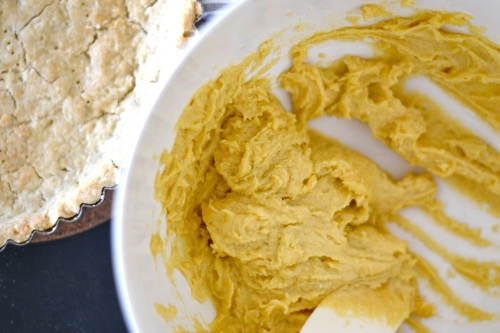
In the meantime, in a separate bowl, use an electric mixer to beat the egg, sugar and salt until pale yellow and creamy. Blend in the two extracts. Slowly blend in the almond flour and mix until just blended. Using a spatula, spread the mixture evenly on the bottom of the cooled tart crust. Arrange the pear slices on top in whatever design you like.

Reduce oven heat to 375F. Bake the tart for another 25-30 minutes or until the frangipane filling is set.

Serve warm or at room temperature.

Dairy-free? You can easily sub coconut oil and/or palm shortening (I love Nutiva’s) for the butter in the crust.

Don’t care about gluten? You can also make the crust using any traditional pastry crust recipe.

Want to make it even richer? Just add 1/4 cup cream to the frangipane mixture.


pear tart slice removed


Enjoy!

Read Full Post »

chick jill abovechicken jill close


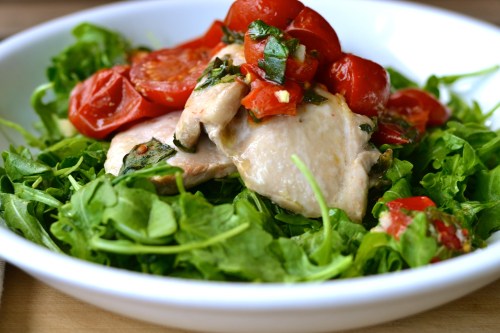
My neighbor recommended this dish, mainly because we’re both busy moms and this dish is insanely easy to prepare, bursting with flavor and kid-friendly. I wanted to call it “My neighbor’s tomato basil chicken,” but that just seemed like a mouthful. It’s similar to my Caprese chicken recipe, but even easier to make, and juicier if you’re using chicken thighs instead of breasts.

This dish takes about 5 minutes to prepare, and approximately 30 to cook. Last week, I served it to the kids over a little gluten-free quinoa pasta (which they loved), and ate it myself over a bed of arugula. I ate the leftovers the next day, and the dish was even tastier. I think that’s simply because the flavors had longer to soak in and blend. In fact, my neighbor says she regularly makes this dish in the morning, cooks it most of the way, places it in the fridge and simply reheats it just before supper.


Ingredients

1 lb boneless, skinless chicken thighs*

1 pint ripe, cherry tomatoes, cut in half lengthwise

1 handful fresh basil leaves, loosely torn or shredded

2 cloves garlic, finely minced

Extra-virgin olive oil

Coarse-ground sea salt

Fresh-ground pepper

*Note: If your family eats more than 1 lb of chicken for dinner, simply up all the amounts accordingly. You needn’t worry about being terribly precise. You can also use bone-in, skin on thighs, but you will need to adjust the cooking time accordingly, and you’ll want to crisp the skin at the end (using the broiler).


chick jill make


Preparation

Preheat the oven to 375F.

Drizzle a little olive oil in a baking dish (whatever size dish accommodates your meat so that the pieces fit snugly without overlapping). Lay down the chicken pieces. Sprinkle the cut tomatoes, torn basil and garlic over the chicken. Drizzle with more oil and season with salt and pepper. Cover with foil and cook for 25-30 minutes or until the meat is just cooked through.

Serve immediately over rice, pasta or another grain or greens if you’re Paleo or just looking for extra nutrition.


Enjoy!

Read Full Post »

zucc hummus abovezucc hummus close


If you find yourself regularly opening the fridge and cupboards in search of a snack–something I find myself doing nearly every day, you might at times question your choices. Maybe you haven’t exactly analyzed every choice, but I bet you have felt a pang of guilt or remorse upon eating a handful of crackers or chips, knowing they offer you little more than empty calories. I know I have. And you aren’t alone if you practically loathe the thought of snacking on a bunch of plain carrots or celery sticks. They might satisfy the hunger pangs on occasion, but let’s be honest, they are just too plain. That said, fresh, raw vegetables are really good for us, and if we can dip those same boring-by-themselves vegetables into a flavorful and creamy sauce or chunky dip, we  can manage to eat a lot more of them and actually enjoy the eating.

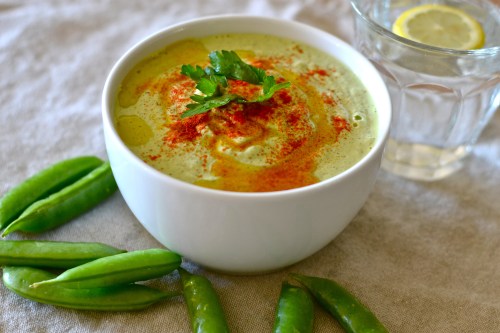
My husband loves traditional hummus and will dip just about anything into it, crackers and chips included. However, I’m practicing Paleo–at least roughly 85% of the time, and regular hummus falls on the 15% side. I would much rather use my 15% on something other than hummus, say for example, a fresh-fruit tart or peach cobbler. So for those snack-craving moments, since I can’t reach for crackers, chips or popcorn, and dairy isn’t a great friend to me, I’ve discovered zucchini hummus. It’s Paleo because it uses zucchini in place of garbanzo beans, and the zucchini impart a beautiful pale green color to this nutritious dip.


Ingredients

2 medium zucchini, ends trimmed

1/2 cup tahini

1/4 cup extra-virgin olive oil

1 lemon, juiced

2 cloves garlic, roughly chopped

1/2 tsp ground cumin

1 tsp sea salt

A few sprigs parsley and/or paprika for garnish


Preparation

Place all ingredients except the garnishes in a high-powered blender and process until completely smooth. Garnish with the parsley and/or paprika and enjoy with sliced carrots, sugar snap peas, broccoli or cauliflower florets or other crudite.

Shown below is a simple grain-free lunch with prosciutto-wrapped slices of pear and sugar snaps with zucchini hummus.


Enjoy!
 
zucc hummus plate

Read Full Post »

omelet closeomelet above

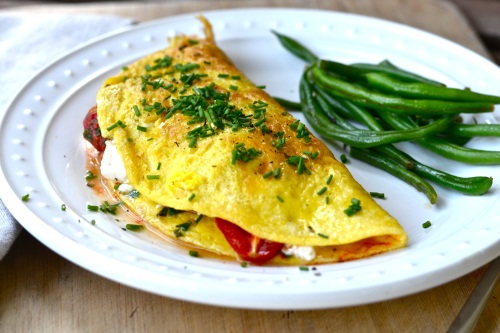
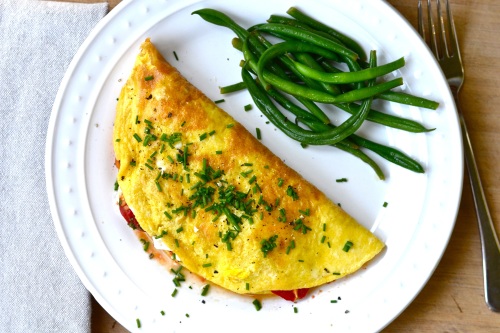
What do you make for dinner when you realize it’s already after 5:00pm, the day got away from you without a thought about dinner or a corresponding trip to the store? Many in this situation simply don’t make dinner, and instead head off to a favorite restaurant. But for those times when you don’t want to leave the home just to feed yourself or your family, consider an omelet! The omelet for dinner is a cooking “trick” of the French. Open the fridge, chop up whatever remaining bits of meat or vegetable you find, whisk a few eggs in a pan, stuff and serve. Et voila!

Before I turned low-carb and subsequently Paleo, I might have boiled some pasta and thrown in a few veggies from the fridge. But pasta rarely makes an appearance in my kitchen these days–with the exception of gluten-free pasta to appease the kids. An omelet serves the same purpose with some significant added benefits.

Many consider eggs one of the most perfect foods. An individual egg offers 6 grams of protein along with a substantial amount of selenium and Vitamin B2. Eggs are one of the best dietary sources of choline, a B-complex vitamin associated with improved neurological function, reduced inflammation and happiness. And in case you hadn’t noticed yet, eggs are rich in sulfur, a nutrient your body needs to produce collagen and keratin (for good skin and nails and shiny hair). Sulfur also aids vitamin B absorption and liver function. And last but not least, eggs have the most easily digestible amino acids of any other protein–at least for humans.

Just like with the quiche recipe I posted a few weeks ago, you can add pretty much anything you like to an omelet, and it’s obviously much fast and easier to whip up than a quiche. I tend to keep a small glass container full of slow-roasted cherry tomatoes in my fridge so I can pop a few in my mouth when the hunger pains arrive, or easily add some in an omelet along with fresh herbs from the garden. Served with a cooked greens or a fresh green salad, an omelet makes a complete, delicious and healthy meal.


Ingredients

3 organic eggs (preferably pastured hens)

A splash of milk or water

Extra-virgin olive oil

1/2 cup roasted cherry tomatoes (recipe below)

1-2 tbsp fresh herbs, such as oregano, parsley, thyme and basil

1/4 cup quality feta (I use sheep milk feta)

Sea salt and fresh-ground pepper to taste

Fresh chives, finely chopped for optional garnish


Preparation

Whisk the eggs and milk (or water) in a small bowl until thoroughly blended.

Heat a little olive oil in an omelet pan or well-season cast iron skillet over medium-low heat. Pour in the egg mixture and cook, gently lifting the edges with a spatula, until nearly set, about 5 minutes. Add the herbs, tomatoes and feta to one half of the circle and carefully fold the plain half over. Cook for an additional 2-3 minutes. Sprinkle the chopped chives and serve immediately.


Slow-roasted tomatoes 

Preheat oven to 350F.

In a medium bowl, add a pint of cherry tomatoes with a drizzle of olive oil, and toss to coat evenly. Season with salt and pepper. Pour out onto a large rimmed baking sheet (or a large cast-iron skillet) and roast in the oven for 30-40 minutes or until the tomatoes caramelize.

Allow to cool before transferring to a glass container. Keeps in the fridge for up to a week.


Enjoy!
Read Full Post »

provencal closeprovencal above

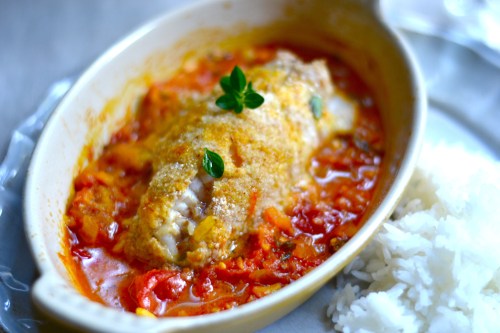
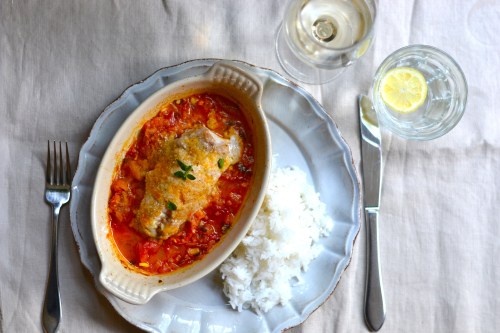
If you’ve never eaten monkfish, you must give it a try. Also known as “poor man’s lobster,” the texture of monkfish, which is white when cooked, is surprisingly like lobster–succulent but sturdy with a very mild flavor. In fact, as I write, I am thinking to myself, maybe next time I buy monkfish, I’ll just grill it and serve it with lemon-butter. But this posting wants to celebrate monkfish cooked Provencal style, like we recently enjoyed it on our summer holiday in Provence.

I remember the day as if it was yesterday. We had ventured all the way down to Cassis from our little chateau just northeast of Avignon–a nearly 3-hour drive. Seeing Cassis meant a lot to me since the last time I had tried to drive there from Provence–with my sister in 2001, my car broke down less than 30 kilometers from the picturesque town. After getting the car towed and negotiating with the mother of the auto mechanic in my very limited French, the chance to see Cassis had vanished.

All these years later, determined as ever to see the famous Les Calanques (fingers of limestone cliffs separated by inlets of turquoise waters), my husband and I strapped the kids in the backseat and set off. The drive takes several hours, and we were famished by the time we arrived in Cassis. We managed to park the car–a remarkable feat in nearly all small, picturesque French towns in Provence and along the Cote d’Azur, and walked into the center. The kids were already showing signs of starvation and sightseeing fatigue, so we sat down to eat outside a little cafe in a narrow walking street. There we devoured a tasty dish of sweet mullet served in a Provencal sauce (and where we saw those little enameled cast-iron tureens we became obsessed with upon our return home, see Dreaming of Provence). I wish I could replicate that dish, but alas, we seem unable to find mullet in Northern California.

calanquescalanques 2

You might be wondering, but where does the monkfish make its appearance? After taking a too-short, but still worthwhile boat tour of the spectacular Calanques, we piled back in the car, hoping to return to the chateaux before dark. Because we’d had a late start, the sun was already setting by the time we got back on the overpriced but essential ribbon of asphalt called the Peage. Somewhere just outside St Remy de Provence, I insisted we pull over when I glimpsed a lantern-lit courtyard with dining tables. I knew the children were not in the mood to sit inside a cramped restaurant at this hour. We sat down to eat at the very modest restaurant of a small hotel. Unfortunately for my husband, they were not adept at cooking steak, but my monkfish Provencal was absolutely delicious. I savored every bite, and vowed I’d replicate the dish when we returned home.

This dish isn’t exactly the same, but I think it has less to do with differences in the ingredients or preparation and more to do with the fact it’s served at my dining table in Marin as opposed to a candlelit table surrounded by Italian cypress trees, with crushed rock underfoot in the heart of Provence.


Ingredients

2 tbsp extra-virgin olive oil

1 onion, peeled and chopped fairly fine

1 large garlic clove, minced

Several sprigs of fresh thyme

6 tomatoes, sliced into eighths*

1 pinch saffron threads

1 splash Pernod

1 1/2 cup chicken broth

1 tsp sea salt

1/2 tsp fresh-ground pepper

2 to 2.5 lbs fresh monkfish filets

4 tbsp seasoned breadcrumbs or almond flour

2 cups rice

*Technically, the tomatoes should be blanched, skinned and seeded, but I’m generally too lazy or too rushed to take the time to do this.


Preparation

Prepare the rice per its instructions (generally 1 1/2 cups water to each cup of dry, uncooked rice brought to a boil and simmered, covered for 15-20 minutes).

While the rice is cooking, turn the oven on to 375F.

Heat the oil in a large cast-iron or other oven-proof skillet. Add the onions and cook until they begin to turn translucent, about 5 minutes. Add the garlic and thyme and cook another 2-3 minutes. Add the tomatoes, saffron and Pernod and cook another 3 minutes. Pour in the chicken stock, add the salt and pepper and cook, stirring occasionally, until a some of the liquid has evaporated.

provencal simmerprovencal laid


Spoon 1/4 of the tomato mixture in each of four small enameled, cast-iron baking dishes if you have them or other small baking dishes. You can also use an 9-inch square baking dish. Place a monkfish filet on top of the sauce in each dish, and season with a little salt and pepper.  Sprinkle each filet with 1 tbsp breadcrumbs or almond flour and cover each dish with a bit of foil. Cook in the middle of the oven for about 10 minutes or until the monkfish is nearly done. (I’ve found that monkfish filets vary greatly in thickness, so just check yours for doneness after 8 or so minutes.) Remove the bits of foil, turn the oven to broil and cook another 2-3 minutes or until the tomato mixture is bubbling and the breadcrumbs are golden brown. Remove from the oven and let sit another 2 minutes. Serve in the individual dishes, if using, with a large spoonful of rice alongside. If you don’t have the individual dishes, serve the fish with several spoonfuls of sauce over a serving of rice.

Play a little Francoise Hardy or Edith Piath on the stereo, and…

enjoy!


cassis2cassis


Read Full Post »

quiche abovequiche close

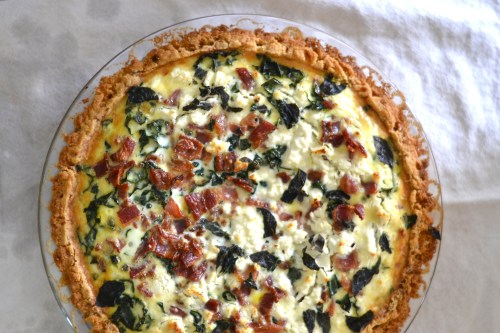
I simply love this dish! It’s easy to prepare, chock full of many of my favorite things, and I love that you can serve it for breakfast, brunch, lunch or dinner. For breakfast or brunch, I like to serve it with a beautiful bowl of ripe berries or other fruit. For lunch or dinner, I’ll pair it with a simple side salad. It also fits with my long-time mantra: “eggs with anything.”  In the past, when I’d found dinnertime nearly upon me, the day having zipped by without a chance to run to the store of think of a meal, I would whip up an omelet or quiche using whatever ingredients could be found in my fridge. It’s a trick of the French, and it will never fail you.

But back to the quiche. I’ve made it using a regular as well as a gluten-free crust. Both hold up fine in this dish, so take your pick. Although the recipe below calls for kale, chard works equally well. You can also substitute goat cheese for feta, although I’m really in love with sheep’s milk feta at the moment. It doesn’t seem to aggravate my stomach the way cow’s milk products do.


Ingredients for the crust

1/2 cup all-purpose gluten-free flour

1/2 cup sorghum flour

1/4 cup almond flour

1/2 cup (1 stick) butter, chilled (or use coconut oil if you’re dairy-free)

1/4 tsp sea salt

2-3 tbsp ice cold water


Ingredients for the filling

1 tbsp extra-virgin olive oil

1 tbsp butter or ghee

1 large leek, trimmed, thinly sliced (white and light green parts only) and carefully washed

1 handful fresh kale, carefully washed, ribs removed and chopped into 1/2-inch strips

3 strips thick-cut quality bacon

1/2-2/3 cup feta cheese

A few tbsp fresh herbs, such as basil or oregano, chopped (optional)

4 large eggs

1 cup milk

Sea salt and fresh-ground pepper


Preparation

Heat the oven to 375F.

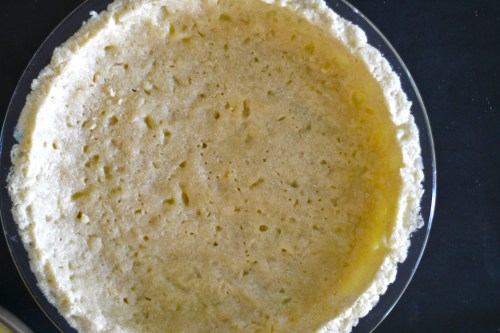
In a medium-size bowl, whisk the flours and salt until combined. Slice in the chilled butter, and mix with the flours using a pastry cutter, two knives or your hands  until there are no chunks larger than pea-size. Sprinkle in a little ice water–1 tbsp at a time, and continue mixing until the dough holds together well. Scrape the contents into a 9-inch pyrex or ceramic pie dish and press the dough into the bottom and up the sides to form your crust. Bake in the oven for 10 minutes, then set aside.

quiche crust


While the crust is baking, fry the bacon strips over medium heat until cooked but still tender, not crisp.

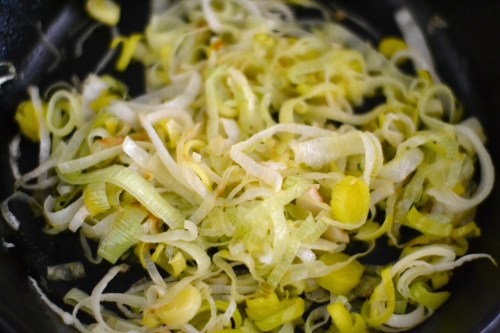
Meanwhile, melt 1 tbsp butter or ghee with the oil in a large cast-iron skillet or similar pan over medium-low heat. Add in the leeks and cook, stirring occasionally, until the leeks are soft and turning a little translucent. Add in the kale, and cook until the kale has softened, about 2-3 minutes.
quiche leeks
In a separate bowl, whisk the eggs with the milk until thoroughly combined. Whisk in a few grinds of pepper and a pinch or two of salt, and the fresh herbs, if using.
quiche bacon layer
Arrange the leeks on the bottom of the quiche. Spread the cooked kale on top of the leeks as the second layer. Make the bacon your third layer. Pour the egg mixture over. Crumble the feta cheese over the top and place in the middle of the oven. Cook at 375F for 10 minutes, then reduce heat to 350F and cook for an additional 25-30 minutes or until the quiche is “set,” and the crust is golden brown.
Allow the quiche to cool for 5-10 minutes before serving.
Enjoy!
quiche kale

Read Full Post »

potato pancake abovepotato pancake close


Our diets have finally returned to normal following our European vacation (read: croissants, prosciutto, fruit tart, steak frites, etc.). I’m back to eating mostly Paleo–trying at least, and more importantly, eating very nutrient-dense foods. That means I’m always conjuring up and looking for dishes that incorporate the best meats (seafood included) and vegetables. Fruits have morphed into natural sweets, and grains have been relegated to occasional treats.

This dish fits the bill, although I’ve been working on this dish for some time now. It tastes delicious, but I can’t seem to photograph it quite right. What I mean to say is, I can’t make the photograph depict the tastiness of the dish. So I guess you’ll just have to take my word for it.

This recipe is an example of me attempting to replicate something I had at a restaurant. My version is nearly as good, and possibly a bit healthier. These pancakes are wonderful served as I’ve shown them here, or set on a bed of arugula that’s been tossed or drizzled with a little vinaigrette. They also make a perfect brunch, lunch or dinner dish.


Ingredients for 4 persons

1 medium-size Yukon Gold potato

1 medium-size zucchini, scrubbed but not peeled

1 large egg, lightly whisked

1-2 slices of quality lox, per person

1 crisp apple, cored, peeled and chopped into 1/4-inch dice

1/2 red onion, peeled and chopped into 1/4-inch dice

2 tsp honey

2 tbsp apple cider vinegar

Avocado oil or xtra-virgin olive oil

Sea salt

Fresh-ground black pepper

1 tbsp fresh chives


Preparation

Place the chopped apple, onion, honey and cider vinegar in a small saucepan. Heat over medium-low heat, stirring regularly. When the apple has softened a little, take the pan off the burner and allow to cool to room temperature.

In the meantime, peel the potato and grate using the standard size holes. Squeeze out the excess liquid and place in a medium-size bowl. Chop the ends off the zucchini and grate on the same setting. Squeeze out the excess liquid and add to the potato. Add in the whisked egg. Season with salt and pepper and mix well.

Heat a large cast-iron skillet over medium heat. Coat the bottom of the skillet with an even layer of oil. Using approximately 1/2 cup (packed) of grated vegetable mixture, form the pancakes two at a time, flattening them slightly so they’re 4-5 inches in diameter. Cook until the bottoms are golden brown, about 3-5 minutes. Flip and cook another 4-5 minutes. Keep cooked pancakes warm while you cook the rest. Note: everyone’s cooktop and pans cook differently. You don’t want to burn your pancakes, but you do want the potato cooked through. Keep an eye on the color while cooking and lower the heat if necessary.

Place the pancakes on plates (or on a bed of dressed greens, if using). Top with 1-2 slices of lox. Place a spoonful of the apple mixture (drained) on top. Sprinkle the chopped chives over the whole dish. Serve warm or at room temperature.

For a little added flavor and presentation appeal, top the pancakes with a dollop of creme fraiche before adding the “chutney” and chives.


Enjoy!

Read Full Post »

tomato salad2tomato salad side


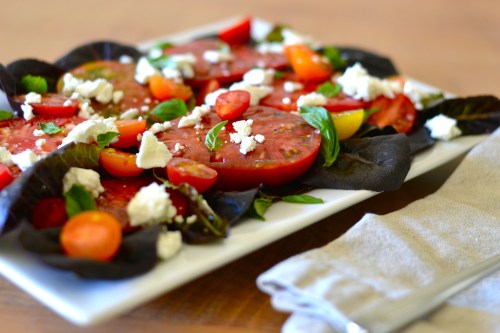
This should be called the End of Summer Salad since that’s when tomatoes–particularly heirloom varieties, are at their best. It’s really just a twist on the caprese salad, but I find goat cheese imparts a more sophisticated flavor, and keeps the focus on the tomatoes bursting with flavor at the end of the summer.

I used my favorite salad green here, which I confess, I don’t know the name of. I pick them every year from our favorite local organic U-pick farm, and even the people that run the U-pick aren’t sure of the name. I think they’re either Breen mini-romaine, Cherokee or Rouge d’Hiver–some sort of Little Gem lettuce, with dark red leaves and exceptional crunch. Maybe someone reading this post will be a lettuce expert and will solve the mystery for me once and for all.

I love that this salad takes just 5 minutes to prepare and looks fresh and festive. It’s a great addition to any meal, and looks especially good served al fresco.


Ingredients

1 bunch Little Gem lettuce, trimmed and washed

2 heirloom tomatoes (try mixing different varieties), sliced crosswise in 1/4-inch thick slices

1 handful mixed variety cherry tomatoes, washed and halved lengthwise

Extra-virgin olive oil

Quality balsamic vinegar

Coarse-ground sea salt

Fresh-ground black pepper

1/4 cup soft goat cheese (aka chevre)

1-2 tbsp fresh basil leaves


Preparation

So simple! Find a nice platter. Arrange the lettuce leaves evenly. Top with the heirloom tomato slices followed by the cherry tomato halves. Drizzle 1-2 tbsp of the olive oil over the salad, followed by 1 tbsp of the balsamic vinegar. Sprinkle the basil leaves and crumble the goat cheese over the salad. Finish with a sprinkle of sea salt and a few grinds of pepper. Serve immediately.


Enjoy!


lettuce red

Read Full Post »

« Newer Posts - Older Posts »

Cooking Without Limits

Food Photography & Recipes

Selma's Table

Life doesn't have to be perfect to be wonderful - stories and recipes from a wonderful life...