Feeds:
Posts
Comments

Archive for the ‘General nutrition’ Category

kale butt abovekale butt close


I’m forever looking for different ways to eat more kale. After all, I do rank it as one of the best things you can eat, along with avocados, apples and eggs. Consider all the good kale can do for you… It helps lower cholesterol, it lowers your risk of at least five types of cancers, including prostrate, colon, breast, ovarian and bladder. It detoxifies the body and it provides at least 45 different flavonoids for antioxidant and anti-inflammatory benefits. What’s more, I love that unlike most lettuces, with kale you can freeze it, blanch it, massage it, as well as treat it like any other leafy green by chopping or blending it.

I ate a version of this salad at a local restaurant and have tried several times to replicate it. This comes pretty close, although the restaurant must use some sort of emulsifier in their dressing because I can’t get mine to have the same almost frothy consistency.

You will like the mixture of greens–curly kale, frisee and radicchio, combined with the crunch of the slivered almonds and apple and tender sweetness of the raisins. This makes a great lunch salad or side to any grilled fish or meat.


kale butt side


Ingredients

Salad:

1 bunch curly kale, washed, dried, ribs removed and roughly chopped

1 small head radicchio, tough core removed, washed and roughly torn

1 small head frisee, stem removed, washed and roughly torn

1 Granny Smith apple, seeded and cored and chopped into cubes

1/2 cup golden raisins

1/3 cup slivered almonds (skin on)


Dressing:

1 small garlic clove, smashed

1/2 tsp Kosher salt

3 tablespoons sour cream (or plain Greek yogurt)

3 tablespoons mayonnaise

1 tablespoon white wine vinegar

1/4 cup buttermilk

1/2 tsp fresh-ground pepper


Preparation

I put most of the instructions next to the ingredients, so at this point, it’s all pretty straight forward. Mix all the salad ingredients in a large bowl. Whisk together the dressing ingredients in a small bowl. Drizzle over the salad. Toss to coat evenly. Adjust seasoning. Serve immediately.


Enjoy!


kale leaf

Read Full Post »

pasta above

What’s your reaction to “Meatless Mondays”? Does it seem like a reasonable suggestion? Do you already practice it? Or does it instill a sense of dread that you’ll be subjected to a meal lacking in flavor and texture? Do you consider it purely a marketing ploy by some sector of our food industry? Are you simply wondering why I’m asking since I’ve often labeled my own diet “modified-Paleo”?

Well consider this… If every American went meat-free, just one day a week (or one extra day if he/she already abstains from meat at least one day a week), more than a billion animals would be spared each year from a factory farm life. A billion animals!! That’s insane, right? Furthermore, according to the Humane Society of the United States, “Half the world’s grain crops are fed to the world’s 65 billion farm animals—when more than a billion people suffer from hunger.” That last factoid is the reason I gave up eating mammals for 24 years.

Giving up just one pound of beef, (the most my family of four now eats in a week–by design), saves 1850 gallons of water, contrasted with a pound of vegetables which uses 39 gallons on average. We raise about 75 billion land animals globally for food each year. That raising causes a significant portion of the three largest greenhouse gas emissions–disrupting our normal weather patterns, increasing ocean temperatures and damaging ecosystems. And lest you forgot what an ecosystem is, it’s a biological community of interacting organisms and their environment–meaning, if you adversely affect one thing in the interconnected system, all the others in that system could also be adversely affected, and the entire ecosystem could eventually die.

For the sake of the environment and animals, consider adopting Meatless Mondays in your home. It will help our environment and save you money!! And if you’re already meat-free at least one day a week, consider going meat-free two or three days each week.

And I should clarify what I mean when I say I eat a “modified-Paleo” diet. (Several of you have asked because you’ve noticed I cook and eat many non-Paleo dishes.) Basically, by “modified-Paleo,” I mean I avoid grains and most legumes at least 75% of the time, and I avoid gluten more than 90% of the time. I consume very little dairy, and I try to eat only pasture-raised animals from local farms. I do not believe the Earth can sustain a majority of people eating a strict Paleo diet, which involves the consumption of relatively large amounts of livestock. However, I think a little red meat is sustainable, and I think it’s still environmentally responsible to eat moderate amounts of other meats, (poultry and seafood) depending on what species, where and how it was raised, etc.

I worry whether my family will get enough protein if I serve mainly vegetarian meals, so I am always on the lookout for good meat substitutes. I actually detest that expression, “meat substitute,” as it sounds like something a lab technician would use or a label tossed around by actors in a bad sci-fi movie. I prefer “faux-meat.” I also find myself wary of soy-based faux-meat products, since I’ve read so much literature on the adverse effects of the over-abundance of soy in many Americans’ diets.

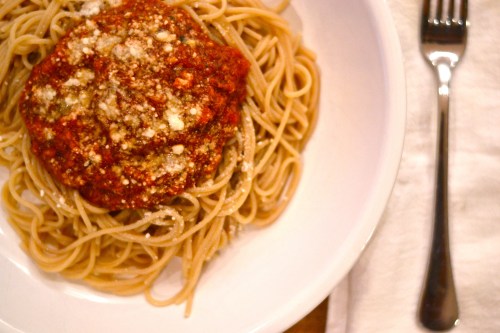
I recently discovered Beyond Meat products, and I think several make good faux-meat options. While some of their products use soy as the base, the ground-beef substitute (“Beefy Crumble”) uses pea protein which I think shows a lot of promise–not to mention, it’s high in protein and fiber. Try my recipe for a basic pasta sauce with the added benefits of Shitake mushrooms. If you want meat, try making this dish using ground turkey–cooking it in a little olive oil before you saute the onions. If Shitake mushrooms aren’t readily available, substitute Cremini.

pasta pkgpasta ground


Ingredients

1 tbsp extra-virgin olive oil

1 small yellow onion, peeled and finely chopped

1 clove garlic, minced

1 cup Shitake mushrooms, brushed clean and finely chopped

1 tsp sea salt

1/4 tsp fresh-ground pepper

1/2 tsp dried oregano

1/2 tsp dried basil

1/2 tsp dried parsley

1 tsp brown sugar

2 tsp balsamic vinegar

1 28oz can stewed Roma tomatoes

1 1/2 cups Beyond Meat Beefy Crumble

Pasta of your choice*

*My new favorite is Organic Red Lentil Rotini by Tolerant Foods, even though I photographed the bolognese sauce over a spaghetti-style quinoa, brown-rice pasta I also like. Tolerant’s Red Lentil Rotini is made from only non-GMO organic red lentils, give you a whopping 21 grams of protein per serving (and 13 grams of fiber), and provides large percentages of many important vitamins and minerals, including Calcium, Thiamine, Folate and Zinc.

rotinipasta veg saute


Preparation

Heat the olive oil in a medium saucepan or large cast-iron skillet. Add in the chopped onions and a pinch of salt and cook until the onions soften, about 5 minutes. Stir in the garlic and mushrooms. Add in the spices, sugar and vinegar. Cook until the mushrooms begin to soften, about 5-7 minutes more. Pour in the tomatoes and bring to a soft boil. Turn the heat to simmer, cover and cook for about 15 minutes.

Bring a pot of salted water to boil and cook the pasta of your choice according to instructions.

Add the Beyond Meat, ground-beef substitute, to the sauce mixture and heat thoroughly, about 3-5 minutes. Adjust salt as needed.

pasta simmer


Serve over your noodles with a little grated Parmesan if you’re not avoiding dairy.


Enjoy while savoring the thought that you’re saving 1850 gallons of water, spared an animal’s life and reduced green-house emissions!!


pasta shrooms


Read Full Post »

heart


I thought long and hard about posting a recipe of some yummy, somewhat decadent treat since most of us associate Valentine’s Day with sweets. However, I decided a few tips on helping your heart stay healthy might be a better way for me to show some love. (But in case you really want something sweet, and not too naughty, see my recipe for dairy-free chocolate truffles here.)

Experts think only about 25% of heart disease is genetic. The rest can be attributed to several factors, primarily diet and lifestyle. Here are a few good basics for keeping your heart healthy. They’re relatively easy, straightforward and have numerous benefits for your health, not just your heart.

Chocolate – The flavonols in cacao can lower your risk of heart disease by thinning your blood and relaxing your blood vessels which lowers your blood pressure. Look for “dark” chocolate, preferably with 70% or more cacao.

Olive oil – Its mix of antioxidants can lower your LDL (bad cholesterol) without having a negative effect on your HDL (good cholesterol).

Garlic – Eating at least one fresh clove of garlic a day can help prevent cholesterol from building up in your bloodstream, keeping arteries plaque-free and more flexible.

Apples – Eating an apple a day (not the juice!) may just keep the doctor away! Studies suggest the fiber and flavonoids in apples may lower your risk of having a heart attach by stabilizing blood sugar levels and reducing cholesterol.

Wine – One glass of red wine a day has been shown to boost your levels of heart healthy fatty acids. However, for women, drinking more than one glass a day has been shown to increase your risk of other serious illnesses, such as breast cancer.

Exercise – Just 30 minutes of exercise a day will lower your blood pressure and increase your HDL. Stroll, walk, sprint, vary your speed and intensity to keep things interesting and help protect your heart.

Relax – It’s easier said than done for most of us, but a regular practice of yoga or meditation has been proven to improve your overall health and lower your risk of heart disease.


Wishing you love and good health!

Read Full Post »

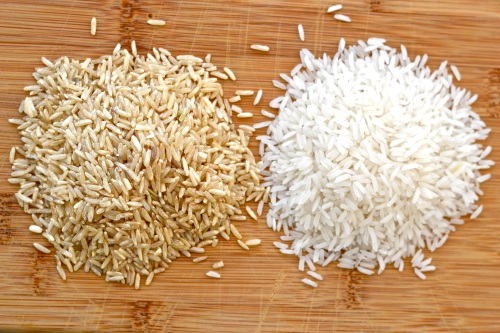
rice


Growing up in a home with a Japanese mother, I considered white rice a dietary staple. I estimate we ate white rice at least three times a week, possibly more. In fact, my mother shunned the potato, as did I for many years,until I married a Dutchman.

When my children were still babies, and it was time to start them on solids, I remember mixing some of my breast milk with organic rice cereal as their first “food.” It was what was recommended by nearly every pediatrician and respected baby book author at the time.

A few years ago, I tried embracing brown rice after hearing how much healthier it is than white. I often ordered it in restaurants in and around San Francisco, where the waitstaff are all trained to ask if you want white rice, brown rice, or a mix. I sometimes bought sushi made with brown rice from my favorite natural foods market. But I could never made the switch completely. Maybe it was the result of too many years enjoying the naturally sweet stickiness of white rice, or the fact that white rice absorbs the juices and sauces from my cooking so much better than brown.

Regardless, I now shun brown rice entirely. Please read on to discover why.

First, some basics… White rice is essentially brown rice in which the bran and germ portions have been removed. White rice carries a higher glycemic index, which suggests brown rice results in a slower increase in your blood sugar level after consumption. Doctors and nutritionists also consider brown rice healthier because the refining process of white rice results in a loss of vitamins, fiber, lignans and minerals, such as magnesium and manganese. Brown rice is also a rich source of selenium, which is thought to reduce the risk of major disease, including cancer, arthritis and heart disease, and it’s high in manganese, which helps the body synthesize fats. It’s surprisingly rich in anti-oxidants, and it’s high in fiber, an essential part of our diet to maintain healthy bowel function and help prevent colon cancer. Studies have shown that replacing white rice with brown rice in your diet will lower your risk of type 2 diabetes.

That all sounds pretty good, doesn’t it? And those of you who have switched to brown rice are feeling pretty good about your choice. But it turns out not to be as simple as that, and in fact much more serious.

Brown rice is also full of phytates, which bind to vitamins and minerals preventing absorption. So while brown rice may contain more vitamins and minerals, those vitamins and minerals aren’t being absorbed. The phytic acid is also thought to inhibit the enzymes which break down protein, impairing proper digestion.

But what’s most concerning is that a 2012 study conducted by Consumer Reports Magazine (CRM) found many popular rice products contained arsenic–some with dangerously high levels of arsenic, including foods marketed as “healthy” snacks and organic rice cereal for babies. The study tested more than 200 samples from a variety of rice products, many of which are targeted to the rapidly growing “gluten-free” market. Here’s the CRM chart summarizing their findings.

Arsenic, a known human carcinogen that is particularly harmful to infants’ and children’s developing brains, is known to cause lung, bladder and skin cancer in humans. According to the Environmental Protection Agency, there is no “safe” level of inorganic arsenic exposure. The CRM report stated, “We found significant levels of inorganic arsenic, which is a carcinogen, in almost every product category, along with organic arsenic, which is less toxic but still of concern. ”

Where both brown and white rice were tested within the same brand, the brown rice was found to have higher arsenic levels than the white rice. In some cases, brown rice had nearly twice the safe limit (based on the 5 parts per billion per serving recommended by the EPA for drinking water). This makes sense since the arsenic concentrates in the outer layers of the grain which get removed when processing to white rice.

Arsenic is also found in fruits and fruit juices and vegetables, which together provide the greatest exposure to arsenic for most of us. Some growers will argue that arsenic is naturally occurring in soil since it can leach into soil from the weathering of rocks and minerals in the earth that contain arsenic. However, humans are the main cause of arsenic in our soil and water. The U.S. continues to the the world’s leading user of arsenic. It’s estimated that more than 1.5 millions tons have been used for industrial and agricultural purposes since the early 1900s. So it comes as no surprise that the CRM study found that rice from Arkansas, Louisiana, Missouri and Texas–where the vast majority of rice is produced in the U.S., had higher levels of total arsenic and inorganic arsenic compared with samples from elsewhere. Those states have a long history of cotton production, a crop that was heavily treated for decades with arsenical pesticides.

The risks of arsenic exposure are greatest for children and pregnant women, because that’s when young brains are developing. The CRM study found concerning levels of arsenic in infant cereals, usually fed to babies as they begin solids between 4 months and 1 year of age. Some nutritionists would suggest pregnant women avoid rice all together, and that babies should never be fed rice or rice cereal.

My recommendation? I’m not a licensed nutritionist, but I would offer this:

– Avoid eating brown rice entirely or eat it only on rare occasion.

– Considering what little nutrient value white rice provides, and knowing that you and your family will still have arsenic exposure from fruits and vegetables, make your choice accordingly.

– Do not buy rice grown in the south-central region of the U.S.

– Buy Lundberg Family Farms Organic rice, if it’s available where you live since it had the lowest levels of arsenic and the company is looking at ways to lower the levels even further.

– Reduce arsenic levels by washing your rice well with warm water (about 6-8 changes of water) until the water runs clear.

– Further reduce arsenic levels by washing your rice a final time after it’s cooked using filtered water or regular tap water if you know your local water doesn’t contain significant levels of arsenic.

 
Be well!

Read Full Post »

gello orangegello red above2


Do you remember eating finger Jello during your childhood? I loved the stuff, and despite the fact that my mother normally fed us healthy food, she seemed to think the benefits of Jello outweighed all the white refined sugar and food coloring it contained. We would regularly make finger Jello as a snack or treat, and on special occasions, particularly holidays, she would make a pretty layered dish with green Jello. This dish was eaten with relish by even the most sophisticated foodies in our lives during that time. One layer contained sliced pears in the green translucence, the other had cream cheese blended in, which made a dreamy pale green color. And my mother always added a few drops of peppermint extract, so the whole dish had a wonderfully light, minty taste.

Several decades passed by in which flavored, colored Jello did not make an appearance. But I did think fondly of it from time to time. Then I started making my own coconut milk yogurt, and found that natural, unflavored, unsweetened gelatin thickened my yogurt nicely. Seeing that creamy, slightly gelled thick yogurt got me thinking more and more about the beloved finger Jello of my childhood. On a side note, I have also been making bone broth regularly–not stock from leftover bones that you use as a soup base, but specifically broth from gelatinous bones that I order and buy from the local farmers market. It is quite gelatinous once it’s cooled, and I swear it has greatly improved my overall digestion and well being. (I will speak about all the virtues of bone broth in another posting.)

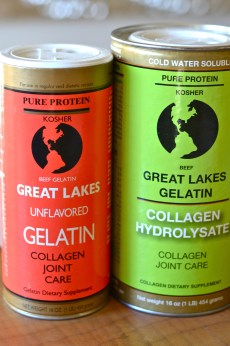
gello containersSometimes, I forget to place my order for gelatinous bones, and the farmer sells out before I arrive at the market. This made me wonder if I could find an off-the-shelf product. Luckily, I quickly discovered a great product, Great Lakes Gelatin, derived from pastured animals. It comes in two forms, regular unflavored gelatin and “Collagen Hydrolysate.” Gelatin is an excellent source of protein, boasting 6 grams per tablespoon with zero carbohydrates. The hydrolyzed version is intended to help regulate your body’s metabolism by giving you pure protein that is easily absorbed by the body. (It can be used as a weight loss aid.)  It’s the same collagen found naturally in the bones, skin and cartilage of animals, and is thought to lubricate joints and help build connective tissue. By age 25, our bodies begin losing the ability to repair supporting connective tissue (and we begin to see those annoying wrinkles forming). Natural gelatin is also chock full of amino acids like lysine, glycine and proline which the body needs to regulate cell function.

Growing up, my fingernails were as tough as, well, nails–the carpentry kind. I could pick things off, pull things apart, scrape things up and generally do anything with my fingernails without a chip or split. However, in recent years, I noticed my fingernails becoming more brittle. If I accidentally jammed one into the car door, the door won. If I picked a sticker off my kids’ dresser using my nails, one or two might chip a little, and my nails generally seemed thinner.

I report with glee that I’ve been using the natural gelatins for a couple of months now, and my nails are, once again, nearly indestructible! Of course, I’m also waiting to see if some of my wrinkles fade away, but that might be wishful thinking. I also expect my hair will grow thicker, although I might not notice it for some time.

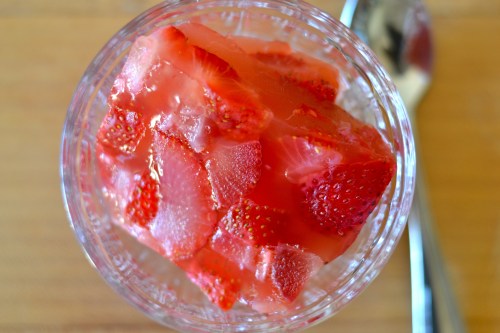
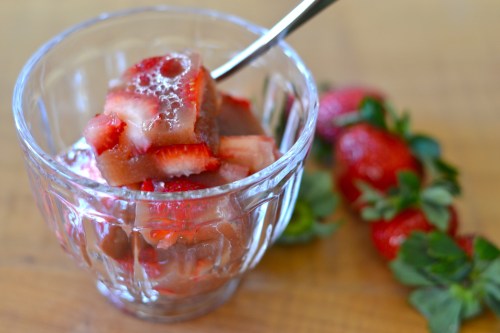
I use the natural gelatin in the red container for making yogurt and finger “gello” or gelatin dessert, and I use the hydrolyzed version in my smoothies (it dissolves easily in cold water). I love that I can make something for me and my family that is fun to eat, feels like a dessert but yet contains no sugar except what’s naturally in fruits and their juices. And the possibilities are endless… I recently made coconut finger gello using my favorite coconut milk. It’s delicious with fresh berries on top.

gello orange closegello red above


Ingredients for basic “gello”

1/4 cup cold water

2 rounded tbsp natural gelatin*

1/4 cup hot water (near boiling)

1 1/2 cups fruit juice

1 cup berries or chopped fruit, such as pear

*Use more if you want your “gello” really firm and easily held in the hand


Preparation

Arrange the cut fruit or berries on the bottom of an 8×8-inch pyrex or ceramic square pan.

In a medium bowl, pour in the cold water. Sprinkle the powdered gelatin evenly over the water and allow to “bloom” for about 10 minutes. Whisk in the hot water until all the gelatin is dissolved. Whisk in the juice. Pour the mixture over the fruit, cover the pan with plastic film wrap and chill in the refrigerator for 2-3 hours or until fully set. Cut into squares when ready to serve.


Variations

Coconut finger “gello” – Skip the fruit and juice and whisk in one can of coconut milk along with 1-2 tbsp maple syrup.

Pureed fruit “gello” – Puree fruit in a high-powered blender until smooth and use approximately 3 cups in place of the juice and chopped fruit. I used ripe persimmons (peeled and cored) from our tree!


Enjoy!
 

gello orange abovegello red close


Read Full Post »

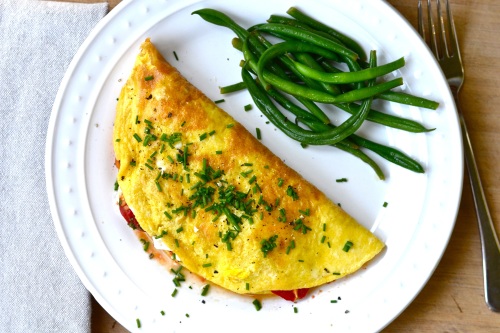
omelet closeomelet above

What do you make for dinner when you realize it’s already after 5:00pm, the day got away from you without a thought about dinner or a corresponding trip to the store? Many in this situation simply don’t make dinner, and instead head off to a favorite restaurant. But for those times when you don’t want to leave the home just to feed yourself or your family, consider an omelet! The omelet for dinner is a cooking “trick” of the French. Open the fridge, chop up whatever remaining bits of meat or vegetable you find, whisk a few eggs in a pan, stuff and serve. Et voila!

Before I turned low-carb and subsequently Paleo, I might have boiled some pasta and thrown in a few veggies from the fridge. But pasta rarely makes an appearance in my kitchen these days–with the exception of gluten-free pasta to appease the kids. An omelet serves the same purpose with some significant added benefits.

Many consider eggs one of the most perfect foods. An individual egg offers 6 grams of protein along with a substantial amount of selenium and Vitamin B2. Eggs are one of the best dietary sources of choline, a B-complex vitamin associated with improved neurological function, reduced inflammation and happiness. And in case you hadn’t noticed yet, eggs are rich in sulfur, a nutrient your body needs to produce collagen and keratin (for good skin and nails and shiny hair). Sulfur also aids vitamin B absorption and liver function. And last but not least, eggs have the most easily digestible amino acids of any other protein–at least for humans.

Just like with the quiche recipe I posted a few weeks ago, you can add pretty much anything you like to an omelet, and it’s obviously much fast and easier to whip up than a quiche. I tend to keep a small glass container full of slow-roasted cherry tomatoes in my fridge so I can pop a few in my mouth when the hunger pains arrive, or easily add some in an omelet along with fresh herbs from the garden. Served with a cooked greens or a fresh green salad, an omelet makes a complete, delicious and healthy meal.


Ingredients

3 organic eggs (preferably pastured hens)

A splash of milk or water

Extra-virgin olive oil

1/2 cup roasted cherry tomatoes (recipe below)

1-2 tbsp fresh herbs, such as oregano, parsley, thyme and basil

1/4 cup quality feta (I use sheep milk feta)

Sea salt and fresh-ground pepper to taste

Fresh chives, finely chopped for optional garnish


Preparation

Whisk the eggs and milk (or water) in a small bowl until thoroughly blended.

Heat a little olive oil in an omelet pan or well-season cast iron skillet over medium-low heat. Pour in the egg mixture and cook, gently lifting the edges with a spatula, until nearly set, about 5 minutes. Add the herbs, tomatoes and feta to one half of the circle and carefully fold the plain half over. Cook for an additional 2-3 minutes. Sprinkle the chopped chives and serve immediately.


Slow-roasted tomatoes 

Preheat oven to 350F.

In a medium bowl, add a pint of cherry tomatoes with a drizzle of olive oil, and toss to coat evenly. Season with salt and pepper. Pour out onto a large rimmed baking sheet (or a large cast-iron skillet) and roast in the oven for 30-40 minutes or until the tomatoes caramelize.

Allow to cool before transferring to a glass container. Keeps in the fridge for up to a week.


Enjoy!

Read Full Post »

mashed caul closemashed caul aboveI resisted making these for months because somewhere in the back of my mind an unpleasant relationship with cauliflower lingers in my childhood memories. My mom was an excellent cook overall, but being inventive with vegetables simply wasn’t her thing. If she served cauliflower to us, it was plain and raw or steamed plain.

I’ve been doing lots with roasted cauliflower these days (see Roasted Brussels Sprouts and Cauliflower and Cauliflower Apple Soup with Truffle Oil and Chopped Chives), but have been reluctant to try much more. I’ve tried the “rice” made from cauliflower, and while it was a decent and much healthier substitute for regular rice, it wasn’t anything worth writing home about.

So I guess I had low expectations when I tried making mashed cauliflower as a great base for meats in sauces and a mashed potato substitute. But no matter–mashed cauliflower is amazingly delicious!! It’s also super easy to make and you get to feel great about eating it because it’s very nutritious and far superior in taste, texture and nutrition to the ol’ white potato. Remember, doctors recommend we eat cruciferous vegetables (broccoli, cauliflower, cabbage, kale, etc.) 2 to 3 times per week. Cauliflower is an excellent source of Potassium, fiber, Vitamin C and Vitamin B-6.


Ingredients

2-3 cloves garlic, unpeeled
1 tbsp extra-virgin olive oil
1 medium-sized head cauliflower, trimmed and broken into florets
1/4 cup coconut milk
3 tbsp butter, ghee or other butter substitute
1 1/2 tsp sea salt
Fresh-ground pepper


mashed caul raw


Preparation

Preheat a toaster oven or regular oven to 400F. Place the unpeeled garlic cloves in a small heat-proof dish and roast until soft, about 15 minutes.

Meanwhile, bring 1/2-inch of water to boil in a medium saucepan. Drop in a steamer basket and add the cauliflower florets. Cover and steam until tender, about 10 minutes. Drain off all the water and place the florets in a food processor or high-powered blender, such as a Vitamix.

Remove the papery skins from the garlic cloves by squeezing them gently and add the cloves to the cauliflower along with the remaining ingredients. Process or blend until smooth.

Serve immediately. Serves 4-6 (just 4 with my family because we fight over every spoonful).

Enjoy!

Read Full Post »

BPA bottlesDo you feel like the concerns over BPA have quieted down lately? Perhaps it’s because in July 2012, the FDA banned BPA from the manufacture of infant bottles and sippy cups. However, the FDA’s decision came after manufacturers of infant bottles and sippy cups had voluntarily stopped using the estrogen-mimicking chemical.


What exactly is BPA?

Bisphenol A (BPA) is an industry chemical widely used in the manufacture of polycarbonate plastics, which are used by nearly every industry. BPA is released into our environment in excess of 1 million pounds per year. Studies show that humans are mainly exposed through food packaging; think about all those water bottles and nearly every canned item on your kitchen shelf, including beans, tomatoes, soups, etc. Food packaging falls under the jurisdiction of the FDA.

BPA is a reproductive, developmental and systemic toxicant and is estrogenic. For these reasons, it’s of particular concern to children’s health and the environment. Studies have linked BPA–a known endocrine disruptor, to diabetes, breast cancer, obesity and hormone abnormalities in children.

The FDA, which originally declined to ban BPA in early 2012, has gone as far as to state on it’s website that the department has “some concern about the potential effects of BPA on the brain, behavior, and prostate gland in fetuses, infants, and young children.”

As a result, the FDA is currently conducting its own studies to better determine the risks of BPA. It also claims to be taking measures to reduce our exposure to BPA in the food supply. Sadly, these measures are only in support of actions the food industry has initiated on it’s own–very likely in response to public outcry. These measures include:

  • Supporting the industry’s decision to stop manufacturing baby bottles and infant feeding cups containing BPA.
  • Supporting the development of alternatives to BPA for the linings of cans of infant formula.
  • Supporting the industry’s efforts to minimize BPA levels or replace BPA in other food can linings.

Also on the FDA’s website: “Consumers can be assured that the FDA supports the strongest regulatory approaches to protect them from risks in the food supply, and will act swiftly to eliminate any individual product, ingredient or chemical that is determined to present a risk to the public health.”

Uh, I think not. If you’ve been following my blog since the beginning, you’ll remember my posting on the pesticide atrazine, another estrogenic chemical which studies show turn male frogs into female frogs and/or make them sterile. The EU banned atrazine in 2006, but the toxic chemical is still widely used in U.S. agricultural practices. (Note: the EU banned BPA from infant bottles in 2011, and is currently re-evaluating its assessment in light of new concerns.) Because the FDA still allows atrazine on our food crops, and because it banned BPA from infant bottles only after the industry had already voluntarily banned it, I have little faith in the FDA, acting “swiftly to eliminate any individual product, ingredient or chemical that is determined to present a risk to the public health.”In addition to being a large, bureaucratic regulatory body (i.e., slow to move and slow to respond), it’s also heavily-influenced by politics (i.e., the pharmaceutical industry, the agricultural lobby, etc.). The FDA’s current assessment is still that “the use of BPA in food packaging and containers is safe.”

Europe takes a much different approach to keeping it’s citizens safe. Since 2007, companies must prove their chemicals are safe, while in the U.S. the burden lies with the EPA. According to a California Senate review from 2010, the EPA has only tested approximately 200 of the 83,000 chemicals in its inventory.


Where else are you exposed to BPA?

All those slightly silky-feeling receipts from your favorite retailers and grocers likely contain BPA. A recent study published by the Journal of the American Medical Association found significantly higher levels of BPA in the urine of people that regularly handle store receipts (such as cashiers). And in a recent study commissioned by the Bay Area based Center for Environmental Health, a Texas lab found that nearly all of the 18 BPA-free toddler cups it tested leached synthetic estrogens–in some cases, more potent than BPA.


BPA receiptsWhat can you do to protect yourself and your loved ones?

  • Use glass or steel water bottles instead of plastic. If you continue to use plastic, make sure it’s BPA-free and avoid exposing it to radiation (microwave) and heat (dishwasher or direct sunlight).
  • Buy less processed, packaged food, including canned. (This step has too many health benefits to enumerate.) Buy your stewed tomatoes or tomato puree in a box carton not a can, unless it’s from one of the handful of companies who have banned BPA from their cans. These include: Native Forest, Eden Organics, Wild Planet, Oregon’s Choice, Eco Fish, Vital Choice and Trader Joe’s.
  • Don’t handle store receipts more than necessary.

Be well!

Read Full Post »

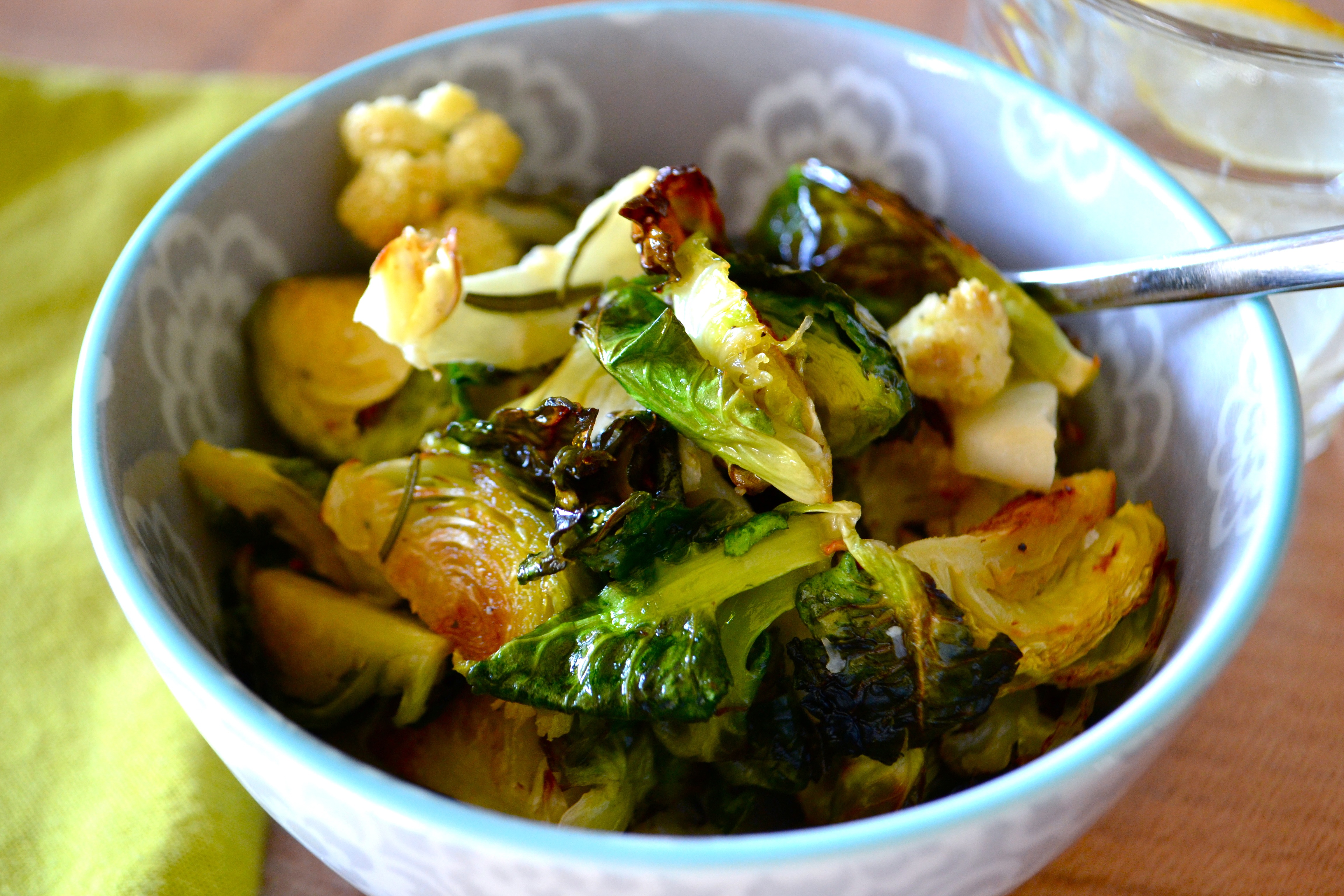
cauli sprout closeDoctors recommend we eat cruciferous vegetables (broccoli, cauliflower, cabbage, kale, etc.) 2 to 3 times per week. I think there may have been an entire decade–possibly in my 20s, during which I didn’t eat (at least knowingly!) any cruciferous vegetables. And I avoided brussels sprouts, in particular, like the plague. They’re one of those vegetables I hated as a kid but can’t eat enough of as an adult. Not only have I discovered many delicious ways of preparing them (unlike the boring method of simply steaming them that my parents did), but I love the fact they’re so good for me. In addition to helping lower cholesterol and protecting DNA, brussels sprouts rank as high as the other superfood, broccoli, for glucosinolates which studies show help prevent cancer.

This dish has become one of my favorite things to eat. And I’ll eat it for lunch or dinner or whenever I’m craving something with tons of flavor.

The original recipe called for the sprouts and cauliflower to be fried. (Who doesn’t love fried food?!) I made the dish  twice that way, but decided to try just roasting the vegetables instead of frying them. Frying can be messy and, well, greasy. While you don’t get quite as much “fried” flavor roasting the vegetables, it’s much easier, and I think the dish is just as good with more of flavor of the brussels sprouts and cauliflower retained.

Serve this dish as a side to roasted meat or a winter vegetable soup like butternut squash or pumpkin.

cauli sprouts chop

Ingredients

1 small head of cauliflower, trimmed and cut/broken into small florets

1 lb brussels sprouts, trimmed and halved or quartered depending on size

3-4 sprigs fresh rosemary

3-4 tbsp olive oil

1 tbsp garum fish sauce

1 tbsp fresh lemon juice

1/4 tsp sea salt

Freshly ground pepper to taste

cauli sprout sheet

Preparation

Preheat the oven to 400F or 375F if using a convection oven. Break off the rosemary leaves and combine with the brussels sprouts and cauliflower in a large bowl. Toss with the olive oil. Spread out on a large rimmed baking sheet and roast in the oven for 20-30 minutes, stirring occasionally, until some of the sprouts get quite brown. You can run the tray under the broiler for 2 to 3 minutes if you want your vegetables even crisper.

Scrape the vegetable mixture off the baking sheet back into the large bowl. Season with the salt, fish sauce and lemon juice. Add pepper to taste. Serve immediately.

Serves 4.

Enjoy!

cauli sprout above2

Read Full Post »

I first posted this a little over a year ago, but since I’m still getting inquiries regularly, and since there is a nasty flu circulating across the country (H1N1), here it is again…

People regularly ask for my recommendations for staying healthy during the winter season. I always preface my response with the line: “Well, I’m not a doctor or a nutritionist, but here’s what I do to keep bugs at bay.” Due to some combination of luck, genetics, careful measures and healthy eating, I rarely get sick, and when I do, it’s typically very mild–a runny or stuffy nose for a few days and maybe an annoying tickly cough from the post-nasal drip. I get a bad cold every 5-7 years, usually after allowing myself to get run down, and I can’t remember the last time I’ve had the flu. (I’m touching wood here!!)

Give your body’s natural immunity a fighting chance by going light on the sugar–just 1 teaspoon of sugar can significantly suppress your immune system (see Sugar: How Much Is Too Much). Wash hands often, and get plenty of sleep are the other two mantras of winter bug avoidance strategies. But if you want to “buy” a little extra insurance, these are my recommendations.*

Vitamin C: Take 500 mg once or twice per day. The RDA is about 70 mg, but most of the studies showing the benefits of Vitamin C usage–from preventing eye disease to protection against cardiovascular disease, used at least a 500 mg daily dose. If you have a sensitive stomach, consider taking a non-acidic, buffered option.

Vitamins D3: Take at least 800 IU but up to 2,000 IU per day (The RDA is 800 IU, but there is much discussion about increasing this amount. See Vitamin D: Why Are We Hearing More About It.) I like the liquid version from Source Naturals.

Elderberry extract: I take this (according to instructions) whenever I feel rundown, had a bad night of sleep or know that one of my little ones is coming down with something. It’s an herbal immunity booster. It’s also known as Sambucus and comes in many different forms. I like the liquid extract from Herb Pharm because it’s alcohol-free and doesn’t have added sweeteners like many of the “syrups” do.

Astragalus: I take capsules of this herb (according to instructions) as a preventative measure all through the winter season.

Omega 3: Take 1000+ mg every day all year long for overall health and inflammation reduction.

Echinacea extract: This herb is often combined with Goldenseal, and is most effective when taken at the onset of a cold. It can be taken throughout the day, but formulations containing Goldenseal should not be used by pregnant women.

Zinc: I take this in combination with Selenium to shorten the severity and duration of a cold. In addition to fighting colds, zinc has been used to prevent recurrent ear infections and lower respiratory infections.

I also try to incorporate fresh citrus fruits into beverages and food for the extra Vitamin C and bioflavonoids they provide. Honey made locally by local bees is believed to help with seasonal allergies, which only serve to aggravate cold and flu symptoms. Try a non-caffeinated herbal tea with a teaspoon of honey and half a squeezed lemon added in.

Best wishes for a healthy winter season!

*While I have used these products and amounts for years, it is always prudent to check with a health care professional before starting a new vitamin or herb program, particularly if you are taking any medications or have any allergies.

Read Full Post »

« Newer Posts - Older Posts »

Cooking Without Limits

Food Photography & Recipes

Selma's Table

Life doesn't have to be perfect to be wonderful - stories and recipes from a wonderful life...