Feeds:
Posts
Comments

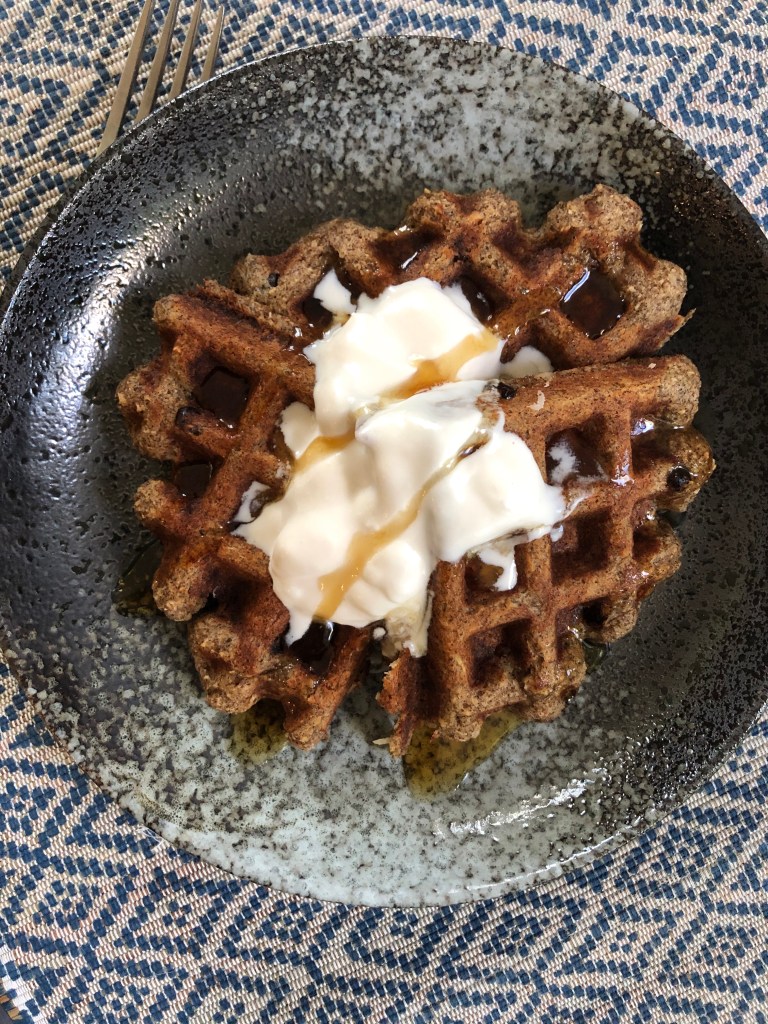
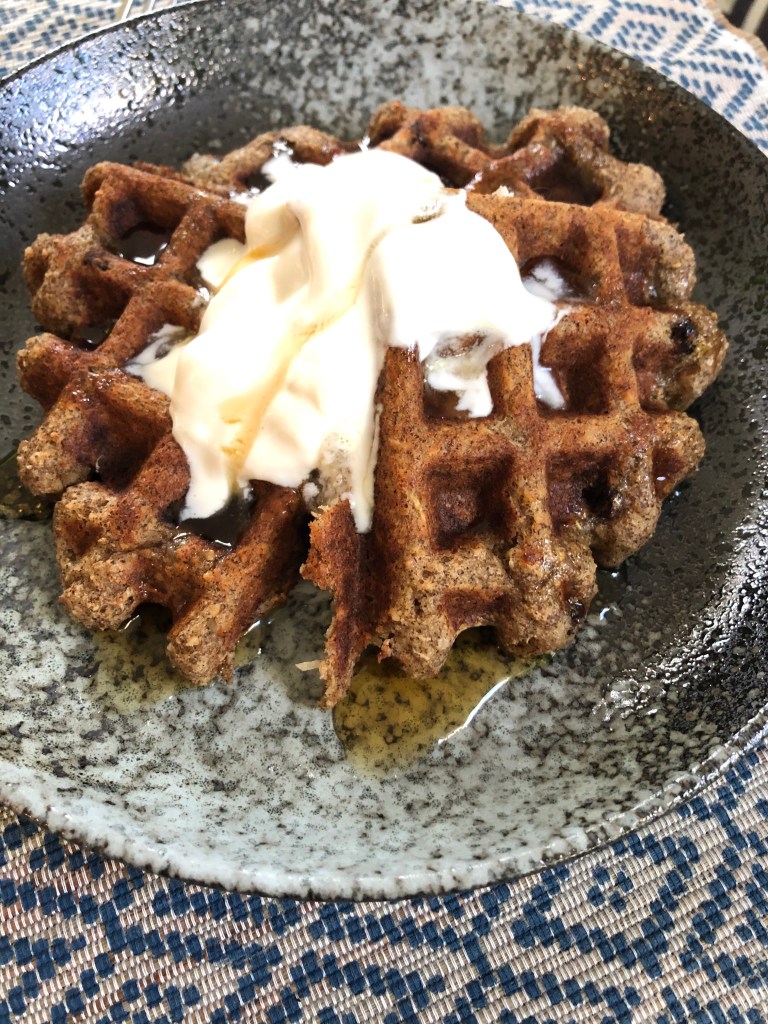
Carrot, Coconut, Pecan Waffles

If you’ve been following my blog for any length of time, you know I’m always looking for ways to incorporate vegetables into meals, especially those the children eat since they are less likely to simply tuck in to a kale salad or plate of braised asparagus.

The recipe for these Carrot, Coconut, Pecan Waffles is an adaptation of a recipe from Dorie Greenspan’s “Waffles: from morning to midnight“. As always, I’ve incorporated more nutritious flours, reduced the sugar and substituted some fats. The natural sweetness of the currants and carrots combined with the slight crunchiness of the pecans and coconut make these waffles my current favorite and one of my kids’ favorites, too.

You can easily make these gluten-free. See my note (*) below.

Ingredients

1/4 cup moist, plump currants (pour boiled water over them in a ceramic or glass bowl and let sit for 5 minutes)

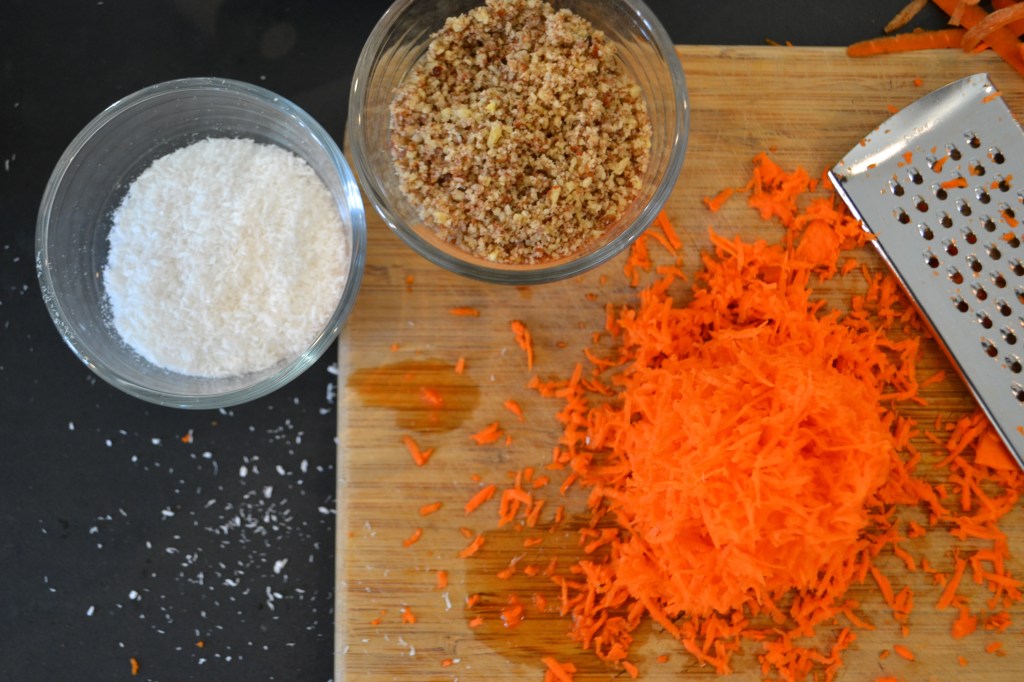
2 carrots, peeled and grated (about 2/3 cup packed)

1/3 cup pecans, finely chopped (I use my mini-Krups processor)

1/3 cup finely shredded unsweetened coconut

2 tbsp. coconut oil, melted

2 tbsp unsalted butter, melted

3/4 cup whole-grain spelt flour*

1/2 cup all-purpose flour

1/4 cup buckwheat flour

1 tbsp double-acting baking powder

1/4 tsp sea salt

3/4 tsp. ground cinnamon

1/4 tsp. ground ginger

1/4 cup sugar

1 cup milk (substitute almond, soy or rice if you prefer)

1/2 cup coconut milk

2 large eggs

1 tsp. vanilla extract

*Replace 3/4 cup spelt flour with 3/4 cup gluten-free all-purpose flour (I like this brand), and substitute 1/2 cup almond flour for the all-purpose.
To Make

Drain currants, and pat dry with a paper towel. Toss together with grated carrots, pecans and coconuts. Set aside.
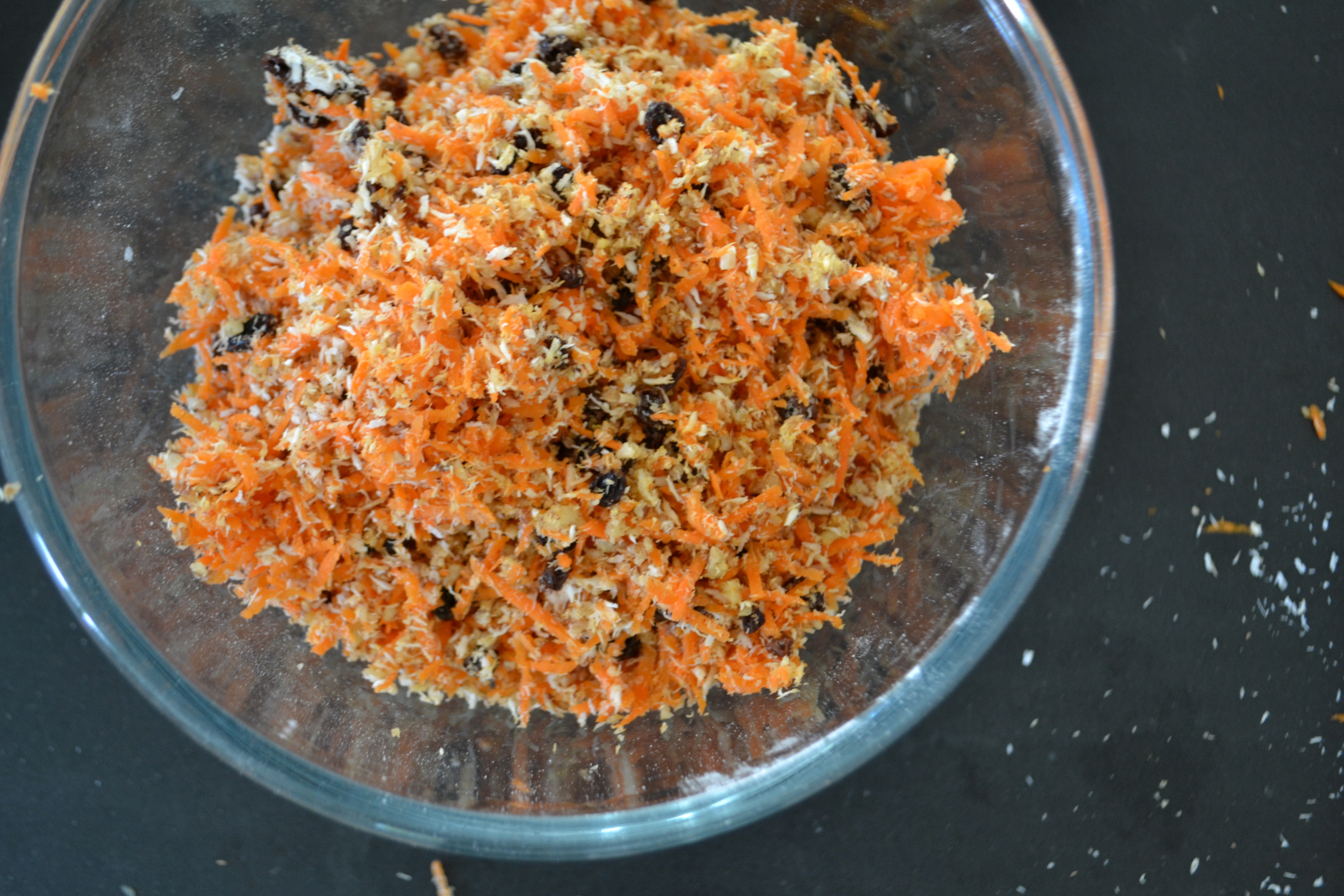
Preheat your waffle iron.

In a large bowl, stir together the flours, baking powder, salt, cinnamon, ginger and sugar. In another bowl, lightly whisk the eggs. Whisk in the milks and vanilla. Pour the liquid ingredients over the dry ingredients and stir until just combined. Fold in the carrot mixture and melted butter and oil.

Lightly butter or spray your waffle grids. Spoon out 1/2 cup of batter into each grid (depending on the size of your grids). Cook until light golden brown.

Serve with maple syrup and/or honey-sweetened plain yogurt. Makes 6-8 waffles depending on grid size.

Enjoy!

I received a version of the following recipe from my neighbor last year. Her recipe called for barley flour as the main ingredient, but I wanted to make a gluten-free version since I’m still on my gluten-free kick. (In fact, I’m currently reading “Wheat Belly” by Dr. William Davis, but more on that later.)

I was also trying to find a way to use the leftover ground almonds from my homemade almond milk recipe, and this is a perfect use.*

Ingredients

4 cups oats, pulverized

3 cups raw whole almonds finely chopped in a food processor (I use 2-second pulses on my mini-Krups until the desired consistency is reached)

1 teaspoon fine sea salt

1 teaspoon ground cinnamon

1/2 teaspoon ground cardamon (optional)

1 cup canola or coconut oil

1 cup real Vermont maple syrup or agave

Your favorite jam (apricot, raspberry and strawberry all work well)


Preparation

Preheat the oven to 350°F. Combine all the ingredients except for the jam together in a large bowl with a wooden spoon. Form into tablespoonful balls and space them evenly on cookie sheets lined with parchment paper. Using your thumb or index finger, make an indent in each cookie. Fill each indent with a small spoonful of jam. Bake until the cookies are a light, golden brown, 18-20 minutes. Do not overbake (i.e., better to be slightly under- than overcooked). Let cool before eating.

This recipe yields 40-45 cookies, but can easily be halved. You can also substitute 1/2-cup of the oats or almonds with ground coconut flakes.

*I’m ashamed to admit I had been throwing away the leftover almond meal for a while simply because I was too lazy to take the extra step of baking out the moisture in the oven. If you make almond milk, you can simply spread out the leftover ground almonds in a baking dish and bake at 175°F for 30-40 minutes. Bake on convect if you have the option.

“Spa” Salad

This salad may not seem like the type of meal you associate with the cooling days, chilly nights and falling leaves. However, I spent many an evening eating this salad during the cold, dark winter months of the year I lived in the Netherlands.

My husband and I always looked forward to Friday evenings when we would head out on the bicycle–he on the seat pedaling, me sitting side saddle on the flat rack above the rear wheel, in route to “the spa.” We’d bounce over the cobblestones along the oudergracht (old canal) of our town. Unlike the American notion of a spa, spas in the Netherlands (and much of Europe) are places men and women go to relax, socialize and just hang out. Ours had a steam room, sauna and plunge pools, but mainly it was just an excuse to go somewhere really warm, don a plush bathrobe, sit by a roaring fire and eat good food.

We ordered this salad every time, and usually followed it with a really decadent creamy mousse thing with cherries known as monchoutaart. (I suspect eating a salad for dinner made us think we had license to eat a ridiculously fattening and sweet dessert.)

We still eat this salad on a regular basis. Not only does it meet my “medley of tastes, textures and colors” requirement, but it is very nutritious, substantial enough for a dinner (or heavy lunch), and it’s easy to prepare.

Ingredients

red leaf or bibb lettuce, torn into bite size pieces

2 stalks of celery, leaves included, chopped

1 medium-sized cucumber, peeled and sliced, or 3-4 Persian cucumbers if you can get them

8-10 cherry tomatoes, halved

1 leek, white and light green parts thinly sliced and washed carefully

Deli-style or similar thin-sliced roast turkey breast

cranberry sauce/jelly

Dressing:

1/2 cup olive oil

1/8 cup red wine vinegar

1/2 tsp Dijon mustard

sea salt and pepper to taste

Preparation

Of course, you can make the salad however you like, but I like to arrange the salad as follows. Put the lettuce on a plate, sprinkle the cucumber slices and tomatoes around the outside edge, sprinkle the entire thing with the sliced leaks, fold the sliced turkey in the middle, top with the cranberry sauce and drizzle all with the dressing.

Happy Fall!

Healthier Halloween Treats

I always approach the end of October with a bit of trepidation. Maybe there’s still some lingering memory of being scared out of my wits walking through a haunted house, or my permanent terror over the Headless Horseman of Sleepy Hollow. Of course, add to that my fear and loathing of all the sugar, food coloring and preservatives that will be dumped into my children’s bags as they hold them open in gleeful, eager anticipation of the great bounty they will amass by the end of the evening. When they were very young, we let them trick or treat at five home. Now that they’re older and can count, we end up having to take them to at least twice as many homes.

My strategy for minimizing their sugar intake has always been to allow them to each eat two pieces of candy the night of Halloween. Then one a day until the supply is gone. Of course, their supplies mysteriously disappear within a couple of days, and until last year, no one seemed the wiser.

As bad as sugar is, I hate to be the one to rain on their parade. I know how much kids look forward to this time of year. (Alas, the dressing up is only half of it.) How can parents make this occasion more than a series of giant insulin spikes and a week of suppressed immune systems?

Consider offering more natural and wholesome treats to the little skeletons, vampires and princesses that show up on your doorstep this coming week. It will set an example for other parents, and you can swap out some of what’s in your kids’ bags when convenient. All natural fruit “gummies,” natural mini-chocolate bars, animal-shaped graham crackers and crispy rice bars are excellent choices for super heroes and ladybugs alike. They taste great and don’t contain chemical preservatives, food coloring and other nasties. My choices for this year include Endangered Species All-Natural Milk Chocolate Treats, EnviroKidz Organic Crispy Rice Bars, Annie’s Halloween Bunny Grahams (honey and chocolate mix) and Annie’s Organic Bunny Fruit Snacks (in assorted flavors). All of the above items are available at most Whole Foods Markets or on-line.

Happy Trick-or-Treating!

After I first heard the results of the now highly-publicized Stanford study, I thought “Really? Who Cares?” I haven’t heard people claim organic food is significantly more nutritious than conventional, so what’s the big deal. The main arguments for choosing to eat organic primarily revolve around the fact that there’s less risk of exposure to pesticides, and other nasties, such as the hormone cortisol, and because organic food is generally much better for the environment.

However, weeks after the study was published, I continue to hear discussion and debate over the findings–so now I feel compelled to comment.

I won’t analyze all the findings and claims, but I will address a few summarized on Stanford’s website.

“While researchers found that organic produce had a 30 percent lower risk of pesticide contamination than conventional fruits and vegetables, organic foods are not necessarily 100 percent free of pesticides.” Right. Well, quite frankly, I’ll go with the “30 percent lower risk of pesticide contamination” regardless of whether the “not necessarily 100 percent” is 96 percent or 99 percent.

“… Researchers noted, the pesticide levels of all foods generally fell within the allowable safety limits.” Forgive me, but considering the U.S. still allows widespread use of Atrazine, an herbicide that has been shown to chemically castrate frogs and other amphibians, has been linked to breast and prostrate cancer in humans and has been banned in the EU for eight years, the U.S.’s “allowable safety limits” appear to hold little and questionable value.

“Two studies of children consuming organic and conventional diets did find lower levels of pesticide residues in the urine of children on organic diets, though the significance of these findings on child health is unclear. Additionally, organic chicken and pork appeared to reduce exposure to antibiotic-resistant bacteria, but the clinical significance of this is also unclear.” Read heavy sigh here. Yes, the dramatic increase in antibiotic-resistant strains of bacteria must be attributable to the fact that we spend too much time on our personal electronic devices. And pay no attention to the documented cases of serious illnesses from pesticides, such as Roundup, that have contaminated the air or drinking water of communities located near application sites. “The significance is unclear?” Really??

As a reminder of why organic is better, please read (or reread) my original blog on buying organic. If you want to get the most nutrition out of your produce, buy local and organic where it counts (see the Environmental Working Group’s “Dirty Dozen“). Many fruits and vegetables start to lose their nutritional value the second they’re picked. Buying local food–for example, at a farmer’s market, in which case the produce was picked that morning–offers the most nutritional punch. If you don’t plan to eat the food that day, keep it as fresh as possible in bags (where appropriate) that allow your produce to release naturally-occurring gases and retain the right moisture levels.

Toward the end of their report, the Stanford researchers do include mention of the other benefits, such as environmental, of eating organic food, but it’s disappointing that they didn’t have the foresight to construe how the media would oversimplify the primary conclusion of their study as it was presented.

Maybe it’s just one of the benefits of living in California, but stores are stocked right now with the most gorgeous, sweet, ripe heirloom tomatoes. And while I associate summer with watermelon, our stores–two weeks into autumn–are stocked with juicy, dark pink-fleshed watermelons. (We also just experienced our two hottest days of the year.)

I made this salad last weekend and served it alongside a simple, lemon and herb grilled salmon. It was delicious. Three helpings later, my only thought was, when can I make it again? It would also have been great with a thick slice of rustic bread to dip in the juices, but I’m currently taking a break from gluten.

Ingredients

2 large, ripe heirloom tomatoes, cut into 3/4-inch cubes

1/4 of a ripe watermelon, cut into 3/4-inch cubes

2 Persian cucumbers (the best!) or 1 small regular cucumber, cut into 1/4-inch slices

3-4 tbsp fresh torn or chopped basil

2 tsp fresh-squeezed lemon juice

3 tbsp olive oil

sea salt and pepper to taste

Put chopped watermelon, tomato and cucumber into a medium-sized glass or ceramic bowl. Whisk the lemon juice, olive oil, salt and pepper together in a small bowl. Pour over the watermelon and tomato mixture. Toss gently. Divide into 4-5 portions. Top with basil. Serve.

Favorite Wrap

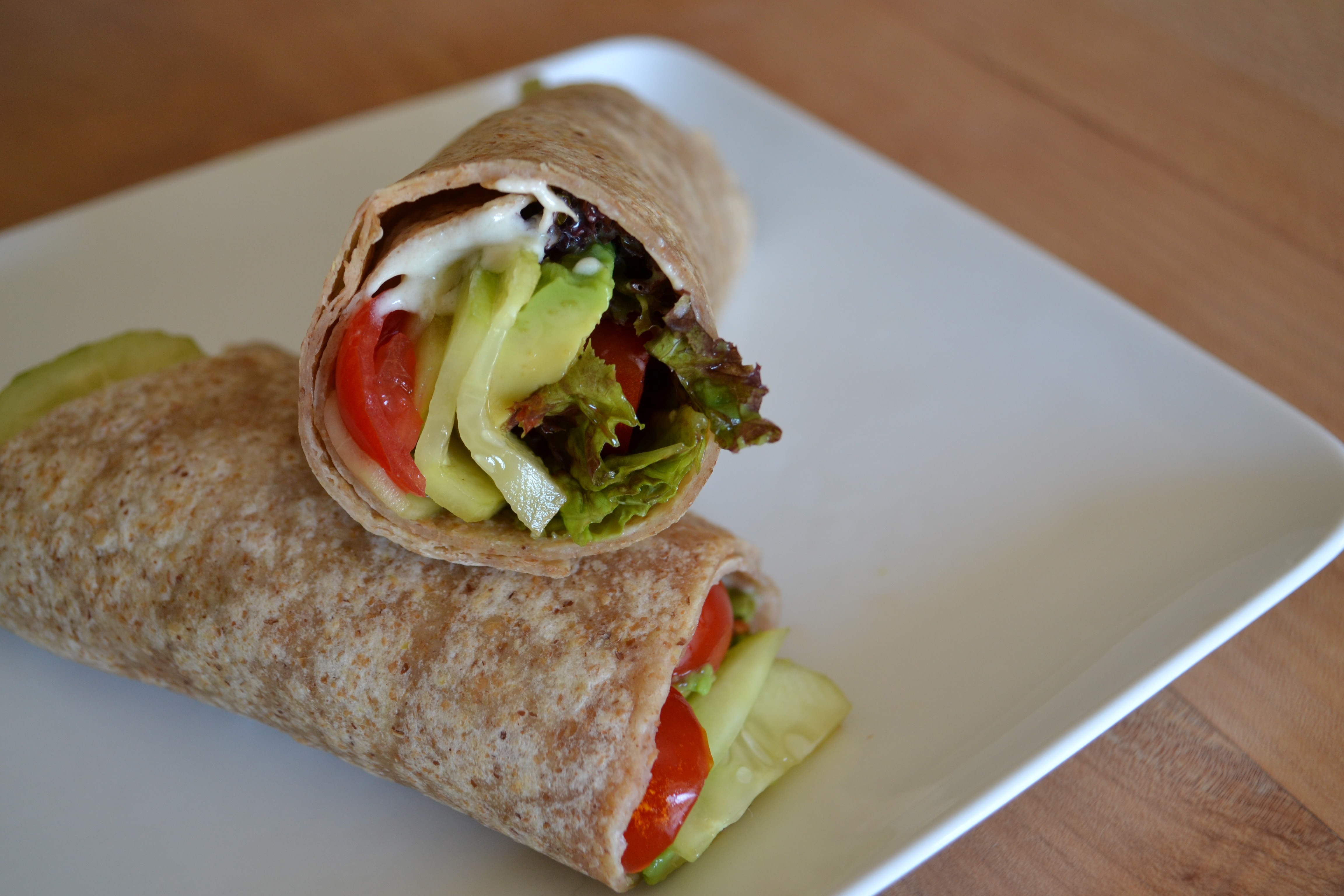
Remember those marinated cucumbers, aka “sweet pickles” I used in my last post? This is my go-to lunch choice, and it uses the same marinated cucumbers.

This recipe is from local Marin County resident and raw-food chef, Diana Stobo–author of “Get Naked Fast” and “Naked Bliss.” While I’m not a raw-food junkie, and I regularly eat meat (fish and fowl, only), dairy and foods that contain gluten, I do think there are some wonderful benefits to be gained from eating raw foods, and Diana has many delicious, simple to prepare dishes. Although going completely raw feels overly restrictive to me, I believe periodically abstaining from dairy, meat and gluten gives the digestive system a much-needed break.

I like this wrap because once again, it’s a medley of flavors, textures and colors. (I’m starting to sound like a broken record!) It’s also surprisingly filling, takes seconds to prepare and doesn’t make me feel sleepy or slowed down like a heavier lunch can.

Ingredients

1 whole-grain spelt tortilla (or brown-rice tortilla if you’re avoiding gluten)

1/2 of a ripe avocado

4-5 cherry or grape tomatoes halved

mayonnaise or soy mayonnaise (I like Nayonaise)

2-3 leaves of red-leaf or bibb lettuce

marinated cucumbers

sea salt and pepper to taste

Warm the tortilla in a pan over medium-low heat. Lay on a board or plate. Spread with mayonnaise, season, add remaining veggies, roll and eat.

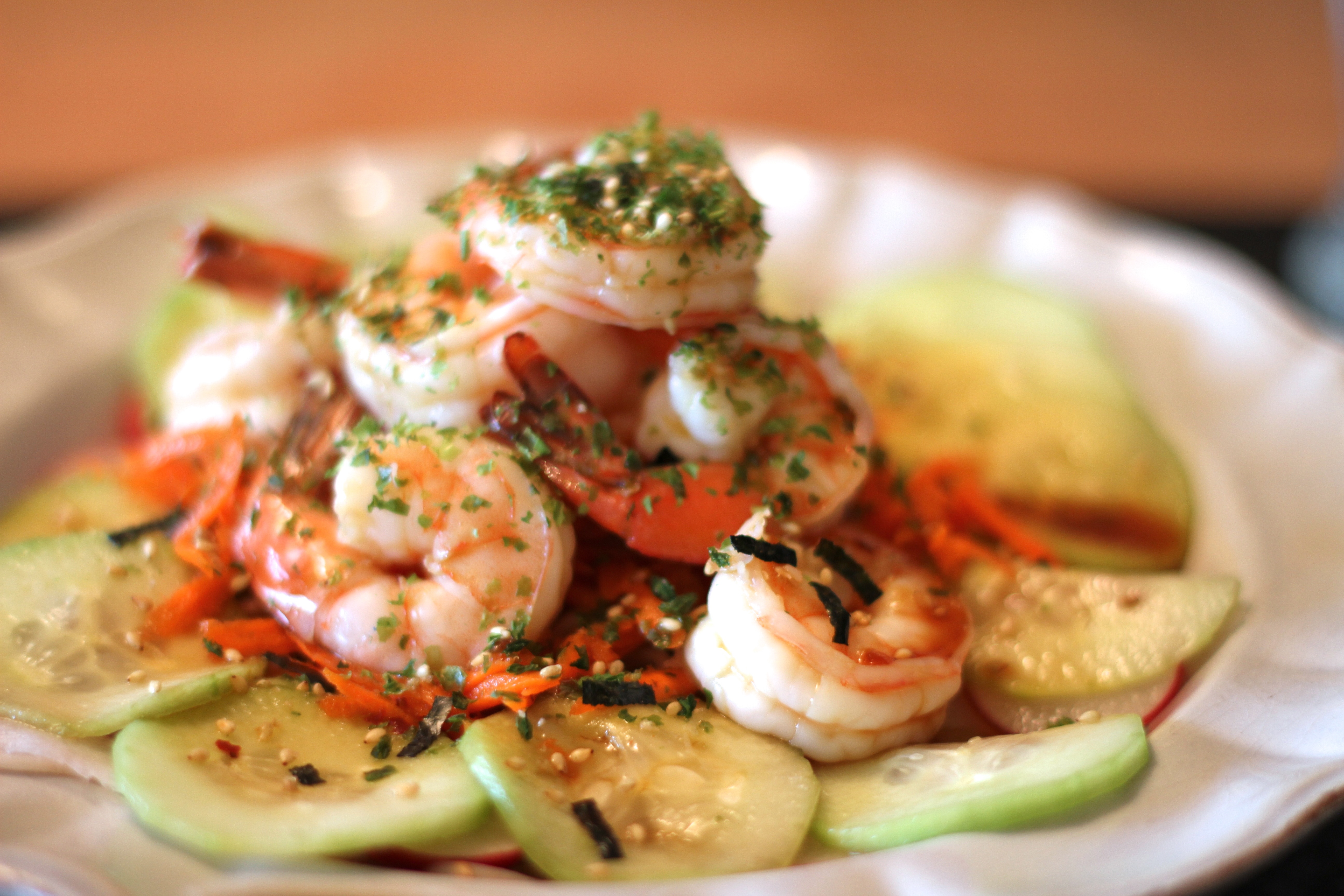
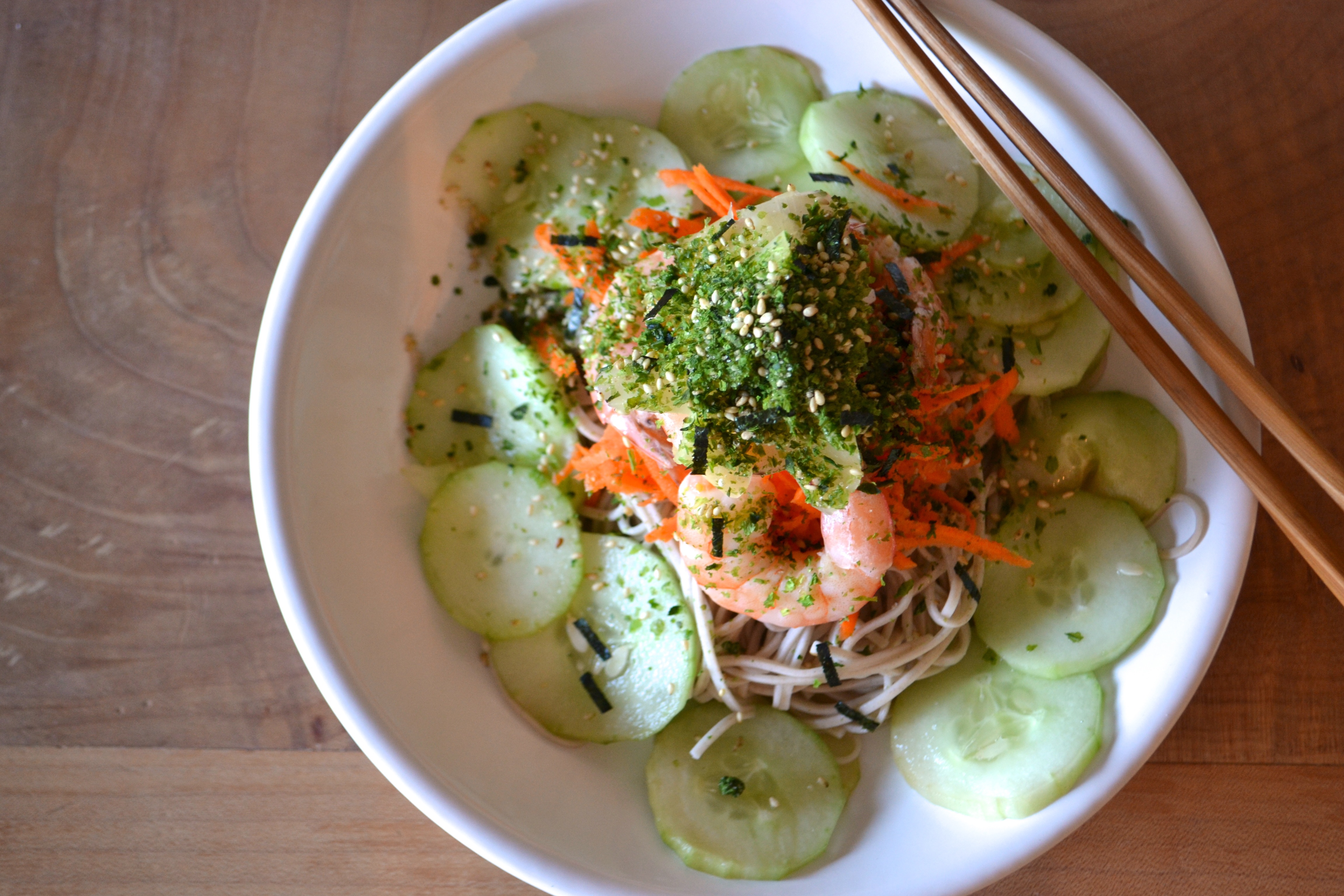
This “salad” dish is one of my favorites when I want something light and nutritious yet filling. It’s really not a salad, but I’m reluctant to call it a noodle dish since it has plenty of vegetables. A similar version was served to me in the Moss Room Cafeteria of the California Academy of Sciences. That was NOT the sort of place you would expect to find great food, but they do amazing job–particularly with their salads.

I like this dish because it boasts a medley of flavors, textures and colors, and it can be served warm or at room temperature. It’s also easy to prepare, although it’s best if you prepare the sweet pickles (or marinated cucumbers) ahead of time. I’ll typically make the sweet pickles at the start of the week and then use them for this poached prawn dish as well as one of my favorite lunches, which I’ll blog about next time.

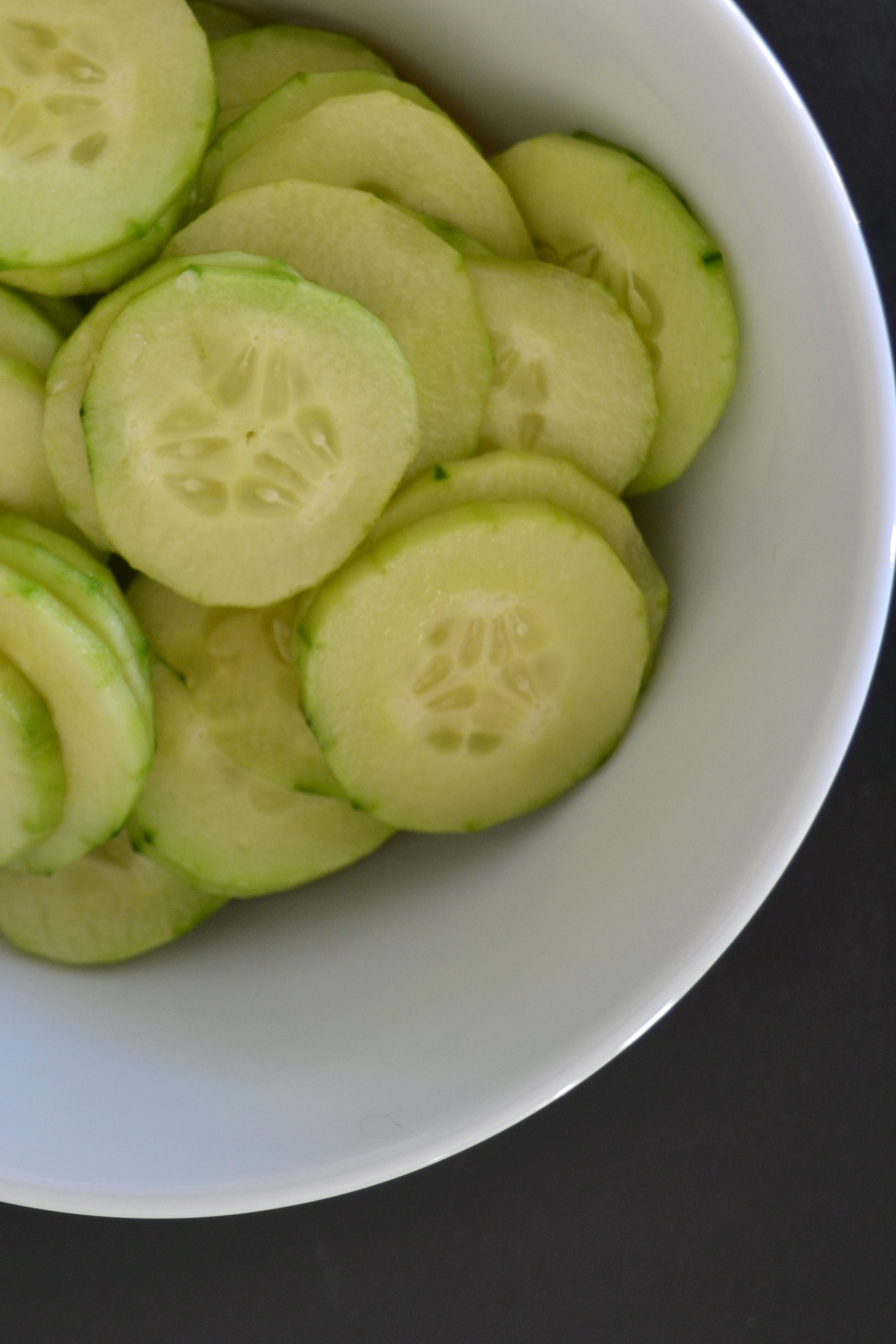
Sweet Pickles (aka marinated cucumbers)

1 medium-size cucumber, thinly sliced

1 tbsp agave nectar

1 tbsp apple cider (or rice) vinegar

1 tbsp Ume plum vinegar (available at Whole Foods Markets or asian specialty stores)

Mix all the ingredients in a glass container with a lid. Shake well, then let it marinate overnight in the refrigerator.

Now for the actual poached prawn dish…

Ingredients

2 bundles soba noodles (cooked per instructions: boil water, add noodles, cook for 4-6 minutes, drain and rinse with cold water)

2 carrots, peeled and grated

6-8 radishes thinly sliced

marinated cucumbers (recipe follows)

1/2 – 3/4 lb. raw prawns, peeled up to tails and deveined

pickled ginger (usually a small jar in the international section of a well-stocked supermarket or Whole Foods)

ponzu sauce (recipe follows)

Furikake*

Boil water in a medium-sized saucepan. Toss in prawns and cook until opaque–approximately 5 minutes. Drain. Arrange handful of noodles in a pasta bowl. Sprinkle sliced radishes and cucumbers around the outer edge. Place a small handful of grated carrot in the center of the noodles. Arrange the poached prawns on top. Top with pickled ginger. Spoon several tablespoons of ponzu sauce over the entire dish. Sprinkle furikake on the “tower.” Serves four.

Ponzu Sauce

Combine the following in a small bowl or glass jar:

1/2 cup low-sodium soy sauce

1/4 cup fresh orange juice

2 tablespoons fresh lemon juice

1 tablespoon water

1 tablespoon mirin (sweet rice wine)

1/2 teaspoon crushed red pepper

* Nori Komi Furikake is a rice seasoning made of sesame seeds, salt, sugar and seaweed. It’s available from any asian markets as it’s very common in the traditional Japanese home.

Happy eating!

Splurge vs. Steal: Hand Creams


Does it make sense to blog about hand creams in the summer when hands often get dry and beaten from too much sun and too much gardening, or wait until winter when dry indoor air and cold temperatures threaten to crack and parch even the best cared for hands? Given the fact that people say you can tell a person’s age just by looking at his or her hands, I figure any time is a good time.

Mine are constantly in warm water–doing the dishes, bathing the kids, etc., which is extremely drying. Warm or hot water and the handling of paper are the too biggest culprits when it comes to dry skin on the hands.

If you’re concerned about slowing the aging of your hands, apply sunscreen to help protect the backs of hands from premature aging caused by UVA light. If you’re mainly concerned about keeping hands smooth and supple, apply hand cream often.

My “splurge” recommendation for hand cream is Skin Food by Weleda. It’s technically not a hand cream, but I’ve been using it as such for several years because it’s so effective.  It’s not inexpensive, but it relieves any degree of dryness overnight. I tend to use it more during the winter months. I typically prefer unscented products, but Skin Food has a not-unpleasant herbal scent that smells like you’ve been in the garden. Skin Food is sold at nearly all Whole Foods Markets as well as other natural food stores, although you’ll pay about $17. You can get a better price ($11-$12) on-line.

My “steal” recommendation is Burt’s Bees Almond Milk Beeswax Hand Cream. I use it all summer. I love the smell of almonds, it’s non-greasy and it absorbs immediately–in part, due to kaolin (clay) as one of its ingredients. Burt’s Bees Hand Cream is now sold in some Safeways for $7.99. You can get it on-line but for only slightly cheaper.

To younger-looking, softer-feeling hands!

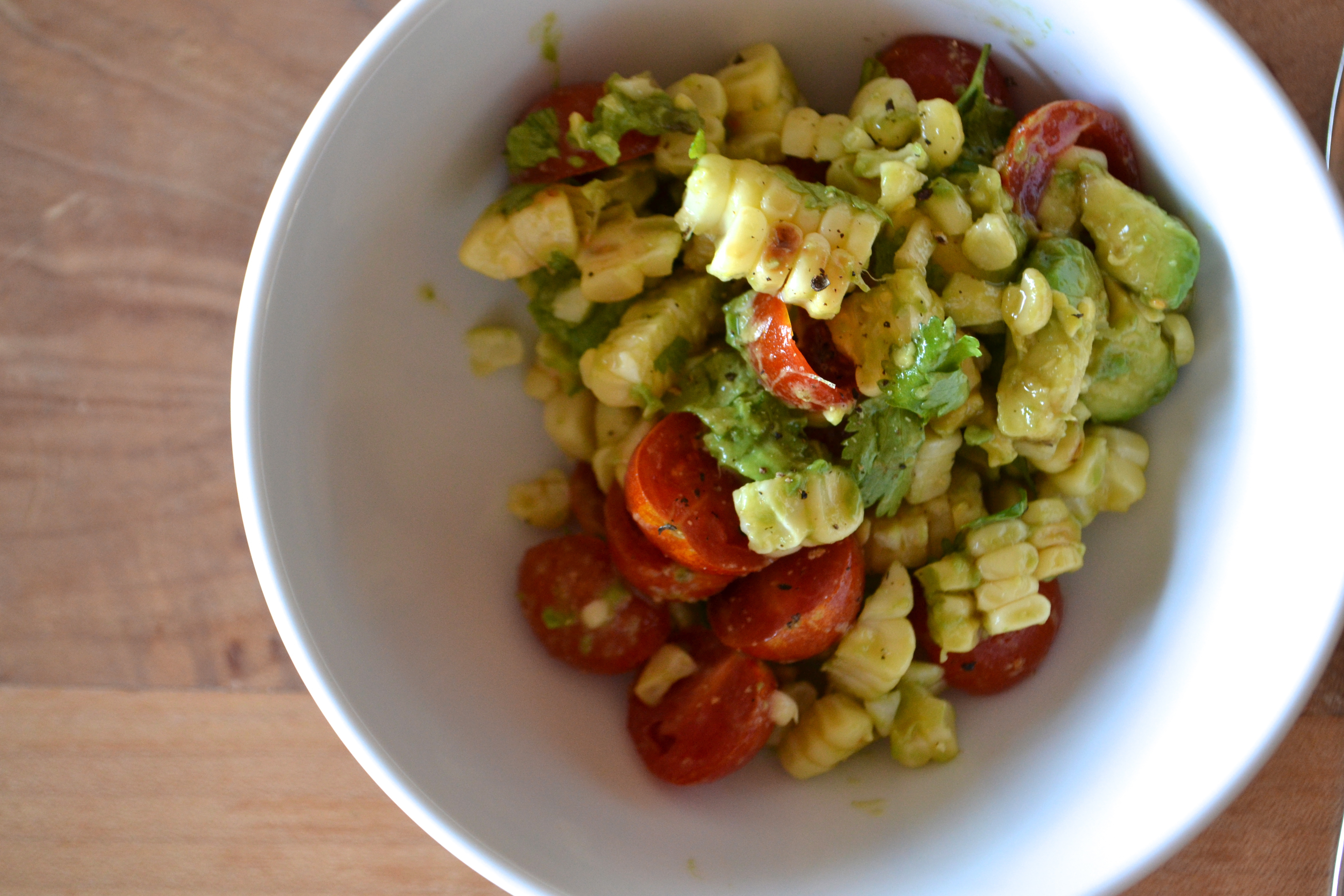
This is one of my favorite side-dish salads. It pairs well with nearly anything, and it has just the right flavor mix of sweet and savory, and the right texture mix of crunchy and creamy. I served it recently as an accompaniment to grilled skirt steak with chimichurri sauce and tonight alongside grilled lemon and thyme chicken.

It can be made whenever fresh corn is available, but I particularly like making it around this time, with summer waning and tomatoes at their best.

Ingredients

2 cups grilled corn (3-4 ears depending on size)

1 avocado, cut into 1/2-inch cubes

1 pint cherry tomatoes, halved

1/2 cup finely diced red onion

Dressing

2 tablespoons olive oil

1/2 teaspoon grated lime zest

1 tablespoon fresh lime juice

1/4 cup chopped cilantro

1/4 teaspoon sea salt

1/4 teaspoon pepper

Directions

Using a sharp knife, cut the corn off the cobs. In a large, glass bowl, combine the corn, tomatoes, avocado and onion, stirring to break up the segments of corn. Mix together the dressing ingredients in a small bowl. Pour over the salad, and gently toss to mix. Serve immediately.

Happy end of summer!

Cooking Without Limits

Food Photography & Recipes

Selma's Table

Life doesn't have to be perfect to be wonderful - stories and recipes from a wonderful life...