Feeds:
Posts
Comments

BPA bottlesDo you feel like the concerns over BPA have quieted down lately? Perhaps it’s because in July 2012, the FDA banned BPA from the manufacture of infant bottles and sippy cups. However, the FDA’s decision came after manufacturers of infant bottles and sippy cups had voluntarily stopped using the estrogen-mimicking chemical.


What exactly is BPA?

Bisphenol A (BPA) is an industry chemical widely used in the manufacture of polycarbonate plastics, which are used by nearly every industry. BPA is released into our environment in excess of 1 million pounds per year. Studies show that humans are mainly exposed through food packaging; think about all those water bottles and nearly every canned item on your kitchen shelf, including beans, tomatoes, soups, etc. Food packaging falls under the jurisdiction of the FDA.

BPA is a reproductive, developmental and systemic toxicant and is estrogenic. For these reasons, it’s of particular concern to children’s health and the environment. Studies have linked BPA–a known endocrine disruptor, to diabetes, breast cancer, obesity and hormone abnormalities in children.

The FDA, which originally declined to ban BPA in early 2012, has gone as far as to state on it’s website that the department has “some concern about the potential effects of BPA on the brain, behavior, and prostate gland in fetuses, infants, and young children.”

As a result, the FDA is currently conducting its own studies to better determine the risks of BPA. It also claims to be taking measures to reduce our exposure to BPA in the food supply. Sadly, these measures are only in support of actions the food industry has initiated on it’s own–very likely in response to public outcry. These measures include:

  • Supporting the industry’s decision to stop manufacturing baby bottles and infant feeding cups containing BPA.
  • Supporting the development of alternatives to BPA for the linings of cans of infant formula.
  • Supporting the industry’s efforts to minimize BPA levels or replace BPA in other food can linings.

Also on the FDA’s website: “Consumers can be assured that the FDA supports the strongest regulatory approaches to protect them from risks in the food supply, and will act swiftly to eliminate any individual product, ingredient or chemical that is determined to present a risk to the public health.”

Uh, I think not. If you’ve been following my blog since the beginning, you’ll remember my posting on the pesticide atrazine, another estrogenic chemical which studies show turn male frogs into female frogs and/or make them sterile. The EU banned atrazine in 2006, but the toxic chemical is still widely used in U.S. agricultural practices. (Note: the EU banned BPA from infant bottles in 2011, and is currently re-evaluating its assessment in light of new concerns.) Because the FDA still allows atrazine on our food crops, and because it banned BPA from infant bottles only after the industry had already voluntarily banned it, I have little faith in the FDA, acting “swiftly to eliminate any individual product, ingredient or chemical that is determined to present a risk to the public health.”In addition to being a large, bureaucratic regulatory body (i.e., slow to move and slow to respond), it’s also heavily-influenced by politics (i.e., the pharmaceutical industry, the agricultural lobby, etc.). The FDA’s current assessment is still that “the use of BPA in food packaging and containers is safe.”

Europe takes a much different approach to keeping it’s citizens safe. Since 2007, companies must prove their chemicals are safe, while in the U.S. the burden lies with the EPA. According to a California Senate review from 2010, the EPA has only tested approximately 200 of the 83,000 chemicals in its inventory.


Where else are you exposed to BPA?

All those slightly silky-feeling receipts from your favorite retailers and grocers likely contain BPA. A recent study published by the Journal of the American Medical Association found significantly higher levels of BPA in the urine of people that regularly handle store receipts (such as cashiers). And in a recent study commissioned by the Bay Area based Center for Environmental Health, a Texas lab found that nearly all of the 18 BPA-free toddler cups it tested leached synthetic estrogens–in some cases, more potent than BPA.


BPA receiptsWhat can you do to protect yourself and your loved ones?

  • Use glass or steel water bottles instead of plastic. If you continue to use plastic, make sure it’s BPA-free and avoid exposing it to radiation (microwave) and heat (dishwasher or direct sunlight).
  • Buy less processed, packaged food, including canned. (This step has too many health benefits to enumerate.) Buy your stewed tomatoes or tomato puree in a box carton not a can, unless it’s from one of the handful of companies who have banned BPA from their cans. These include: Native Forest, Eden Organics, Wild Planet, Oregon’s Choice, Eco Fish, Vital Choice and Trader Joe’s.
  • Don’t handle store receipts more than necessary.

Be well!
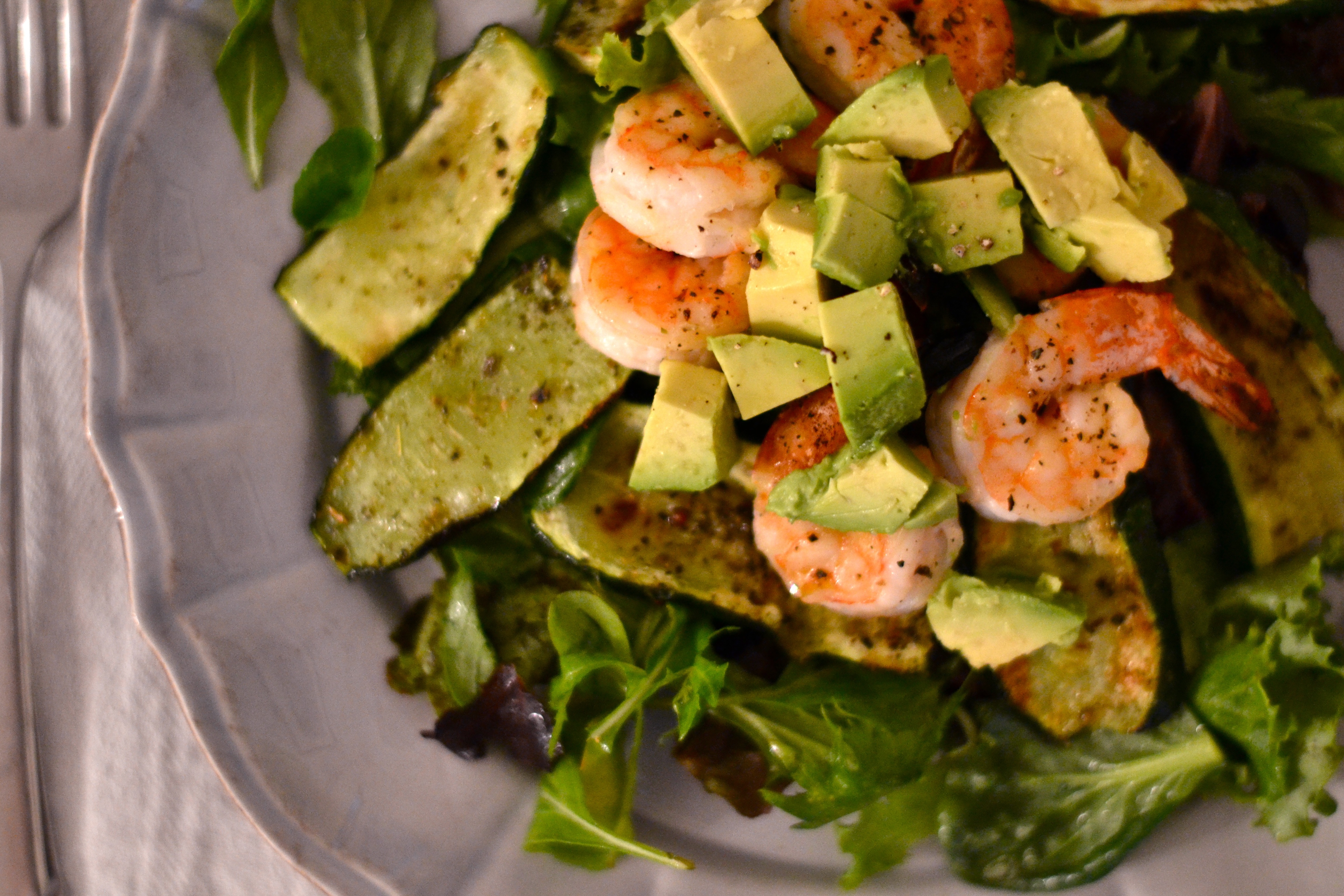
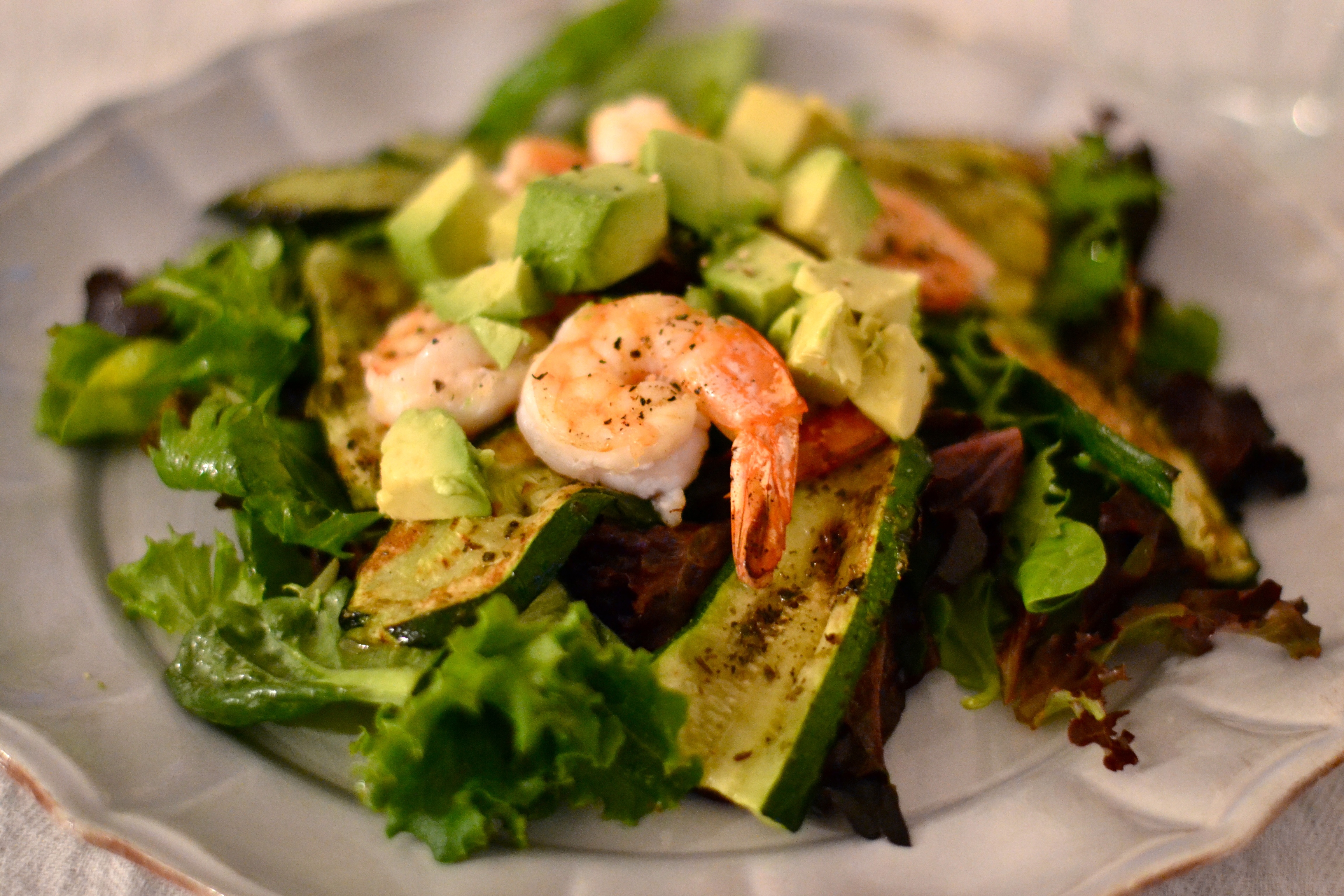
prawn zucc salad aboveprawn zucc salad closeI’m still essentially following the Paleo diet, and now my husband is wanting to get in better shape–mainly by dropping a few pounds. That makes cooking meals slightly easier and more difficult all at the same time. On one hand, cooking meals is easier because he’s now perfectly happy eating exactly what I’m eating (whereas before he might have grumbled about the rice or couscous “missing” from his plate, and the “over” abundance of vegetables). But preparing meals is slightly more difficult in that the children don’t always want to eat my Paleo-inspired meals. They like a little “filler,” and since they naturally run lean, I’m perfectly alright with having them eat any relatively nutritious starch.

Everyone was thrilled the other night after I prepared a grilled zucchini and prawn salad for me and my husband, and used the remaining prawns to make one of my favorite stand-by dishes (fried rice), for the kids. Even better, dinner was ready in less than 40 minutes.

This salad might seem more appropriate for a warm summer night–when you can grill the zucchini and prawns on an outdoor grill (although I’m a big fan of the broiler when I just don’t feel like going outside), but we just experienced a week of uncommonly warm temperatures here in Northern California. My kids trooped around in shorts and T-shirts, and while I couldn’t bring myself to expose my still-pale-from-winter legs, I did wear sandals and T-shirts with cropped pants. (FYI -I guess as payback, we’re having a week of rain now.)


Ingredients

1/2 lb prawns, peeled and deveined

2-3 medium zucchini, washed, trimmed and sliced lengthwise into 1/4-inch slices

2 tsp dried oregano

1 tsp dried basil

2 garlic cloves crushed or 1 1/2 tsp garlic powder

Extra virgin olive oil

Juice of 1 lemon, divided

Sea salt and fresh-ground pepper

1/2 tsp Dijon mustard

1 tsp Champagne or good-quality white wine vinegar

3 large handfuls of mixed greens


Preparation

Preheat the oven to broil.

Wash and dry the mixed greens and set aside in a large bowl.

In a small bowl, whisk together 1 tbsp olive oil, the vinegar, half the lemon juice, the mustard, 1/4 tsp salt and a few grinds of pepper. Set aside.

Put the prawns on 2 skewers and place the skewers in a small, shallow baking pan or grill pan. Drizzle with a little olive oil and season lightly with salt and pepper.

Lay the zucchini slices on a large rimmed baking sheet. Drizzle with 2 tbsp olive oil. Lightly grind with your fingers and sprinkle the oregano, basil and garlic powder (if using) on the zucchini. If you’re using fresh garlic, spread it on the slices so each one gets a bit. Sprinkle 1/2 tsp sea salt and a few grinds of pepper. Place the baking sheet under the broiler–about 8 inches from the coils (which is the second “shelf” in my oven). Broil for 3-5 minutes or until golden brown on the edges. Flip the slices and broil another 2-3 minutes until the zucchini is cooked through and nicely colored. Remove from the oven and set aside while you cook the prawns–about 2-3 minutes per side under the broiler.

Toss the greens with the dressing and divide between to plates or large low bowls. Drizzle the zucchini and prawns with the remaining lemon juice and layer them on the salad. Serve immediately.

Serves 2 as main, 4 as a side.

Be well!


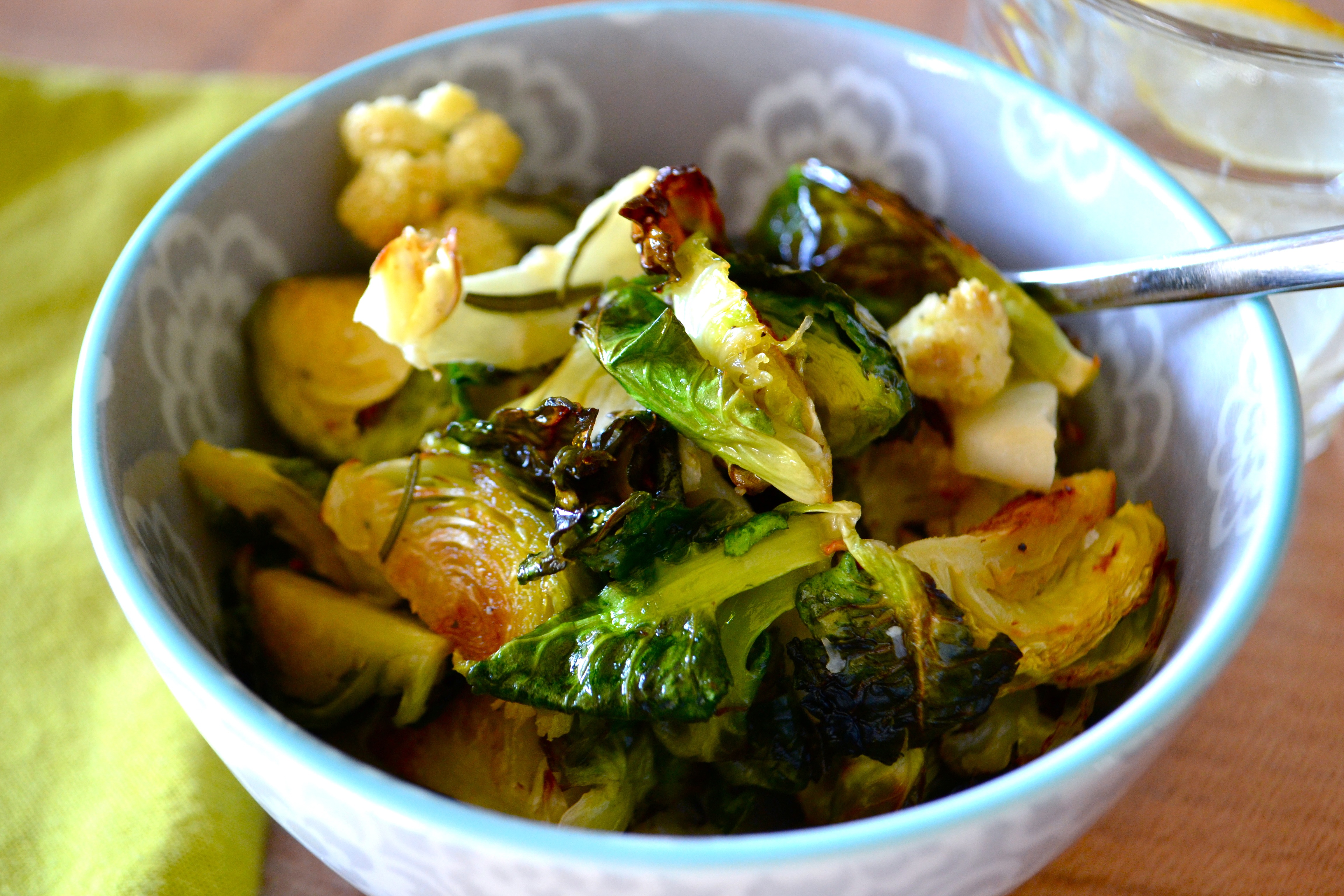
cauli sprout closeDoctors recommend we eat cruciferous vegetables (broccoli, cauliflower, cabbage, kale, etc.) 2 to 3 times per week. I think there may have been an entire decade–possibly in my 20s, during which I didn’t eat (at least knowingly!) any cruciferous vegetables. And I avoided brussels sprouts, in particular, like the plague. They’re one of those vegetables I hated as a kid but can’t eat enough of as an adult. Not only have I discovered many delicious ways of preparing them (unlike the boring method of simply steaming them that my parents did), but I love the fact they’re so good for me. In addition to helping lower cholesterol and protecting DNA, brussels sprouts rank as high as the other superfood, broccoli, for glucosinolates which studies show help prevent cancer.

This dish has become one of my favorite things to eat. And I’ll eat it for lunch or dinner or whenever I’m craving something with tons of flavor.

The original recipe called for the sprouts and cauliflower to be fried. (Who doesn’t love fried food?!) I made the dish  twice that way, but decided to try just roasting the vegetables instead of frying them. Frying can be messy and, well, greasy. While you don’t get quite as much “fried” flavor roasting the vegetables, it’s much easier, and I think the dish is just as good with more of flavor of the brussels sprouts and cauliflower retained.

Serve this dish as a side to roasted meat or a winter vegetable soup like butternut squash or pumpkin.

cauli sprouts chop

Ingredients

1 small head of cauliflower, trimmed and cut/broken into small florets

1 lb brussels sprouts, trimmed and halved or quartered depending on size

3-4 sprigs fresh rosemary

3-4 tbsp olive oil

1 tbsp garum fish sauce

1 tbsp fresh lemon juice

1/4 tsp sea salt

Freshly ground pepper to taste

cauli sprout sheet

Preparation

Preheat the oven to 400F or 375F if using a convection oven. Break off the rosemary leaves and combine with the brussels sprouts and cauliflower in a large bowl. Toss with the olive oil. Spread out on a large rimmed baking sheet and roast in the oven for 20-30 minutes, stirring occasionally, until some of the sprouts get quite brown. You can run the tray under the broiler for 2 to 3 minutes if you want your vegetables even crisper.

Scrape the vegetable mixture off the baking sheet back into the large bowl. Season with the salt, fish sauce and lemon juice. Add pepper to taste. Serve immediately.

Serves 4.

Enjoy!

cauli sprout above2

Cinnamon Carrot Raisin Muffins

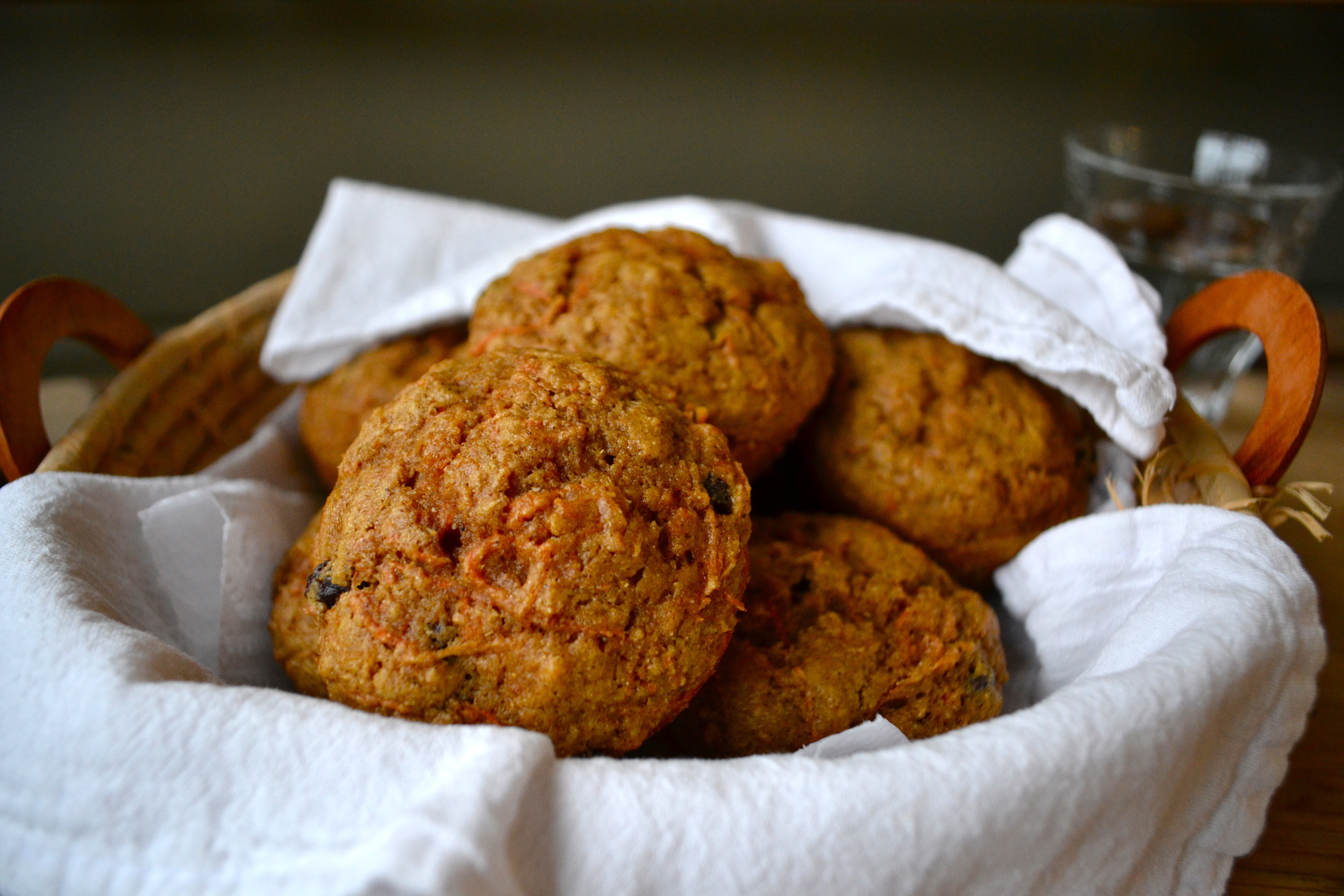
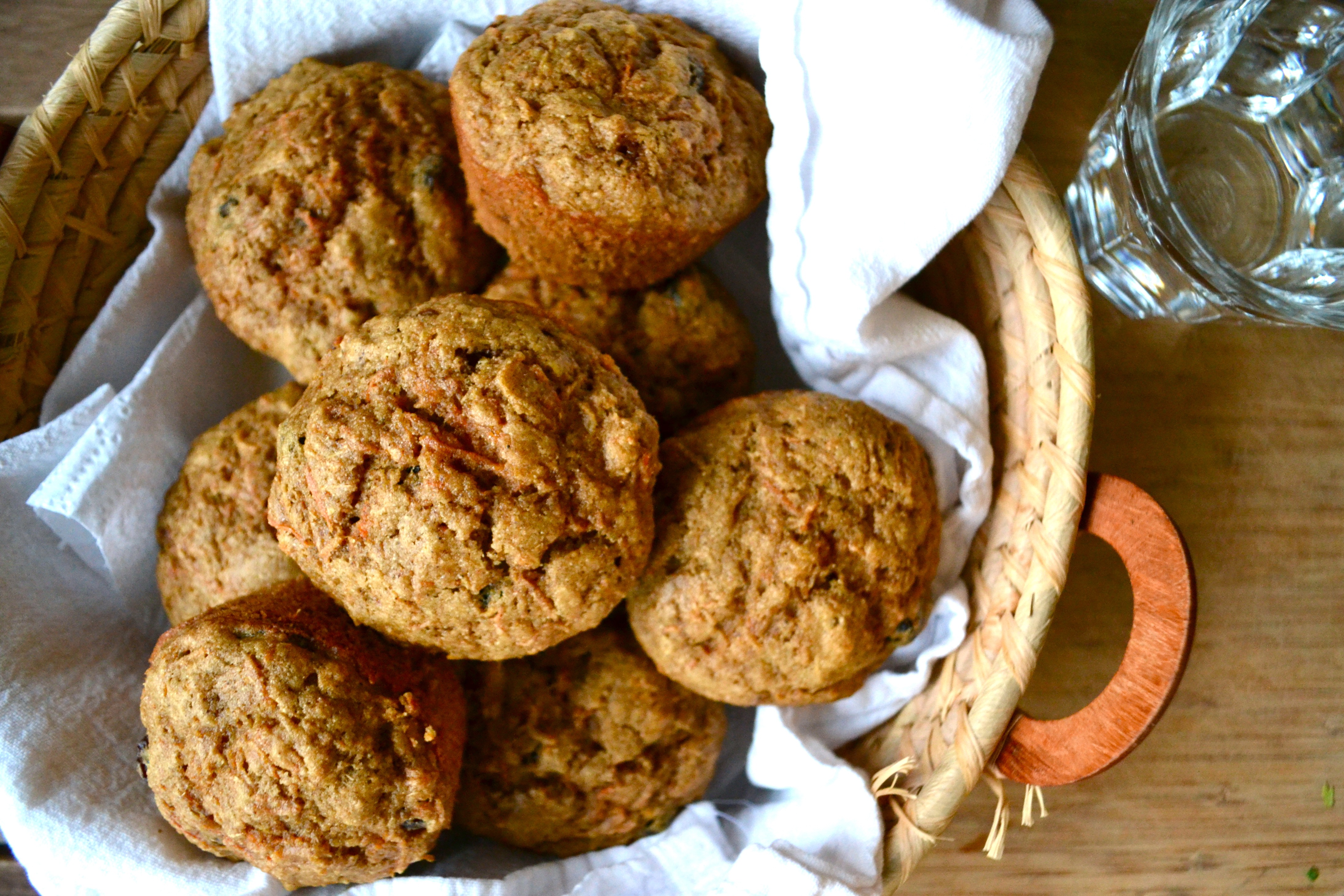
carrot muffinsThese moist and yummy muffins make a great addition to breakfast. They use very little sugar since the carrot and raisins make them naturally sweet. Aside from the grating, you can whip up a batch of muffins in about 30 minutes including the cooking time. They taste best still warm from the oven like most baked goods, but they also keep nicely for several days when stored in an airtight container. I baked a batch right before we left last weekend for a two-day ski trip.

I also find these muffins make great school snacks for kids because you don’t need to prep them with honey or jam since they’re naturally sweet. Just remember to omit the nuts if your kids attend a nut-free class or school like my youngest does. For an added treat, toss in a couple tablespoons of mini bittersweet chocolate chips thrown when you add in the raisins and/or nuts.


carrots bunchIngredients

3/4 cup whole-grain spelt or barley flour

1/2 cup all-purpose flour

2 tbsp wheat germ

1 tsp ground cinnamon

1 tsp baking powder

1/2 tsp baking soda

1/4 tsp sea salt

1/3 cup avocado or melted coconut oil

1/3 cup buttermilk

2 large eggs

1 tsp pure vanilla extract

1/2 cup coconut crystals or light brown sugar

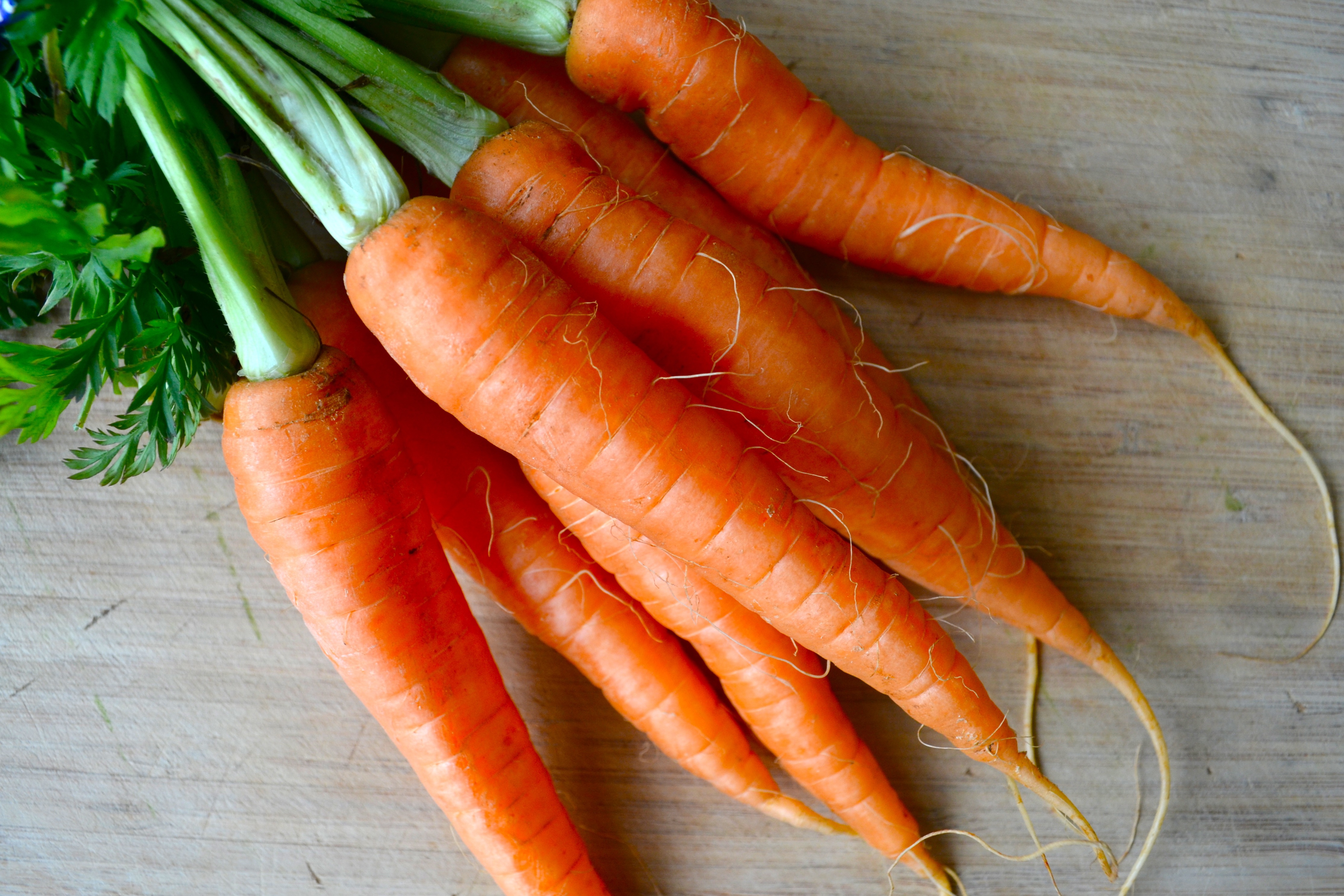
2 cups finely grated carrots (about 4-5 carrots)

1/4 cup raisins

1/4 cup finely-chopped walnuts or pecans (optional)


Preparation

Preheat oven to 350F.

Line a standard muffin tin with cups or lightly grease.

Whisk flours, wheat germ, cinnamon, baking powder, baking soda, and salt in a bowl. Whisk eggs in a large mixing bowl. Whisk in sugar until well blended. Whisk in oil, buttermilk , vanilla and grated carrot. Fold dry ingredients and raisins (and nuts if using) into wet and mix until just combined. (Do not overmix!)

Spoon the batter into the prepared cups and bake until a toothpick inserted in the center of a muffin comes our clean, about 20-22 minutes. Cool in the pan for 10 minutes, then serve plain or with a little butter or cream cheese. (Or if you’re avoiding dairy, try this great dairy-free cream cheese substitute!)

Enjoy!

carrot muffins above

truffles closetrufflles aboveI think Valentine’s Day is a bit overdone here in the U.S. If you pay attention to the ads, they suggest every man should buy his wife or girlfriend a relatively pricey piece of jewelry to celebrate the day. Not only do I fear the idea of my husband having to personally select that much jewelry for me, (because if I’m going to own that much jewelry, I’d rather select my own pieces), but it also puts a ridiculous amount of unreasonable pressure on our nation’s menfolk!

As an American, I’ve accepted that every possible holiday or occasion is commercialized to the full extent possible, and then some. And although my husband and I try to make holidays fun and magical for our children, we try to reject a lot of the commercialization and focus on the true intent of the holiday.

Valentine’s Day doesn’t require a fancy gift or expensive dinner. It’s a day to recognize and celebrate love. Giving a card (especially a handmade or carefully selected card!) to a loved one is always special. After all, who doesn’t like to be reminded they’re being thought of? It can also be nice to share a sweet or special indulgence. Forget all the commercial candy currently stocked in stores. Nearly all is chock full of chemicals, the dreaded high-fructose corn syrup and artificial coloring. And if you can carve out an hour between now and next Friday, consider making or baking a little treat for your loved one(s). Your efforts will be greatly appreciated!

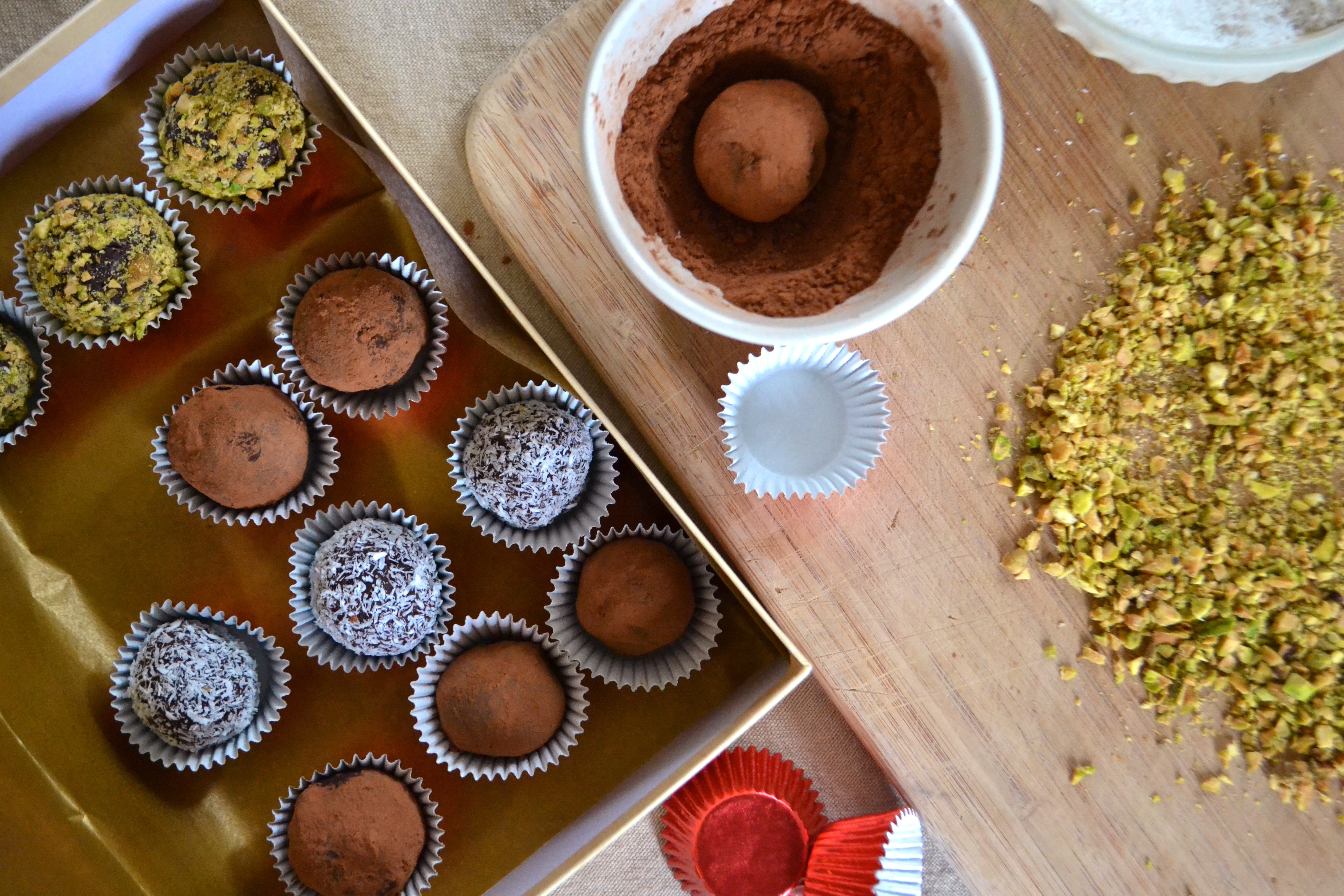
Dark chocolate truffles are super easy to make, present nicely, and feel very indulgent. I like to make my own, because on the rare occasion I buy them, I’m always rejecting a fair percentage of what’s in the box because I don’t like the sickeningly sweet fruit center they added or the unnecessary or excess milk or white chocolate they used (viewing anything but dark chocolate as a cheap, watered-down version of the real stuff). Truffles are also nice to have on hand at dinner parties when you’re serving a main dessert, such as a tart or cheesecake, that you’re not sure everyone will want due to dietary restrictions. These dark chocolate truffles are dairy-free and extremely low in sugar. In fact, one could easily argue that they have more upside (nutritionally) than downside–a very rare thing for “candy.”

Ingredients

8 oz dark chocolate* (at least 70 percent cocoa), chopped

1/4 cup coconut oil

1 tsp pure vanilla extract

Pinch of sea salt

1/4 cup cocoa powder, for rolling

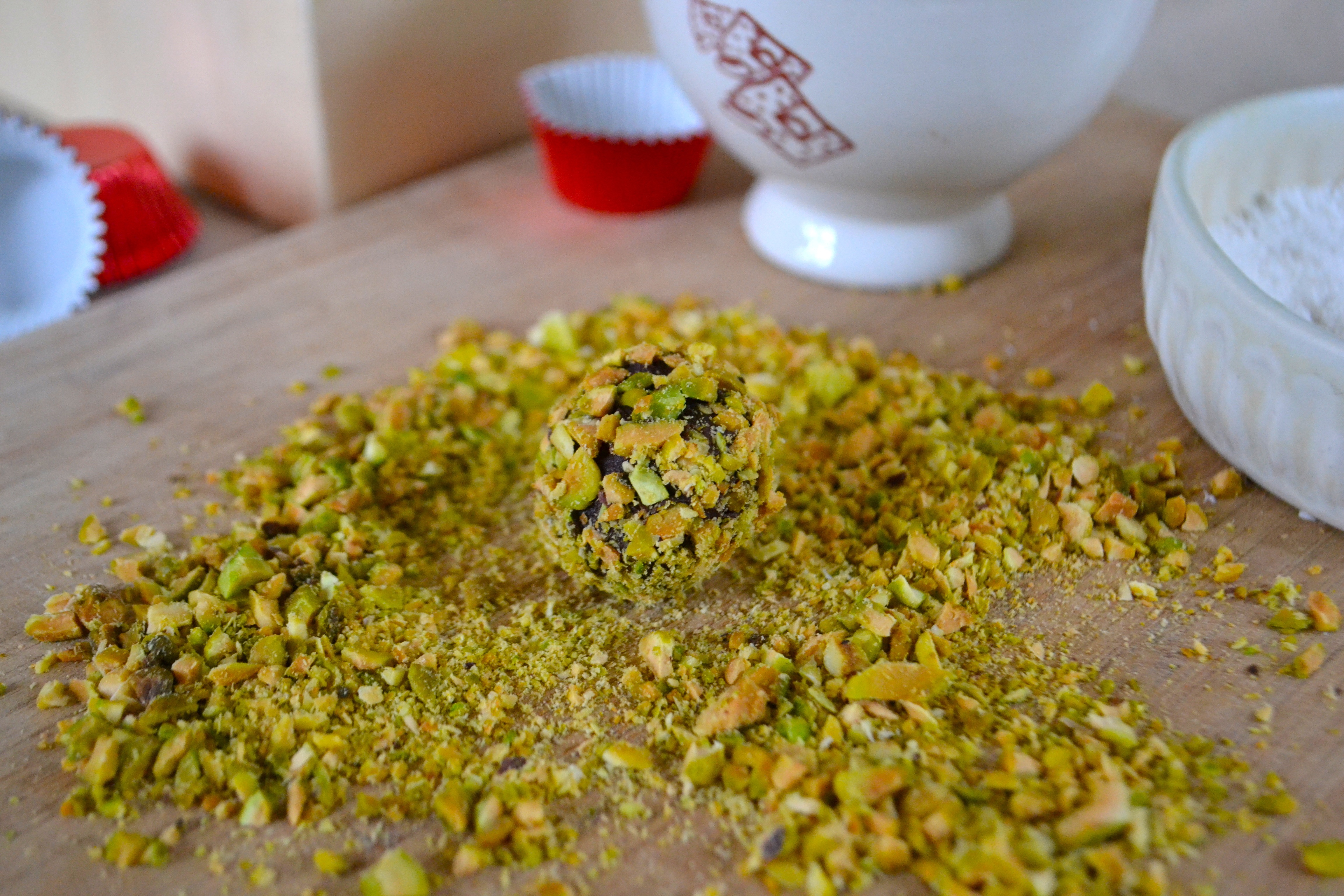
Other toppings: finely chopped pistachios, hazelnuts or pecans, toasted unsweetened shredded coconut, etc.

* My favorite is Green & Blacks Organic Chocolate bars. They’re available in the U.S. and U.K. and probably a few other places by now. They are remarkably smooth with excellent flavor and no bitterness, even at the 85% cocoa level.

truffle blendPreparation

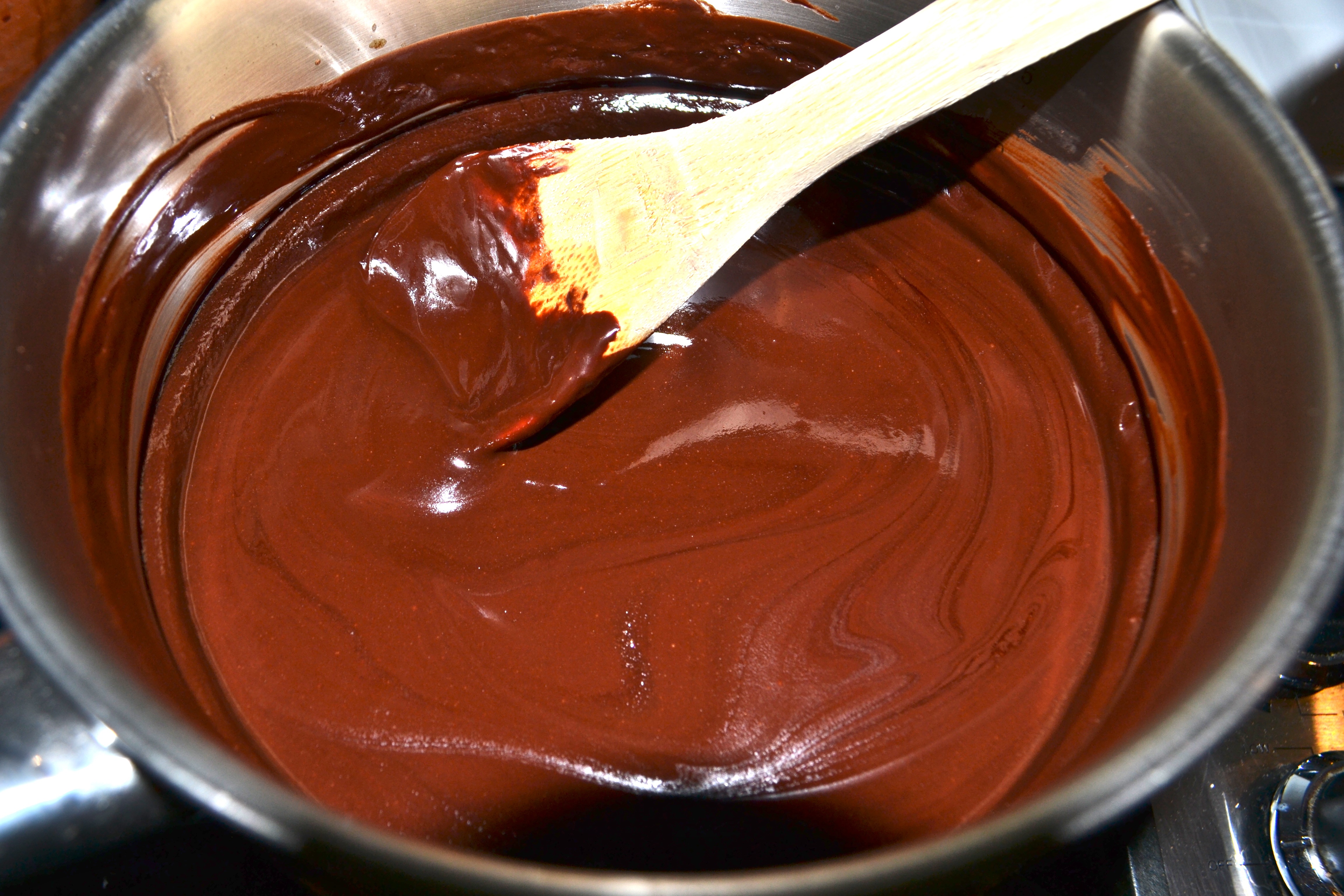
Heat chocolate, oil and 3 tbsp water in a double boiler, stirring until just melted. Remove from heat, add in vanilla and sea salt, and mix well.

Transfer mixture to an 8-inch baking dish or glass loaf pan, and refrigerate until the mixture is firm but still pliable, about 2 hours.

truffle pistachioUsing a 1-inch melon baller or very round spoon, scoop out the chocolate mixture and transfer to a parchment-lined baking sheet. Coat your hands with cocoa powder and roll the chocolate scoops into balls. For the other coatings, roll the balls in the finely-chopped nuts or coconut until evenly coated. Refrigerate 10 minutes to set. Place the truffles in small gift boxes or tins lined with parchment paper or colored tissue paper.

Serve with love!

I first posted this a little over a year ago, but since I’m still getting inquiries regularly, and since there is a nasty flu circulating across the country (H1N1), here it is again…

People regularly ask for my recommendations for staying healthy during the winter season. I always preface my response with the line: “Well, I’m not a doctor or a nutritionist, but here’s what I do to keep bugs at bay.” Due to some combination of luck, genetics, careful measures and healthy eating, I rarely get sick, and when I do, it’s typically very mild–a runny or stuffy nose for a few days and maybe an annoying tickly cough from the post-nasal drip. I get a bad cold every 5-7 years, usually after allowing myself to get run down, and I can’t remember the last time I’ve had the flu. (I’m touching wood here!!)

Give your body’s natural immunity a fighting chance by going light on the sugar–just 1 teaspoon of sugar can significantly suppress your immune system (see Sugar: How Much Is Too Much). Wash hands often, and get plenty of sleep are the other two mantras of winter bug avoidance strategies. But if you want to “buy” a little extra insurance, these are my recommendations.*

Vitamin C: Take 500 mg once or twice per day. The RDA is about 70 mg, but most of the studies showing the benefits of Vitamin C usage–from preventing eye disease to protection against cardiovascular disease, used at least a 500 mg daily dose. If you have a sensitive stomach, consider taking a non-acidic, buffered option.

Vitamins D3: Take at least 800 IU but up to 2,000 IU per day (The RDA is 800 IU, but there is much discussion about increasing this amount. See Vitamin D: Why Are We Hearing More About It.) I like the liquid version from Source Naturals.

Elderberry extract: I take this (according to instructions) whenever I feel rundown, had a bad night of sleep or know that one of my little ones is coming down with something. It’s an herbal immunity booster. It’s also known as Sambucus and comes in many different forms. I like the liquid extract from Herb Pharm because it’s alcohol-free and doesn’t have added sweeteners like many of the “syrups” do.

Astragalus: I take capsules of this herb (according to instructions) as a preventative measure all through the winter season.

Omega 3: Take 1000+ mg every day all year long for overall health and inflammation reduction.

Echinacea extract: This herb is often combined with Goldenseal, and is most effective when taken at the onset of a cold. It can be taken throughout the day, but formulations containing Goldenseal should not be used by pregnant women.

Zinc: I take this in combination with Selenium to shorten the severity and duration of a cold. In addition to fighting colds, zinc has been used to prevent recurrent ear infections and lower respiratory infections.

I also try to incorporate fresh citrus fruits into beverages and food for the extra Vitamin C and bioflavonoids they provide. Honey made locally by local bees is believed to help with seasonal allergies, which only serve to aggravate cold and flu symptoms. Try a non-caffeinated herbal tea with a teaspoon of honey and half a squeezed lemon added in.

Best wishes for a healthy winter season!

*While I have used these products and amounts for years, it is always prudent to check with a health care professional before starting a new vitamin or herb program, particularly if you are taking any medications or have any allergies.

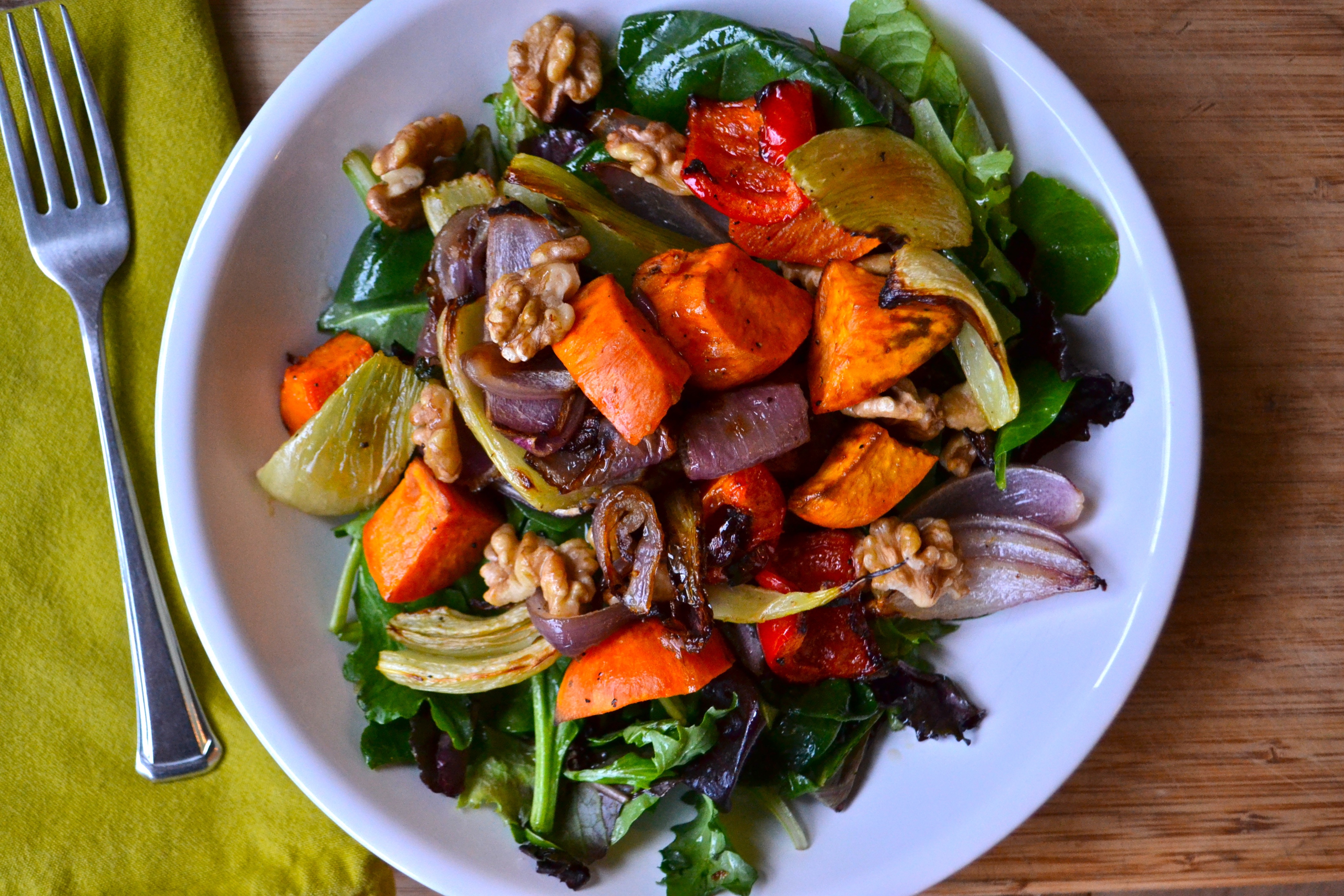
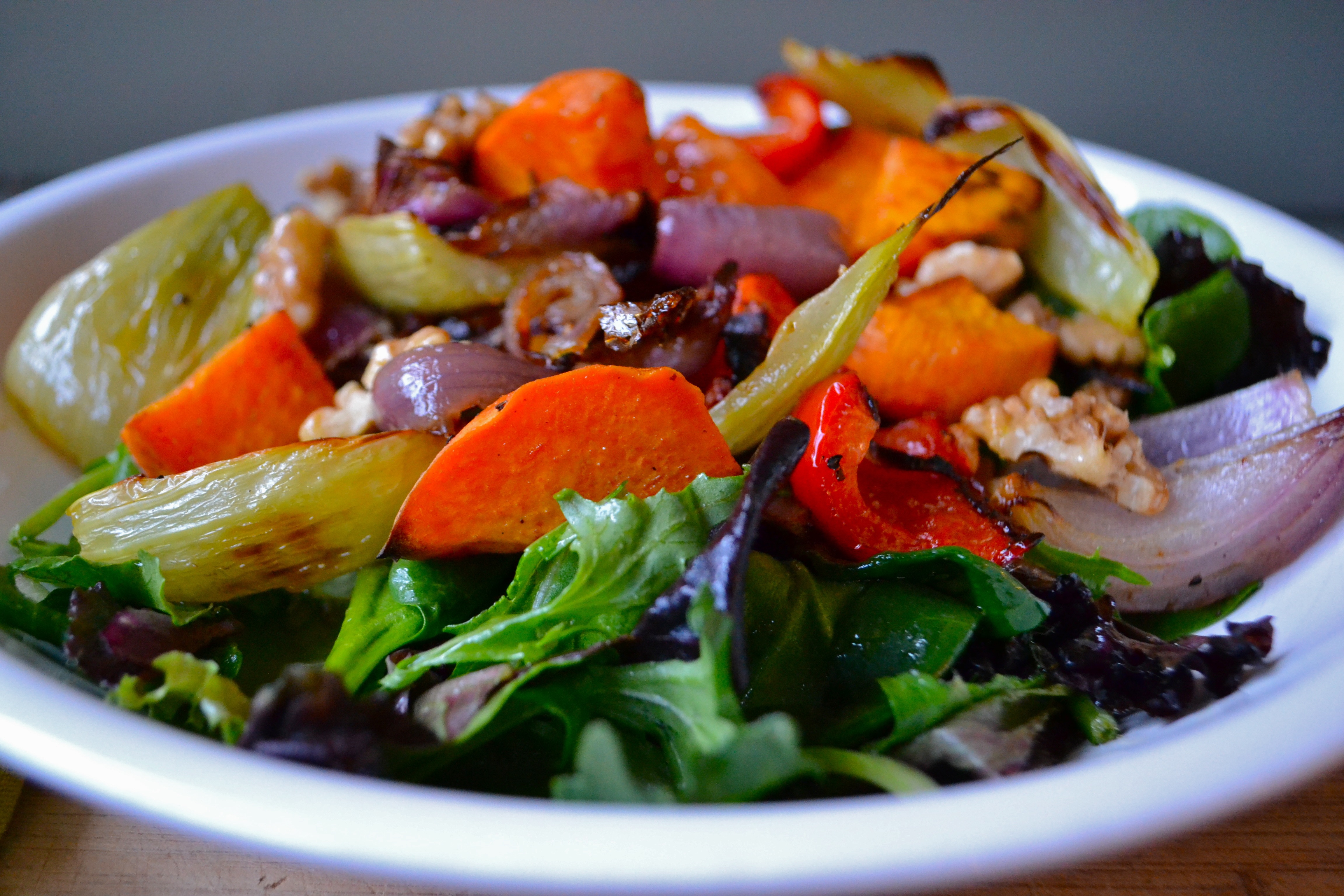
winter salad abovewinter salad closeI love “warm” salads during the winter months, especially those that take advantage of all the wonderful root vegetables in abundance this time of year. This particular salad (one of my husband’s favorites!) boasts great flavor, texture and nutrition and is “meaty” enough to satisfy carnivores (there’s that husband, again) even though it doesn’t actually contain any meat. When you’re looking for something simple but satisfying, or when you just want to give your digestion an easy day, serve this dish.

Packed full of nutrients, this salad works for either dinner or lunch. It contains sweet potatoes (most stores actually sell yams), an excellent source of fiber, potassium, vitamin B-6 and vitamin C; walnuts for iron, magnesium and vitamin B-6 as well as protein and healthy fats; and red bell pepper–rich in vitamin A and C an an excellent source of anti-oxidant flavonoids such as α- and b-carotenes, lutein, zea-xanthin, and cryptoxanthin. Together, these antioxidants help protect us against the effects of free radicals generated during stress and disease.


Ingredients

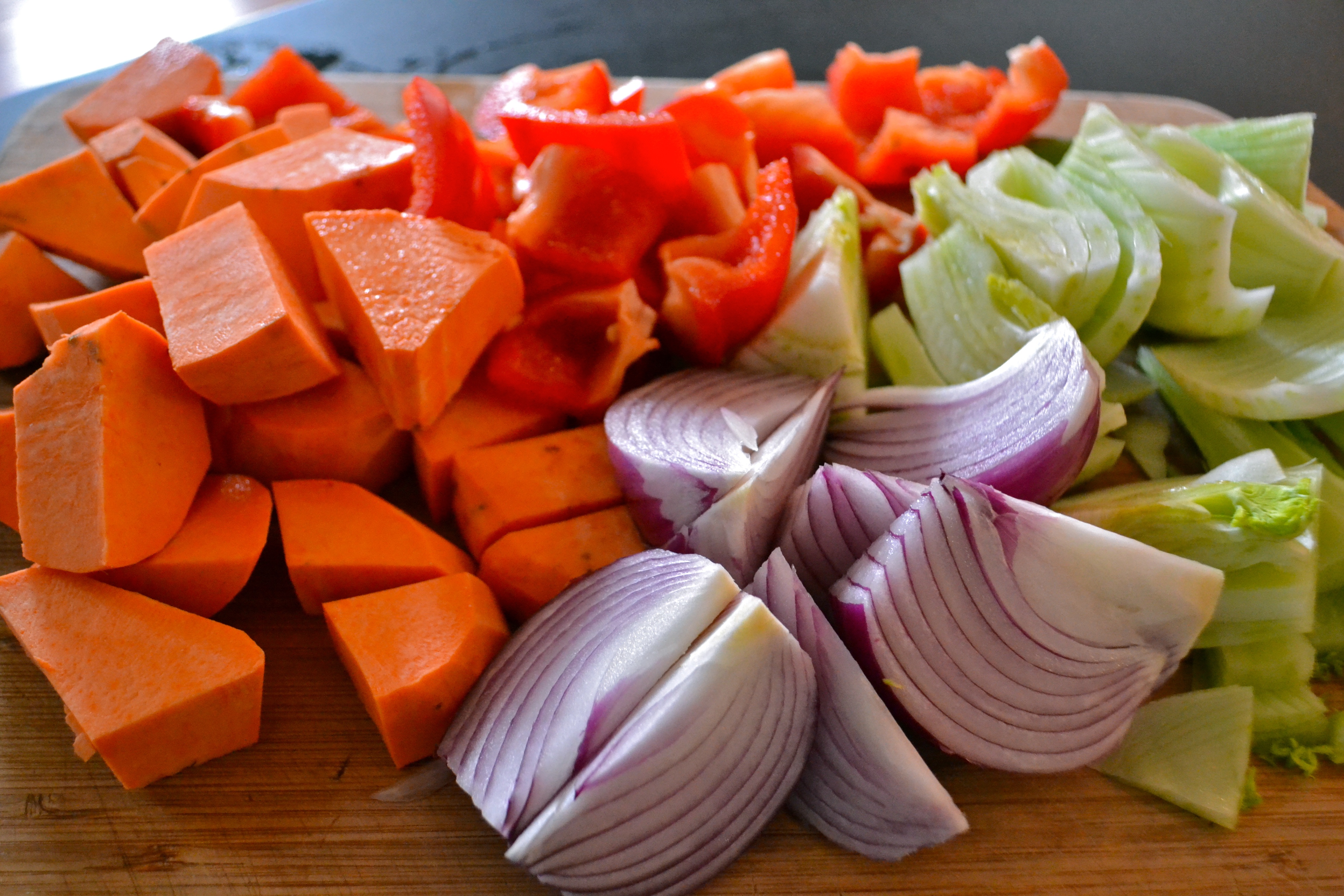
1 medium red onion, cut into 8 wedges

1/2 lb sweet-potato or yam, peeled and cut into 1-inch chunks

1/2 lb small red potatoes, cut in half

1 medium fennel bulb, end trimmed and cut into 8 wedges

1 red bell pepper, cut into 1-inch chunks

4 tbsp extra-virgin olive oil, divided

1 tsp sea salt, divided

1 tsp pepper, divided

2/3 cup coarsely chopped walnuts

2 tbsp good-quality red wine vinegar

2 to 3 tbsp raw honey

6 oz loosely packed mixed salad greens


winter salad shopPreparation

Preheat oven to 425F. In a large bowl, toss onion, sweet and red potatoes, fennel and bell pepper with 3 tbsp olive oil and 1/2 tsp each salt and pepper. Spread vegetables over a rimmed baking sheet and roast until tender and golden, about 40 minutes, turning over halfway through the baking time. About 10 minutes before the vegetables are done, sprinkle the walnuts on the baking sheet and toast until golden.

In the meantime, in a small bowl, whisk together 1 tbsp olive oil, vinegar, honey and the remaining 1/2 tsp each of salt and pepper.

Toss the greens in a large bowl with half of the dressing. Divide among 4 plates. Let the vegetables cool for about 5 minutes then transfer to the large bowl and toss with the remaining dressing. Spoon over the greens and serve warm.

Serves 2 as a dinner or 4 as a starter.

Enjoy!

Creamy Coconut Milk Yogurt

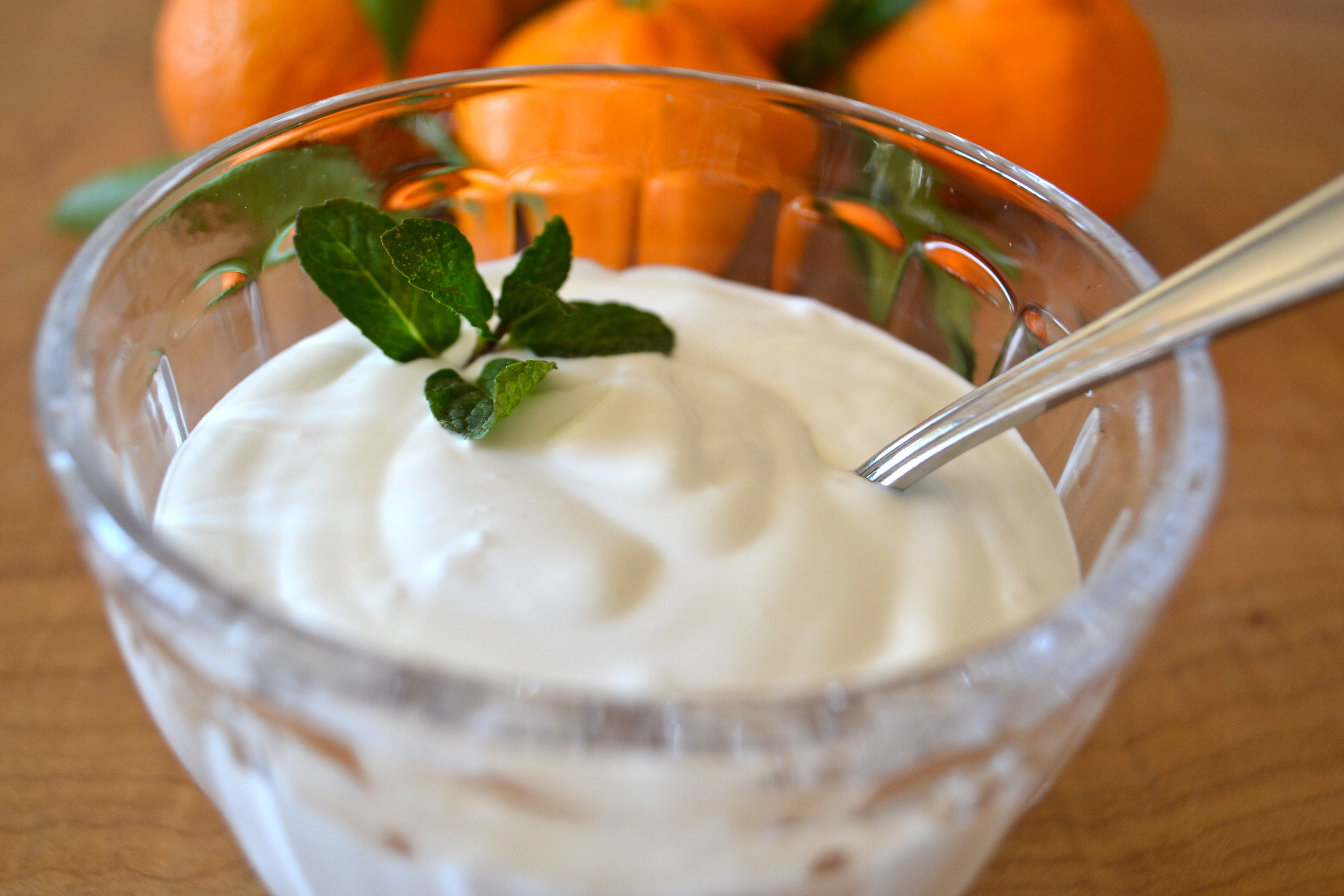
yogurtSeeing as dairy and I don’t always get along, but given how much I love creamy concoctions, I’m always on the hunt for good substitutes. Luckily, I prefer my homemade almond milk (not pre-packaged!) to regular cow’s milk. There’s that very subtle anise flavor that makes it taste much better in my opinion, and it’s just as creamy if not creamier in texture. And I recently discovered a good cream cheese substitute. I rarely use cream cheese, but occasionally I like to spread it on a cracker with a little lox.

I’ve also tried several brands of coconut milk yogurt, but they’ve all been subpar–too watery, too sweet and/or too gelatinous in texture. I’ve tried making my own several times using agar agar, xantham gum and other (from my perspective) difficult to work with ingredients. But I finally found a recipe that is incredibly simple, and the yogurt comes out exceptionally creamy and with a perfect consistency. This recipe, like the Rosemary Raisin Crackers I posted last week, comes from Danielle Walker’s Against All Grain cookbook. The only variation I’ve made is to exclude the 2 tbsp of honey she uses in hers. I think 2 tbsp seems like a lot of sweetener for 27 oz of yogurt, and I find if you use good quality coconut milk (Native Forest is my favorite), the yogurt comes out sweet enough. I’m also wary of sweetening a pure white “plain” yogurt when I live with people that then automatically assume they need to add sweetener once the yogurt is in their bowls. Danielle insists on the honey because she believes it’s what encourages the good bacteria to culture, but I’ve heard mixed things about culturing with honey, so for now, I skip it.

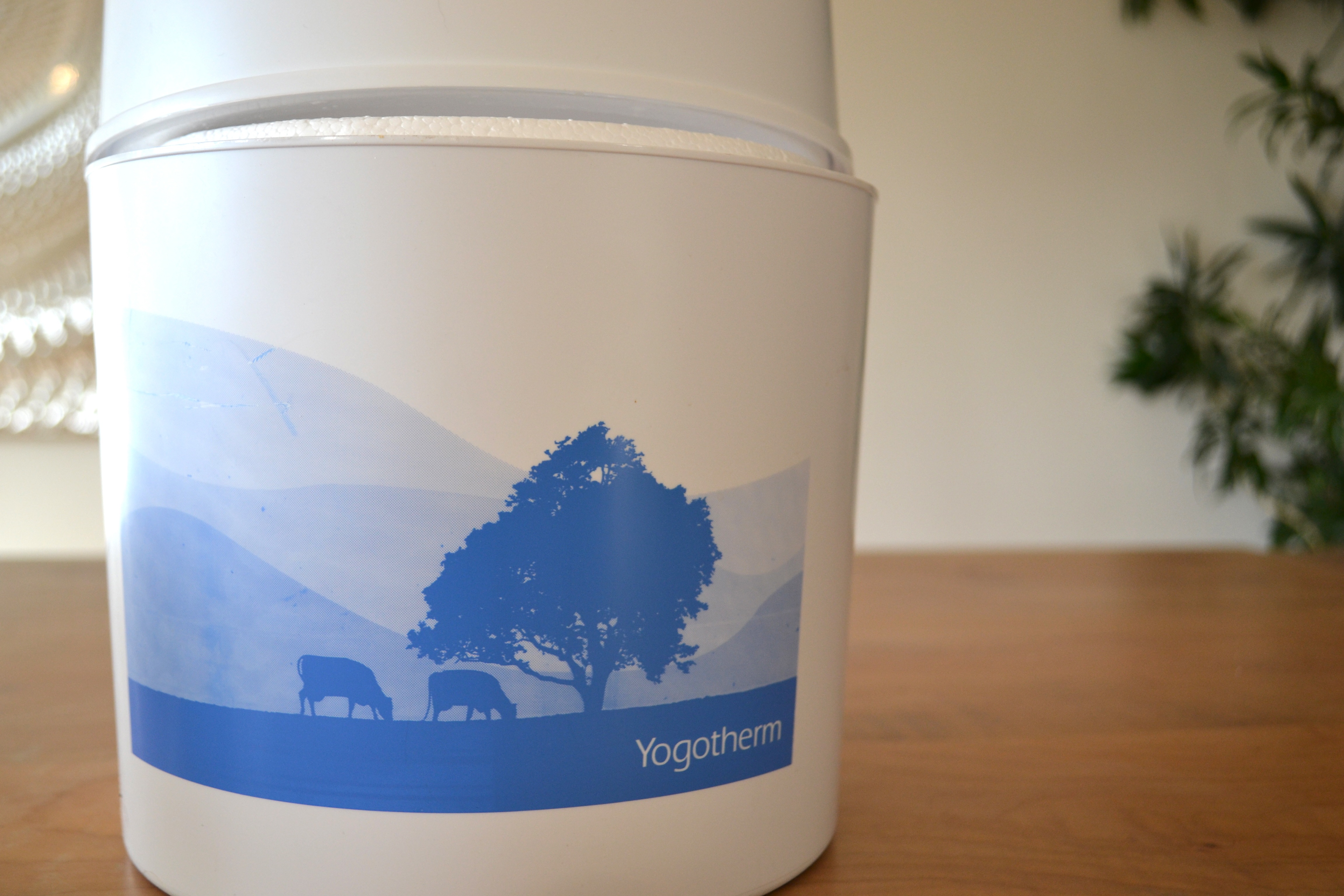
I don’t have a fancy yogurt maker (see photo below). I mistakenly didn’t build enough storage space into my kitchen remodel four years ago to house a lot of large gadget items (e.g., yogurt makers, dehydrators, etc.). I also don’t care to mess around with all those individual little glass jars that most yogurt makers come with. So I bought a very simple insulated tub. It doesn’t take up much space, it’s super easy to clean, and when the yogurt is ready I simply pour it into a large glass jar (which had been a pickle jar in a previous life). I also know people who also just wrap towels around a large glass jar and leave it in a warm place for 24 hours.

yogurt maker


Ingredients

2 13.5-oz cans unsweetened coconut milk, divided

3 tsp unflavored gelatin (1 packet)

1 tbsp raw, organic honey (optional)

1 50-billion IU probiotic capsule or 1 dairy-free probiotic yogurt starter packet*


Preparation

Place 1/4 cup of the coconut milk in a small bowl. Sprinkle the gelatin over it and set it aside for 10 minutes so it can “bloom.”

Heat the remaining coconut milk in a saucepan over medium heat until it reaches 150F. Stir in the gelatin/coconut milk mixture and honey if using. Stir until thoroughly dissolved.

Allow the milk to cool to 110F (you can submerge the bottom half of the saucepan in a bowl of ice water to quicken the process), then whisk in the contents of the probiotic capsule or yogurt starter.

Pour the mixture into sterilized jars (if you have a regular yogurt maker) or place in a large glass jar and screw on the lid(s). Ferment for 18-24 hours. I place my insulated tub in a sunny spot on my deck during the day and on the floor of my bathroom which has radiant heat at night. I think allowing the yogurt to ferment for 24 hours results in the best consistency.

After the fermenting period, place the jar(s)/tub in the refrigerator for 4 hours to further thicken and set. Once set, if any separation has occurred, whisk vigorously or blend the yogurt in a blender for a super-smooth consistency.

Enjoy!


*I get my vegan yogurt starter from Cultures for Health, but I don’t see why you can’t use more than one probiotic capsule to get to the 50 billion IUs Danielle suggests in her recipe. The Nature’s Way probiotic I regularly take contains 35 billions IU per capsule.

yogurt starter

crackers aboveI’ve been thinking of giving up grains for 30 days to see if I experience any significant changes in my health. Mind you, I feel pretty darn healthy most of the time, but there are those minor, in some cases–frequent annoyances. For example, the inside of my nose is often wet in the mornings. It’s usually not enough to bother blowing, but I can feel it, and it’s definitely annoying. I also have scalp psoriasis, which I’ve had since my mid-20s. You usually can’t see it, but I can almost always feel it. To both issues, my doctor says it’s likely a very low-grade allergic response to something I eat regularly. But what? I did the food sensitivity testing and that didn’t reveal the culprit. A while ago, I gave up dairy for two months, and that didn’t help. I went gluten-free for several months, and that didn’t do anything (although I noticed the skin on the back of my upper arms became incredibly smooth). So maybe it’s grains–not particularly gluten.

I’ve been reading Chris Kresser’s Your Personal Paleo Code. His logic is compelling, and the people I know that have gone grain-free lost their “wet noses.”

Of course, I’m not one of those people who simply dive into things, and it’s hard for me to imagine giving up all dairy, grains and sugar for 30 days! First, I need to research the proposed change and test it out to see if I think I can really handle it. So along those lines, I’ve been making all sorts of dairy-free and grain-free dishes–many of which you’ll see soon on this website.

When I gave up gluten I turned to corn–NOT a great alternative since it’s one of the oldest genetically-modified crops in the world (certainly here in the United States). But I love cornbread and I love guacamole and salsa, so corn serves me well in that regard. But what happens when corn and rice are also off the menu? I’m a snacker and still require something crunchy I can reach for during the mid-afternoons.

As part of experimenting with Paleo, I bought Against All Grain by the best-selling author and blogger, Danielle Walker. She realized early on that people can’t survive on meat and vegetables alone (emotionally, not physically), so her book contains all sorts of snacks and desserts as well as salads and meat dishes.

I tried her grain-free Raisin-Rosemary Crackers and loved them! They are super easy to whip up, and contain a nice balance of sweet, salty and crunchy. I only modified the recipe ever so slightly in ingredients and instruction.

Ingredients

1 cup blanched almond flour/meal (I use Bob’s Redmill)

2 tbsp raisins

2 tbsp cold water

1 tbsp plus 1 tsp raw sunflower seeds, divided

1 tbsp fresh rosemary

1 1/2 tbsp extra-virgin olive oil

1/2 tsp sea salt

Preparation

Preheat the oven to 350F.

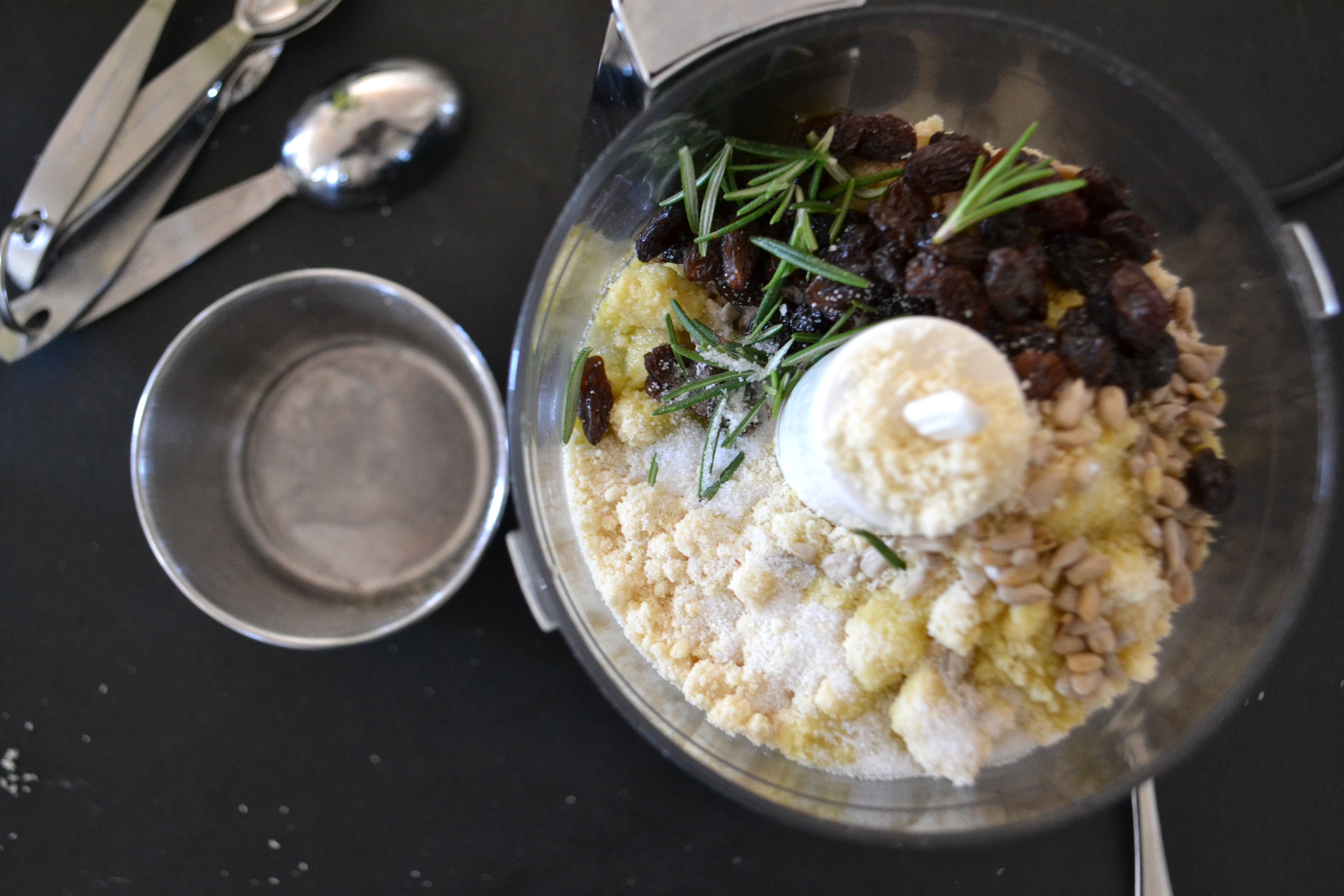
If you have a regular-size food processor, put all the ingredients except the 1 tsp sunflower seeds in the processor. Process for 15 seconds, or until the ingredients are well mixed and the raisins and rosemary leaves are chopped into small bits. If you don’t have a regular-size food processor, like me, and have to rely on a mini-processor (like my mini Krups), put in all the ingredients except the almond flour and process until the raisins and rosemary leaves are chopped into bits. Then add the “flour” and process until the dough comes together (several 2-second pulses on my machine).

cracker mixForm the dough into a squarish shape and roll between two pieces of parchment paper until you have a 1/8-inch thick rectangular shape.

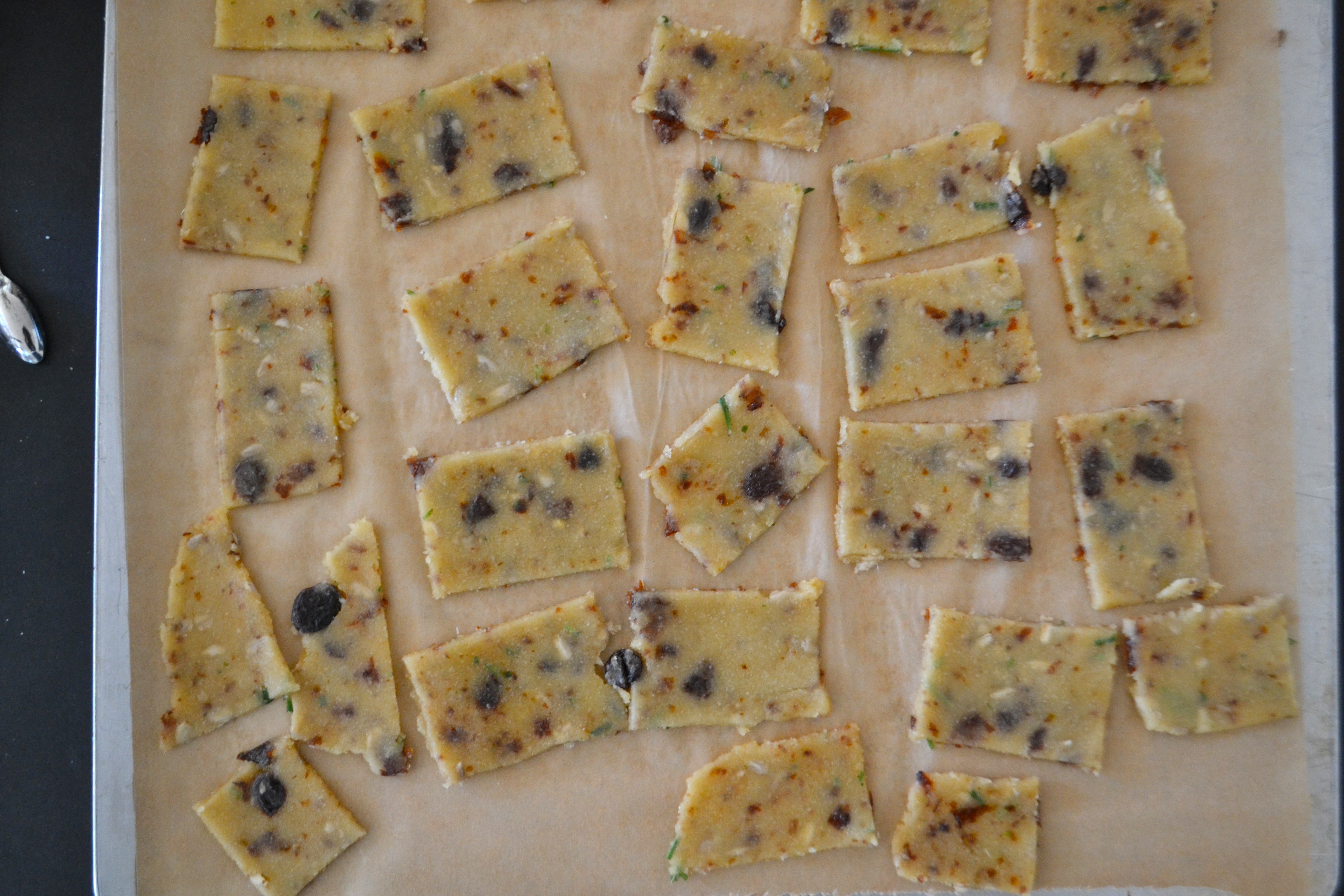
cracker rolled outRemove the top sheet of parchment. Use a sharp flat-edged knife or pizza cutter to cut the dough into 1-inch x 2-inch rectangles. Save the end bits to re-roll in the first piece of parchment to make more crackers.

crackers cutCarefully transfer the parchment paper to a baking sheet. You can bake as is, or carefully separate the crackers from one another. I find they bake better when they’re separated.

Bake for 10-15 minutes, rotating the pan once, until the crackers are golden and browning slightly on the edges.

Cool completely before serving. Serve with dairy-free “cream cheese” or a piece of prosciutto.

Happy snacking!

I don’t believe I’ve ever reblogged another blogger’s posting before, but there are many other wonderful, like-minded health-obsessed bloggers in the blogsphere, such as Emma Nutrition. I found this posting particularly interesting. I hope you find it worthwhile, too!

EmmaNutrition's avatarEmma Nutrition

Emulsifiers

Scientists have discovered a link between high numbers of E. coli bacteria and colon cancer as well as the inflammatory bowel diseases Crohn’s disease and Ulcerative Colitis. Not only are E. coli levels high but they encode a toxin that damages the DNA in the cells of the gut lining. Approximately 66% of people with inflammatory bowel diseases and colon cancer carry E. coli compared to 20% in those who have a healthy colon. This isnt just any old E. coli though. Its E. coli that contains pks genes.

Dr Barry Campbell, co-author of the research at the University of Liverpool, said: “The research suggests that E. Coli has a much wider involvement in the development of colon cancer than previously thought. It is important to build on these findings to understand why this type of bacteria, containing the pks genes, is present in some people and not others.”

What is…

View original post 240 more words

Cooking Without Limits

Food Photography & Recipes

Selma's Table

Life doesn't have to be perfect to be wonderful - stories and recipes from a wonderful life...