Feeds:
Posts
Comments

This bread has loads of flavor and bakes so the top has a slight crunch and the inside is perfectly moist. I usually kill the dairy-free quality by letting a little butter melt into my slice of just-baked bread, but the bread is so good it doesn’t need anything.

Ingredients

1 cup all-purpose flour*

1 cup whole-grain barley, spelt or wheat flour

1 1/2 tsp. baking powder

1/2 tsp. baking soda

1/4 tsp. salt

1/2 tsp. ground cinnamon

1/4 tsp. ground nutmeg

2 eggs, beaten

1 1/2 cups mashed, ripe bananas (about 5)

2/3 cup evaporated cane sugar

1/3 cup coconut oil, melted and cooled

3 tbsp. coconut or almond milk

1 tsp. pure vanilla extract

1/3 cup finely-chopped walnuts (optional)

1/3 cup chocolate chips (optional)

*You can easily make this recipe gluten-free by substituting the 1 cup all-purpose and 1 cup spelt for 1-1/2 cup gluten-free all-purpose flour and 1/2 cup almond flour.

Directions

Preheat oven to 350F. Spray a medium-sized bread pan with nonstick cooking spray. In a medium bowl, combine all dry ingredients except sugar (and except for the nuts and chocolate chips, if using). In a large bowl whisk together the eggs, sugar, bananas, “milk,” oil and vanilla extract. Fold in the flour mixture until just blended. Fold in the nuts and chocolate chips, if using. Pour batter into bread pan. Bake for an hour or until a toothpick inserted in the middle comes out clean. Cool for a few minutes before removing from pan.

Enjoy!

SaveSave

SaveSave

All of us—at least those of us with children—currently use or have at some time received or bought a piece of colorfully-decorated melamine dinnerware. Many consider melamine dishes the perfect choice for kids because they are practically unbreakable.

I have a set of melamine mixing bowls from Williams-Sonoma which I use regularly–although one did break in a freak accident last year, and until very recently, I used melamine dishes for most of my kids’ meals.

A friend who visited recently said, “I’m surprised YOU (meaning you who professes to be a health and safety fanatic) are serving food to your kids on melamine!”

I confess that while I had heard of health issues concerning melamine, I thought the issues were around the improper care and use of melamine (i.e., they should never be used in the oven or microwave) and as a food additive. I made a mental note to do more research, hence this blog posting.

First, what is melamine?

Melamine is an “organic,” nitrogen-rich industrial compound, created from one of three materials: urea, dicyandiamide or hydrogen cyanide. The hard and sturdy melamine resin is created by combining melamine with urea and formaldehyde. Melamine resin is fire and heat resistant, durable, and versatile. It is used in the manufacture of floor tiles, whiteboard and numerous kitchen items, including melamine dishes.

By all appearances, melamine dishes seem incredibly practical and convenient. They are dishwasher safe, light, nearly unbreakable and can be molded into various shapes and designs, which can be brightly colored or printed.

Potential dangers

Some of the first dangers concerning melamine appeared in 2007 and 2008 when it was reported melamine had been added to certain brands of pet foods and infant formula as a cheap filler. There were reports of illness and deaths from renal failure in the animals and babies that had consumed melamine-contaminated food. Shortly after this melamine “scare,” the first concerns were raised about whether melamine could leach into food from dinnerware made from melamine resin.

Melamine resin is fixed and unchanging unless it is exposed to excessive heat, which is why you should never put your melamine dishes in your oven or microwave. Excessive heat can make the plastic unstable and allow the resin to decompose back into its original elements, several of which are highly toxic.

What also is poorly understood is “synergistic toxicity” or the combined effects of consuming a product, for example bread, made from wheat that was grown with a melamine-based fertilizer (remember, it’s nitrogen-rich!), served with milk that has added melamine (increases protein levels), on melamine dinnerware which has possibly become unstable due to improper use or handling.

Note: The levels of melamine in dinnerware are considered safe by the FDA, but this does not account for others sources that can build up melamine in the body.

Recommendation

Although melamine dinnerware seems incredibly convenient—with it’s bright colors and nearly unbreakable design, why risk your or your children’s health?

If you and your family use melamine dishes, but eat only organically grown food, then presumably your sole concern lies with the condition of your dishes. However, as I stood examining my own melamine dishes for hairline fractures or scratches, knowing I have never put them in the oven or microwave, I quickly decided it wasn’t worth the risk. Bamboo, BPA-free plastics, stainless steel and glass or china are safer alternatives. I found some nice-sized, colorful china dishes at Crate & Barrel (link).

I decided to blog on the subject of raw milk because a friend asked my opinion about it after buying a bottle at our local farmer’s market. He commented on how delicious tasting the milk was, and wondered if he should make the switch from pasteurized to raw.

I am not a medical practitioner nor a registered licensed dietician or nutritionist, so the following is just the opinion of a cautious but health-conscious mother.

I do not drink raw milk nor do I serve it to my children. That said, I did regularly drink raw milk from a neighbor’s farm while growing up, and never experienced any health problems from it. I might add that our neighbor’s farm was not a particularly clean operation. We would plunk down the metal pail under the goat, milk her and take the pail to the house where the contents were poured into a glass jar and stuck in the refrigerator for later consumption. (There was definitely no hand washing or sterilization happening here.)

Now, I occasionally buy cheese made from raw milk for my personal consumption, but the majority of the time, I purposefully choose products made from pasteurized milk. My reasoning is that the alleged dangers of raw milk are simply too compelling—a little of the “better safe than sorry” philosophy.

While many websites exist extolling the virtues of raw milk, (e.g., cavity fighter, autism curer, antiviral, antimicrobial, etc.) the claims appear to be anecdotal with the exception of allergies. Studies have shown that drinking raw milk may result in fewer symptoms of hay fever and asthma. (June 2006 Journal of Allergy and Clinical Immunology, May 2007 Clinical and Experimental Allergy). However, despite these potential health benefits, all medical institutions warn that raw milk can harbor pathogens, the most common being E. coli, listeria and salmonella. The bacteria can be especially dangerous for infants and young children, pregnant women, the elderly and people with weakened immune systems, such as people with HIV or AIDS. For example, there have been cases in which children who had E. coli went on to develop hemolytic uremic syndrome, a serious condition affecting the kidneys.

The Center for Disease Control and Prevention (CDC) reports that from 1998 through 2008, raw milk or raw-milk products were implicated in 86 outbreaks in the US, resulting in more than 1,600 cases of illness, 191 hospitalizations and 2 deaths.

Where the problem lies is in the relativity of those numbers. The CDC does not share the overall number of foodborne illness outbreaks in which other foods, spinach or strawberries, for example, were implicated. Many foods can carry pathogens, and numbers are only numbers unless we can make them relative.

Cost is another consideration in the raw milk debate. My regular grocery store used to sell a quart of raw milk for $9.00. They have since pulled it from their shelves over liability concerns.

It is true that pasteurization (heating milk to 161 degrees F for about 20 seconds) does destroy some of the vitamins found in milk as well as many enzymes. Raw milk advocates claim these enzymes are what allow people to easily digest raw milk, and that many people who are lactose intolerant can tolerate raw milk. This seems logical enough, but since my children both love and drink regular milk, lactose intolerance has not been a concern for us.

My sister drinks only raw milk, as does her 7-year-old child. She buys it from a local farmer whose cows are grass-fed. She is convinced the benefits far outweigh the risks. And I imagine once you start drinking raw milk from grass-fed cows—which tastes the way milk should taste—it must be pretty hard to switch back to sterilized (i.e., pasteurized) milk.

Lastly, a word about homogenization because people often confuse it with pasteurization. Homogenized milk has been run through yet another process, which breaks down the fat molecules so your milk remains an even consistency. Because I want only the minimum amount of processing, I buy pasteurized—flash pasteurized, but not homogenized, milk. I don’t mind the extra step of having to scoop a little cream off the top and/or give my bottle a good shake before pouring.

So unfortunately, I cannot and should not make a recommendation as to whether my friend or anyone should drink raw milk. At least it gives us some food—or milk, as the case may be—for thought.

A drink to your health!

Here’s a product I wanted to blog about after the first use, but thought I owed it to my readers to really test it out.

After losing a close friend to breast cancer, and knowing too many women who have battled it, I have long been suspicious of anti-perspirants and their suggested link to the deadly disease. It just seems too unnatural to literally block sweat from exiting your body in one of the main places it wants to do it.

While the jury is still out on whether the active ingredients in anti-perspirants (aluminum-based compounds) contribute to the development of breast cancer,* I chose to play it safe more than a decade ago by switching to deodorants only. That said, I never was–until now–satisfied with their performance. Some were goopy, and some were sticky, but more importantly, all seemed unable to keep me feeling relatively dry and odor-free for an entire day.

In my pursuit of the best natural deodorant, I have tried nearly everything available in a natural foods stores (Tom’s, Kiss My Face, Desert Essence, etc.). All couldn’t last a normal day or any type of strenuous work or particularly stressful situation (e.g., running through the airport trying to catch a flight).

Approximately three weeks ago, I tried Weleda’s Sage Deodorant. While my expectations might arguably have been low, I was literally shocked by how good this product performed. It hasn’t just kept me smelling good doing desk work and going about a quiet day. It has kept me from smelling bad even after a 2-hour power hike up the mountain, working in the garden and running through the airport to catch a flight to L.A.

This deodorant is the best–without a doubt–of any I’ve tried. It comes in a glass bottle with a non-aerosol pump that delivers a concentrated spray. Although wet at first, it dries quickly due to its alcohol content. It leaves no visible residue nor anything you can detect by touch–making it superior to any product I’ve ever tried–deodorant or anti-perspirant. And it’s subtle herbal scent makes it truly unisex.

It’s not completely natural, but the ingredients are relatively benign even to those with the most stringent standards (e.g., the Environmental Working Group link). You can find it in many natural food stores, including Whole Foods, as well as on-line.

I recommend this product to everyone!

*”Some research suggests that aluminum-based compounds, which are applied frequently and left on the skin near the breast, may be absorbed by the skin and cause estrogen-like (hormonal) effects. Because estrogen has the ability to promote the growth of breast cancer cells, some scientists have suggested that the aluminum-based compounds in antiperspirants may contribute to the development of breast cancer.” [National Cancer Institute]

Greenlicious

I don’t know if you’re like me, but I’m always looking for creative, easy ways to get more greens in my body and my kids’ bodies. The later can be especially tricky as they tend to balk at things of unusual color, consistency or that are just plain unfamiliar.

I recently tried a green smoothie from Diana Stobo’s book “Get Naked Fast!” She calls it Popeye’s Passion, and it has become my passion. It’s nutrient-packed and tastes delicious. Spinach is a great source of iron, calcium and vitamins A, C and E. And while it’s high in sugar thanks to the banana and apple juice, they are natural, food-based sugars–which I don’t mind given that my kids slurp down this drink.

I call it “Green Monster Juice” to add a little fun and mystique.

Ingredients

2 cups fresh pressed organic apple juice

2 cups fresh organic spinach (I used two packed cups)

1 frozen banana (or one regular, and add a few ice cubes)

Note: adding a little coconut milk makes it even creamier and gorgeous in color.

Blend all ingredients together on high until creamy. Serve immediately.

Happy slurping!

One of my favorite skincare lines, and the maker of my absolute favorite all-natural, mineral sunscreens, is offering two Valentine’s Day specials.

Enter promo code roses to receive 20% off your entire order, or spend $100 and receive a 2 oz. bottle of Marie-Veronique’s Anti-Aging Body Oil ($36 value) using promo code valentine.

To order Marie-Veronique products click favorite.

To read my initial review of Marie-Veronique Organic’s Kid Safe Screen SPF 25 and their Moisturizing Face Screen SPF 30, click here.

If you’re like me, you’ve thought about making a few New Year’s resolutions, but haven’t necessarily nailed them down precisely. Your resolutions might include losing weight or exercising more, or maybe you’re looking to start a new hobby or pursue and old one. Well, why not help Mother Earth by throwing in a resolution to live greener this year?

No one I know lives completely “green.” Most of us fall somewhere along a very broad continuum. And that’s OK. If everyone picked just one or two things from the following list, our world and everyone in it would automatically live healthier lives.

I certainly don’t live super “green.” For example, I can be a bit of a clothes horse, and I love fashion too much to stop buying trends. But I’ve committed to buy less this year, and I keep a worm bin and chickens to feed my kitchen scraps to, and I haven’t acquired a single plastic shopping bag in too many months to remember.

Let’s be straight, since there are some people who won’t manage even one thing off the following list, why not take up their slack and commit to three or four?

25 Ways to Live Greener:

  1. Buy organic.
  2. Buy local.
  3. Carry a collapsible/reusable bag at all times so you never have to take another shopping bag home.*
  4. Power down all your electronics when you’re not actually using them.
  5. Drive less, walk more.
  6. Grow your own herbs or veggies in a garden or garden box.
  7. Recycle everything you can.
  8. Buy less to begin with.
  9. Rinse out jars (e.g., applesauce, pickles, etc.) and use them to store food instead of buying plastic containers.
  10. Turn your thermostat down at least 2-4 degrees.
  11. Don’t buy anything containing synthetic fragrance (anything other than essential oils).
  12. Don’t buy products containing sulfates or parabens.
  13. Only buy cleaning products that are biodegradable and phosphate-free.
  14. Switch to LED light bulbs. They’re the most energy-efficient.
  15. Make sure your freezer is filled to capacity. It’s more energy-efficient than a half-filled one.
  16. Only run the washing machine when you have a full load, and never wash on hot.
  17. The same goes for the dishwasher; fill it up before you turn it on.
  18. Shorten your shower and make sure you’re using a low-flow showerhead.
  19. Don’t wash your car at home. Find a car wash that recycles the water.
  20. Stop buying bottled water. Use/install a filter and use stainless steel or glass bottles.
  21. Reduce the amount of junk mail you receive. Visit http://www.DoNotMail.org.
  22. Sign-up for on-line bill pay.
  23. Don’t use chemical fertilizers or pesticides on your lawn.
  24. Have less lawn.
  25. Eat less meat, particularly beef!!

Happy New Year, and happy greener-living!

* I carry a ChicoBag in my purse at all times since it holds a ton and easily stuffs down to the size of my fist!

Photo: Bruce Irving, Flying Singer

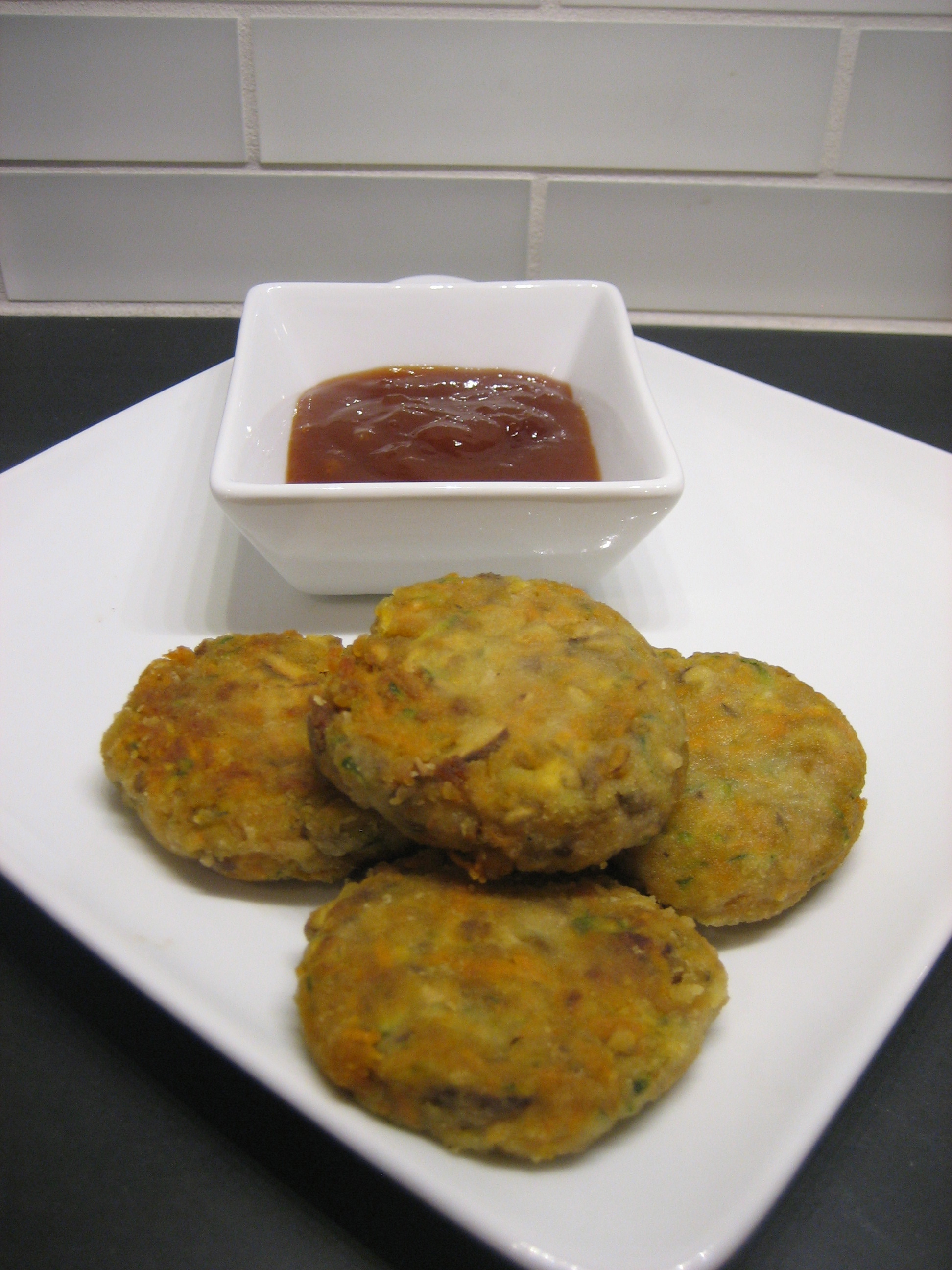
Try serving these vegetable patties (known in the UK as “rissoles”), for an easy-to-prepare, nutrient-dense meal for your kids. Mine love them (actually, so does my husband), and you can easily alter the recipe to include other ingredients from your vegetable bin or cupboard.

1 medium carrot, washed, peeled

1 small zucchini, ends removed

1 small yam or sweet potato (peeled)

1 handful mushrooms (try crimini, button or shitake), finely chopped

1 small clove garlic, crushed

1 egg, lightly beaten

1/4 cup ground almonds

1/2 a cube of chicken or vegetable bouillon, finely chopped or crushed

1 tsp soy sauce (or Nama Shoyu)

1/2 tsp crushed, dried oregano

1/2 tsp crushed, dried basil

whole-grain bread crumbs

Grate the carrot and zucchini on medium-fine. Squeeze out the excess liquid and put in a medium-size mixing bowl. Grate the yam or sweet potato and add into the mixture in the bowl. Add in all the other ingredients except the bread crumbs. Add a couple spoonfuls of the breadcrumbs and stir to combine. Add in more breadcrumbs if necessary until you have a mixture that holds together well and is not too wet.

Lightly coat the bottom of a large skillet with olive oil, and heat on medium.

Form the mixture into small patties (roughly 2-inches in diameter and 1/2-3/4-inches in thickness). Toss lightly in flour and place in the skillet. Cook several minutes on each side until golden brown.

Serve plain or with sweet-and-sour sauce or ketchup.

Enjoy!

Princes and frogs

If you get a chance, watch the new made-for-TV movie, Harmony (link) I saw it this past weekend at a pre-screening party put on by Forest Ethics (link). It features His Royal Highness (HRH) Prince Charles, and discusses the importance of sustainable farming.

I’m guessing most Americans aren’t aware that HRH Prince Charles has owned and operated a large, organic farm and been a huge proponent of sustainable farming for decades. I first became aware of his “goodness” while living in London. I was shocked and pleasantly surprised one day to discover that the organic biscuits I’d been buying all along had been made from ingredients sourced from HRH Prince Charles’s organic farm.

In all his worldly travels–which I suppose any good prince makes–he saw first hand the horrific damage being done to our Mother Earth by unsustainable practices. (It ties back in to one of the first articles I posted here titled, “Why Eat Organic?”, link) The film discusses the difference between sustainable and organic farming vs. conventional farming–the later of which results in nutrient-poor soil, less tasty food and the overall degradation of the environment.

The film aired on NBC last Friday, but I suspect it will run again. In the meantime, you can watch the entire film on-line using the Harmony link provided above.

Happy viewing!


Photo: Dave77459

A friend recently asked my opinion about nonstick pans and their potential dangers. The issue has been in the news sporadically over the past several years, and I thought it was an excellent topic for this blog.

In past years, the concern was that non-stick coatings in cooking pans would eventually flake, and that the material would end up in our bodies. Warnings were released about the potential health hazards of ingesting nonstick coating material. We also were advised to avoid using metal utensils in the pans, which could damage the non-stick coating. The FDA’s response was that the pans were perfectly safe to use because the chemical coating is inert and passes right through our bodies.

Newer generations of nonstick pans have all but eliminated the peeling/flaking problem. Ceramic, stainless steel or titanium powders are now included in the mix making the coating much more durable. In addition, the coatings are applied much more thickly.

That said, DuPont has acknowledged that the fumes emitted by non-stick coatings can sicken people, an effect known as “polymer fume fever,” a temporary influenza-like syndrome. The effects on humans of long-term exposure are as of yet unknown.

DuPont has also acknowledged that the non-stick coatings begin to deteriorate at high temperatures (approximately 500 degrees F), but that those temperatures are higher than those typically used in cooking. The company has also admitted birds may be harmed by the fumes emitted by the heating of non-stick pans. Exposed birds have been known to hemorrhage in their lungs leading to death by suffocation.

On DuPont’s own website, the company carefully states that non-stick cookware “should not be allowed to reach extreme temperatures. Additionally, cooking should not be conducted in poorly ventilated areas.”

The Environmental Working Group (EWG) has recommended that people phase out nonstick cookware. In a study conducted by the advocacy group it was found that non-stick pans could reach temperatures as high as 700 degrees Fahrenheit in 2 to 5 minutes, releasing more than a dozen harmful chemicals and gases, including two carcinogens.

Studies have shown that there are toxic chemicals from the use of non-stick pans that persist in the environment. A 2005 study by the EWG found perflouroocanoic acid (PFOA), a chemical commonly found in non-stick coatings and a known carcinogen, in the umbilical cord blood of newborns. A similar study by John Hopkins Medical Center in 2006 found PFOA present in the umbilical cord blood of 99% of the 300 infants tested. And in 2004, the chemical giant, 3M, shocked the rest of the industry by announcing they would no longer produce PFOA.

But we can’t place all the blame for PFOA’s existence on non-stick cookware. PFOA and similar chemicals are also commonly used in other applications, such as the non-stick coating on other household appliances like irons, in the coating of water- and stain-repellent clothing and furniture and in regular carpeting.

There is a non-stick coating on my panini maker and my waffle machine. I have gotten rid of all other non-stick pans.  Instead, I primarily use cast iron. It is incredibly durable (incredibly heavy, too, depending on the size of the pan!) and resists sticking beautifully if properly maintained. The friend who asked me if she should get rid of all her non-stick pans also wondered if it was going to be an expensive question. Luckily, it’s not. Cast iron is unbelievably cheap, and the pans will last a lifetime. Note: my non-cast iron pots are anodized aluminum or steel.

My recommendation, which also happens to be the EWG’s:

  1. Start to phase out your non-stick cookware (and appliances).
  2. Use the pans on low or medium heat only.
  3. Never heat an empty pan on a burner.
  4. Always use an exhaust fan or open a window.
  5. Always carefully read and follow the manufacturer’s directions for use.

Happy cooking!


Cooking Without Limits

Food Photography & Recipes

Selma's Table

Life doesn't have to be perfect to be wonderful - stories and recipes from a wonderful life...