Feeds:
Posts
Comments

lentil soupMaybe it’s due to the constantly changing weather we’ve been having where I live–hot enough for shorts one day, cool, wet and sweater-required the next–but I starting craving lentil soup. I must have 10 recipes for lentil soup, not all of which I’ve made, and not one of which I’ve made did I love. However, I happened upon a version of this recipe in a past issue of Martha Stewart Living, and had it tucked away in my mind and in my recipe binder.

I made the soup last night, tweaking the original recipe just a tad–delicious! I loved the balance of the curry with the coconut, and the sweet/sour combination in the dried cherries. The color combination of golden orange, dark red and green was beautiful to the eyes as well.

In addition to being tasty and easy to prepare, this soup is hearty and nutritious. Lentils are an excellent low-fat, low-sodium, high-protein (17 grams per cup!) and high-fiber (nearly 16 grams per cup) food. They also pack a punch of folate which your body needs for iron production. This recipe also contains a hefty amount of ginger and garlic–two ingredients with known anti-cancer properties, and carrots, an excellent source of Vitamin A and beta-carotenes.

You could serve this as a starter, but I find lentils so hearty that I recommend making this your main dish accompanied by a simple side salad.

Ingredients

1 tbsp olive oil

3 tbsp finely chopped peeled ginger (approximately a 2-inch piece)

4-6 garlic cloves, finely chopped

1 large shallot, finely chopped

2-3 carrots, finely chopped (about 1 1/2 cups)

2 tsp mild curry powder

1 1/4 tsp sea salt

3/4 cup unsweetened coconut milk (quality matters; I like Native Forest Organic Coconut Milk)

1 tbsp maple syrup

1 cup red lentils

1/3 cup chopped dried cherries (unsweetened)

3 tbsp chopped cilantro leaves

Preparation

Heat oil in a medium-sized saucepan over medium heat. Add ginger, garlic, shallot and carrots, and cook, stirring frequently until all have softened, approximately 7-10 minutes. Add the curry powder and cook, stirring constantly until fragrant.

Add salt, 1/2 cup of the coconut milk, maple syrup, 4 cups filtered water and the lentils. Bring to a boil then reduce heat, cover and simmer until lentils and carrots are completely cooked, 10-12 minutes. Puree to desired consistency in a blender.

Divide into four bowls. Swirl in the remaining coconut milk, and garnish with the chopped dried cherries and cilantro. Serve immediately.

Eat well, be well, live well!

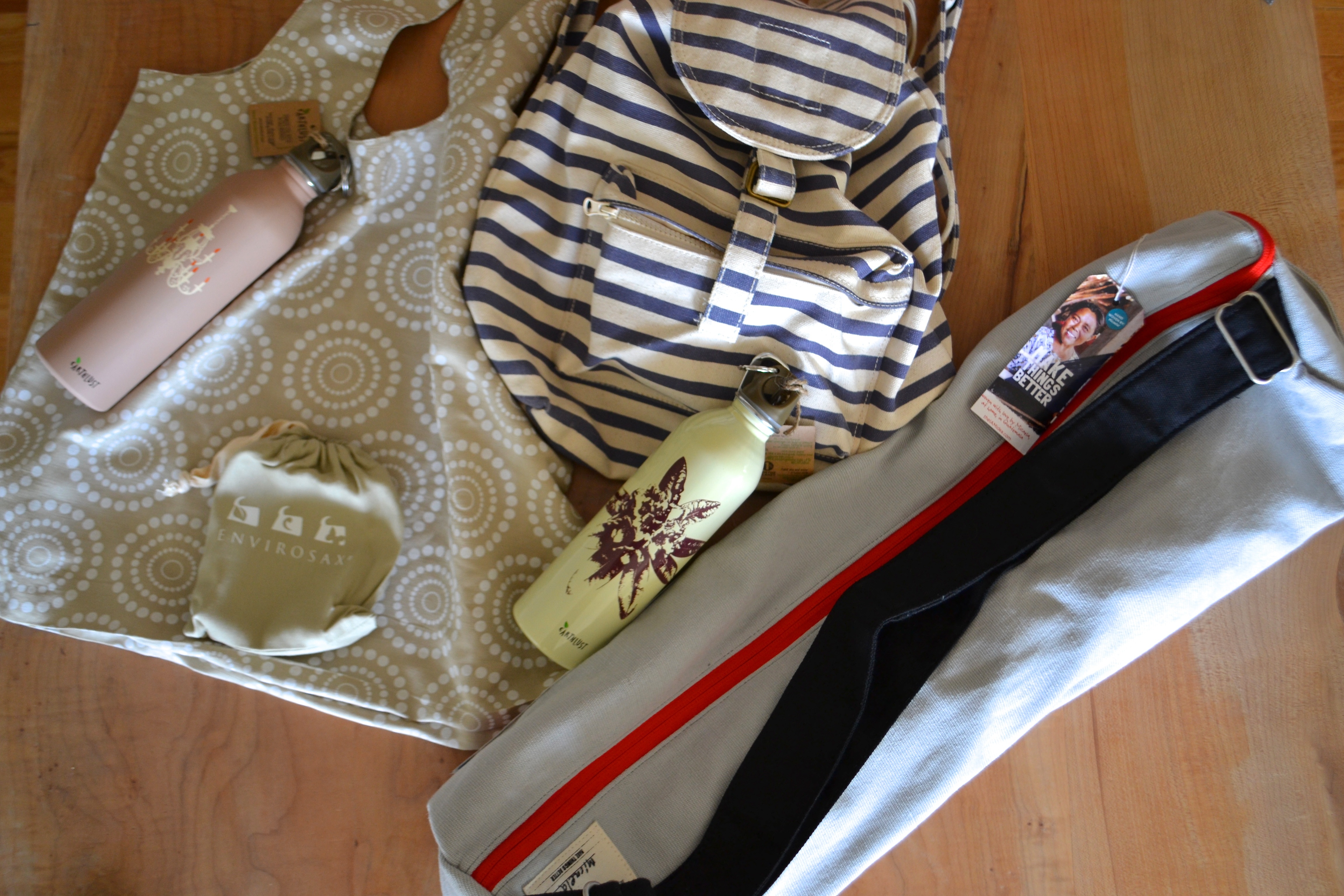
favorite thingsOK, so I mainly write about food and occasionally about things that can affect our health, such as household cleaners and skincare products. But today, I couldn’t resist sharing just a few of my favorite (non-food) things.

I selected these items because they look great and have a sustainable or world-friendly component which I think you’ll find pretty cool.

backpackFor sightseeing this summer 

I recently bought this backpack from Baggu. I’d been looking for a “day pack” that wasn’t too big for my small frame (nearly always an issue with the name-brand backpacks), and that had some recycled component. This cotton canvas backpack by Baggu is made from 100% recycled cotton, and the company offers this pack in a wide variety of colors including some great basic as well as some on-trend brights. (I got mine in marine blue stripes because I had the South of France on my mind.) Baggu also offers a larger version, but this size easily fits an insulated lunch bag, water bottle, wallet and scarf or light sweater. It also has a zippered pocket inside as well as on the outside–handy for keys and cellphones.

yoga bagHit the yoga studio in (fair-trade) style

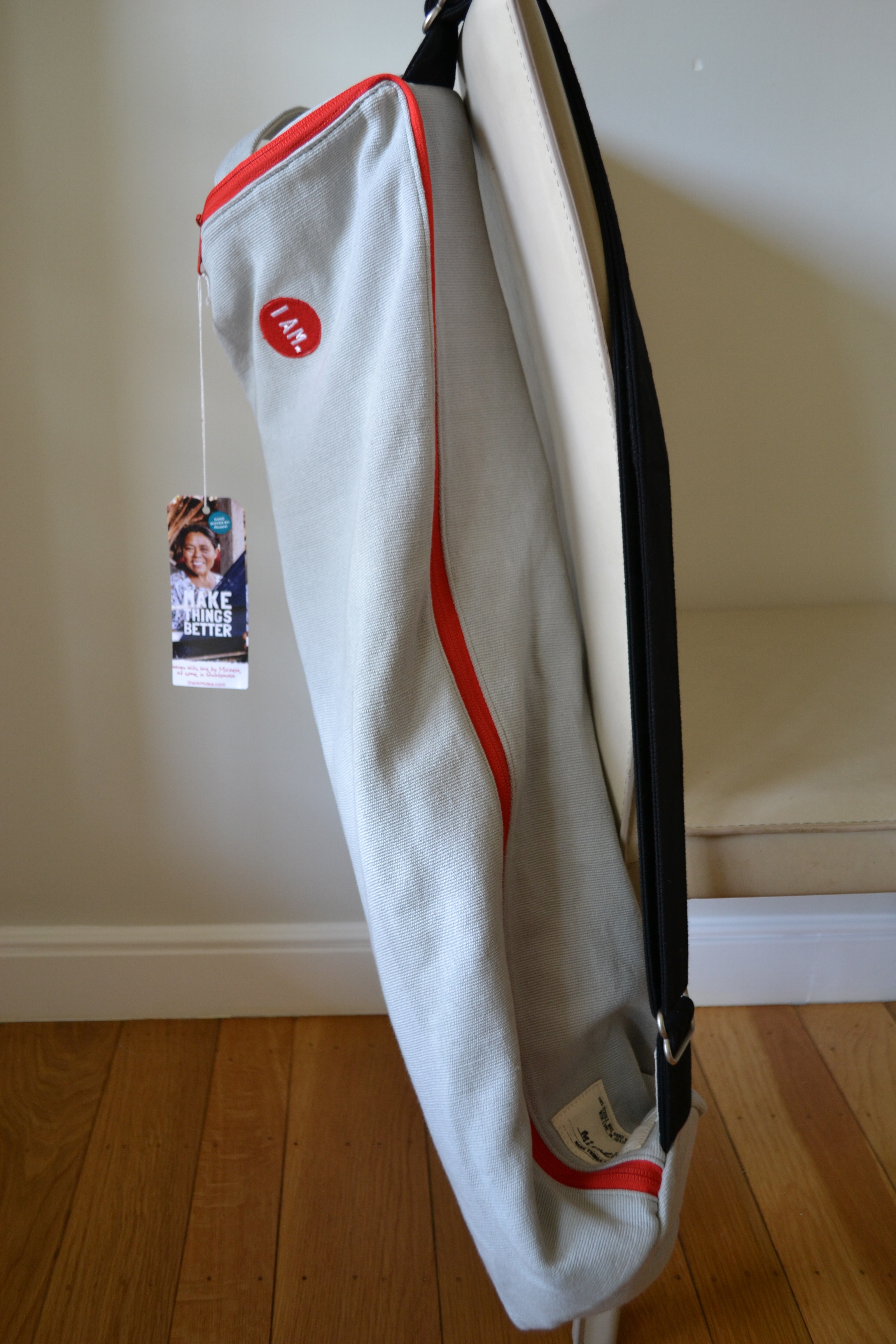
This super-cool yoga mat bag by I AM. is made with fabric hand-woven by women in Guatemala, and each bag is hand-signed by the woman who helped make it. I AM.’s mission is to provide high-paying weaving work to Mayan women who live in impoverished communities. I also love the concept of connecting creators with users.

The Maya yoga bags come in great color combinations, have a wide and comfortable strap for slinging over your shoulder, and are roomy enough to store a wallet and light blanket or fleece in addition to your yoga mat. The inside is lined in recycled scraps of material, and there’s a waterproof inside pocket for any sweaty or wet items.

earthlustNever buy another plastic water bottle

Earthlust water bottles are my favorite because they’re light, BPA-free, use non-toxic paint, have small “mouths/necks” so you aren’t spilling water all over your face and they have the most gorgeous designs. Here I’ve shown one in matte paint as well as the more common glossy paint. I also love that they come with an aluminum carabineer clip for hooking onto your shorts, backpack or yoga bag.

Do your shopping in eco-friendly style

Make a personal commitment to reduce the 380 billion (!!) plastic bags used in the U.S. alone each year. (That number averages out to 1200 bags per person!) It’s estimated that only 1-2% are recycled, and thousands of marine mammals and more than 1 million birds die each year from plastic pollution. Ever since I committed to stop accepting plastic grocery bags, I’ve been amazed at how easy it is. I’ve gone as many as 6 months without taking a single plastic grocery bag. Granted, on those rare occasions I forget to bring my own and paper wasn’t an option, I’ve walked out of the stores with all my groceries precariously balanced in my arms.

envirosax

Envirosax makes great reusable bags. I love the bamboo bag featured here from the company’s Organic Series (which also offers organic cotton and hemp bags). Bamboo is incredibly strong, 100% sustainable and grows naturally without requiring pesticides or fertilizers.

Envirosax offers an incredible array of sizes, patterns and colors in several different fabrics. The company’s nylon bags fold (or stuff!) down into a pouch the size of a tangerine, so they’re super easy to keep in your purse or glove compartment. They’re also less than $10 each and last for years.

Of course the first rule of the three Rs is Reduce (before Reuse and Recycle), and while I didn’t own a backpack, I certainly can’t justify buying any new water bottles. But if you’re in the market for a new item or need a gift for a friend, please consider environment- and world-friendly options such as these.

Happy shopping!

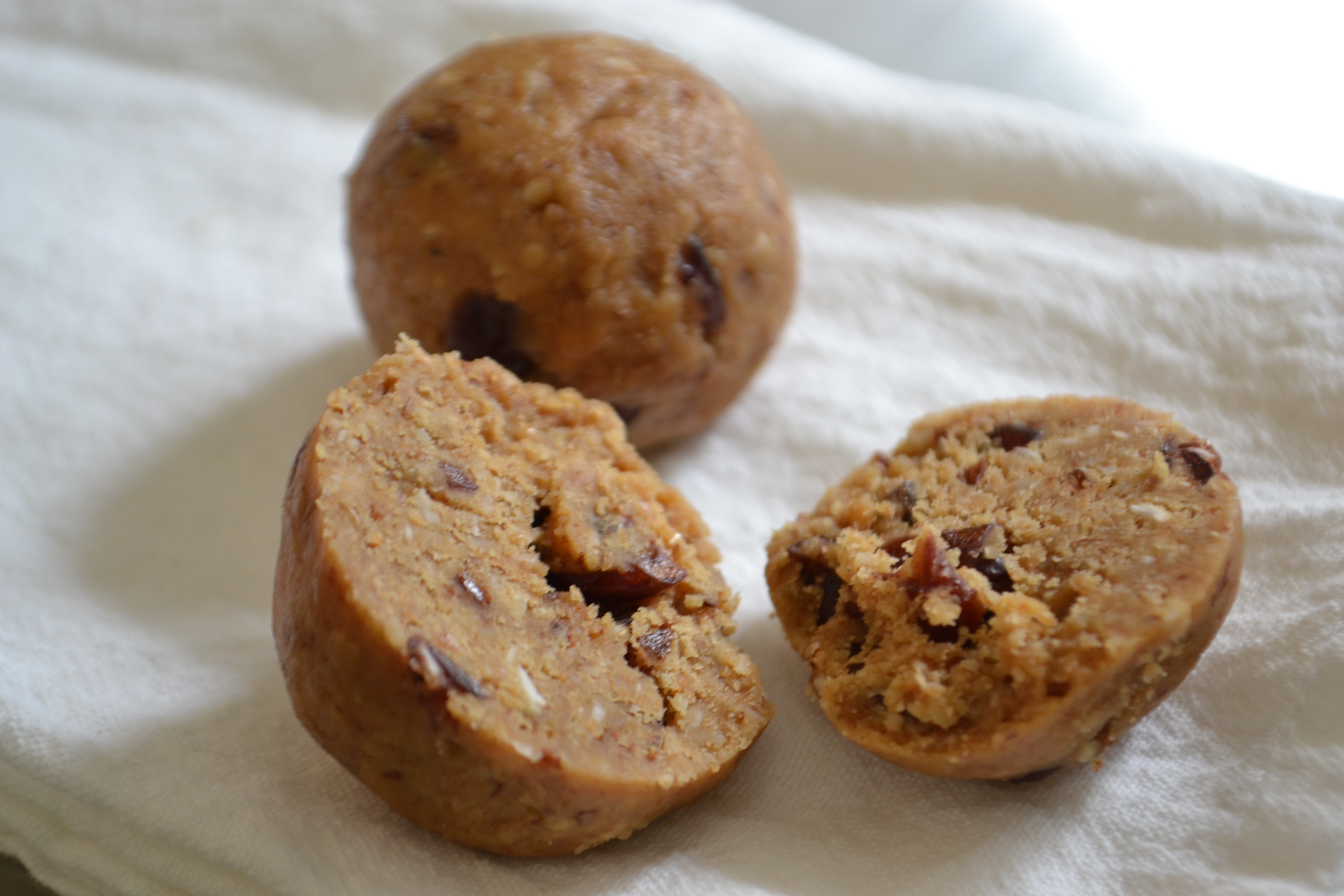
peanut ballsThese easy to prepare bites boast plenty of protein, healthy fats and fiber. They make an excellent snack when you want to quickly curb hunger pains or need extra energy for a particular busy or strenuous day.

Ingredients:

1/2 cup oats (porridge oats work best unless you want to run yours through the food processor)

1 cup shredded unsweetened coconut
¼ cup unsalted raw sunflower seeds, chopped or ground in the food processor
1 cup natural peanut butter (or almond or cashew butter)
3/4 cup cranberries, chopped (or substitute with 1/2 cup bittersweet chocolate chips)

1/2 cup finely chopped pecans

1/4 cup almond meal
¼ cup maple syrup (reduce to 1/8 cup if substituting chocolate chips)
2 tbsp coconut sugar

1 tsp vanilla
½ tsp cinnamon

1/4 tsp ground cardamon

1 tbsp each ground golden flaxseed

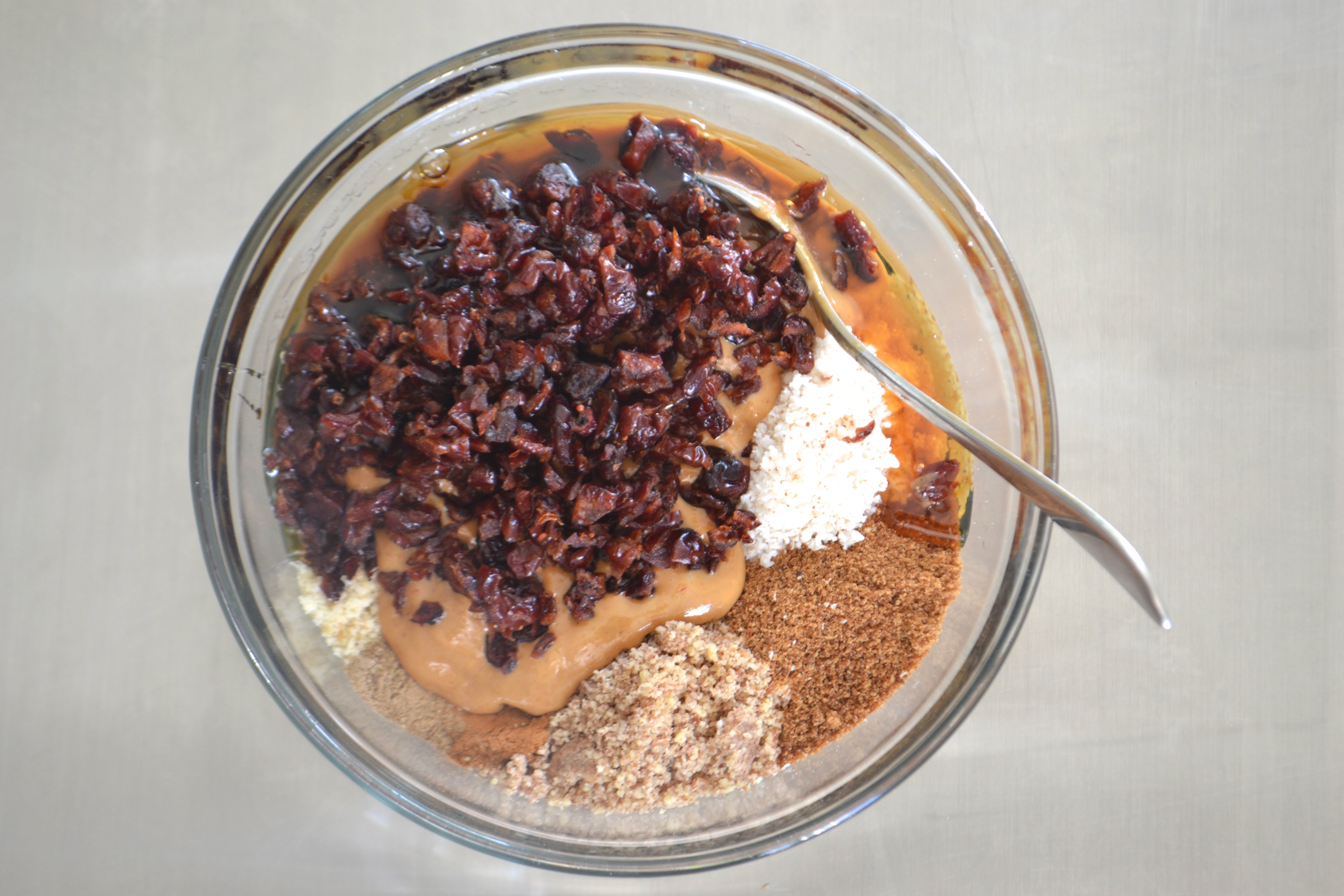
peanut balls mixPreparation:

Mix all ingredients in a medium-sized bowl. Stir until thoroughly combined. Roll into approximately 1-inch diameter balls. Store in an airtight container.

Makes 18-20 “bites.”

Happy snacking!

Kids Kale Smoothie

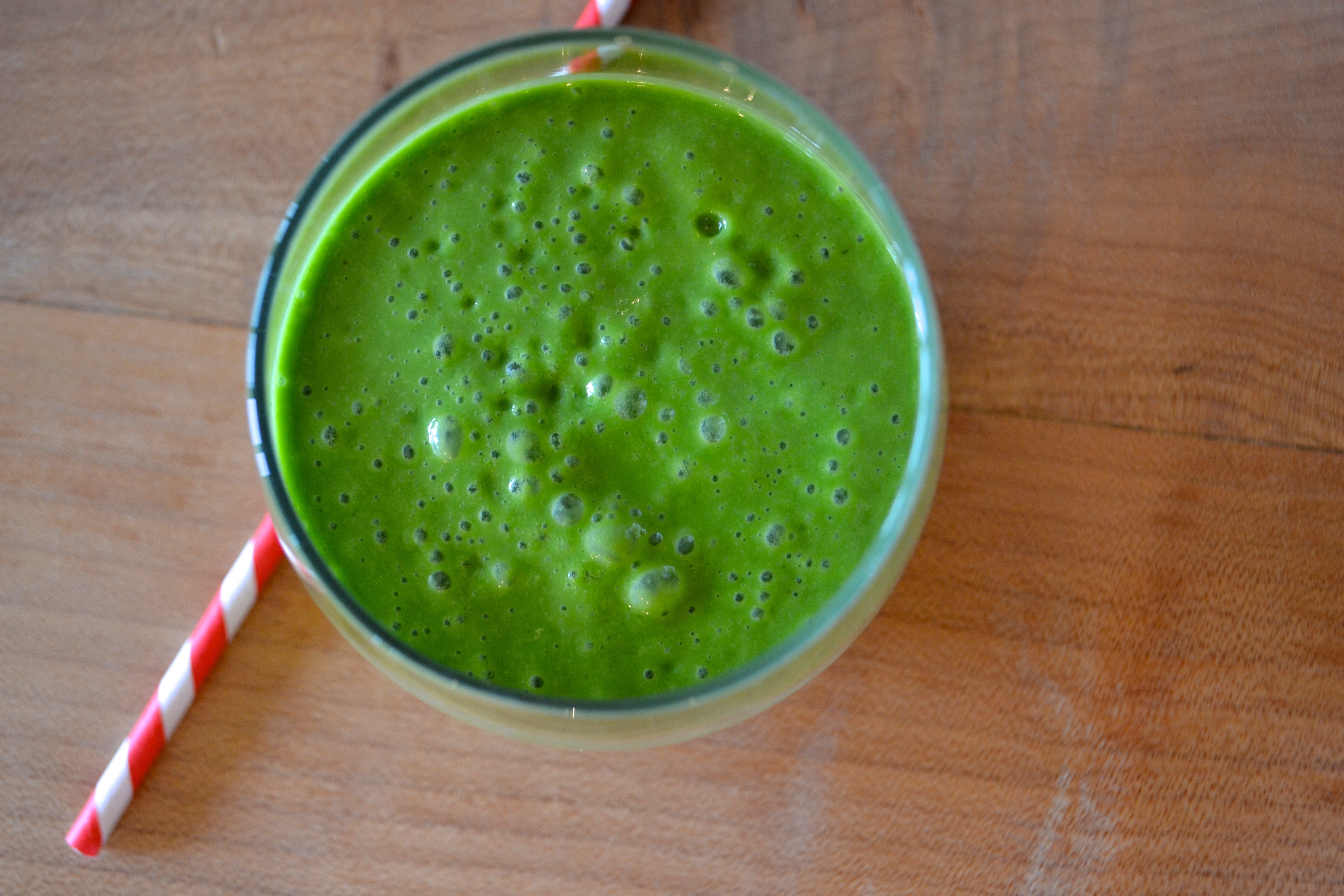
kids kale smoothieWhen I’m late pulling together dinner, or just too exhausted to think of creative ways to serve greens, I make this smoothie.

My kids recognize that it’s not the “green monster juice” I also serve, but that’s about the only distinction they make. They like this drink better than the Green Power Shake because this one is naturally sweeter from the banana and mango, and it boasts an amazingly bright green color.

Particularly if you own a Vitamix, you can get this drink incredibly smooth so that the green is merely thought of as the color of the drink (as opposed to what might be making it green). I mention this not because I’m a big proponent of hiding from my children what I feed them, but because I know there are plenty of kids (including mine, at times!) who balk at the thought of eating certain vegetables.

Ingredients:

1 ripe banana, peeled

1 handful of frozen mango chunks

1 handful fresh kale, washed and tough stems removed

1/2 cup water

1/4 cup coconut milk

A splash of maple syrup or Stevia to sweeten as desired

A splash or squirt of flaxseed oil (optional, but another great way to get in healthy Omega-3!)

Ice, if desired

Preparation:

Add all ingredients to your blender. Blend until completely smooth and creamy. Serve immediately.

Happy sipping!

paleo breakfastI’m not on the Paleo Diet, but I have been reading more about it, and can appreciate the logic behind it.

In case you’re not familiar with the Paleo Diet, it involves eating lots of grass-fed and/or wild meat, such as pasture-raised beef, venison, wild salmon, etc., and plenty of fruits and vegetables. Grains and legumes are not part of the diet, so no rice, beans, potatoes, etc. Basically, it’s what our ancestors ate during the Paleolithic Era–the logic being, while our culture has evolved to eat grains and such, our digestive systems have not. And while our society upholds certain beliefs around food, many of those beliefs are completely false or at least not the complete picture.

For example, the U.S. has one of the highest rates of osteoporosis (bone de-mineralization) even though calcium intake in the U.S. is one of the highest in the world. Paleo Diet proponents argue it is your calcium balance (intake vs. excretion) that determines bone de-mineralization. And acidic foods such as cheeses and grains destroy the calcium balance. We’ve also been led to believe we need grains (cereals, whole-grain breads, etc) for fiber and B vitamins, yet on a per-calorie basis, non-starchy vegetables contain seven times as much fiber as whole grains and 31 times as much as refined grains.

Even though I haven’t “gone Paleo,” I know myself well enough to recognize that a breakfast of carbs–whole grain, sprouted or plain–won’t last me until noon. Even a hearty breakfast of oatmeal or quinoa with almond milk and dried or fresh fruit will only last me until 10:30am at best. After which, I’ll find myself standing in the kitchen with a cupboard or refrigerator door open. However, a hearty breakfast of eggs with fruit or vegetables lasts me until at least 11:30am.

So while I won’t be giving up my Sunday waffle tradition any time soon (started several decades ago by my father), I am incorporating more Paleo-ic meals into my days.

These curry-spiced, pan-fried tomatoes with herb-scrambled eggs are incredibly flavorful and substantial without feeling heavy. Note: The dish isn’t strictly Paleo because I use a pinch of salt, and salt isn’t allowed under Paleo due to its acid-forming nature.

herbsIngredients:

2 tsp. extra-virgin olive oil

1 cup cherry or grape tomatoes

1 tsp. mild curry powder

sea salt (optional) and pepper to taste

4 eggs, beaten

1-2 tbsp. fresh oregano, chopped

1-2 tbsp. fresh chives, finely chopped

Preparation:

Heat a little olive oil in a small skillet (preferably cast iron) over medium heat. Add the cherry tomatoes, along with a grind of fresh pepper, a pinch of sea salt (optional) and the curry. Cook, shaking the pan occasionally, until the tomatoes “wilt” and start to caramelize and brown. Spoon out onto the serving plates and cover to keep warm.

fried tomatoesAdd just a splash of water to the eggs along with the oregano, and beat to incorporate. Add the eggs to the pan and cook until done, taking care not to over stir them. Serve them alongside the tomatoes. Sprinkle the chives on top of the eggs and serve warm.

Enjoy!

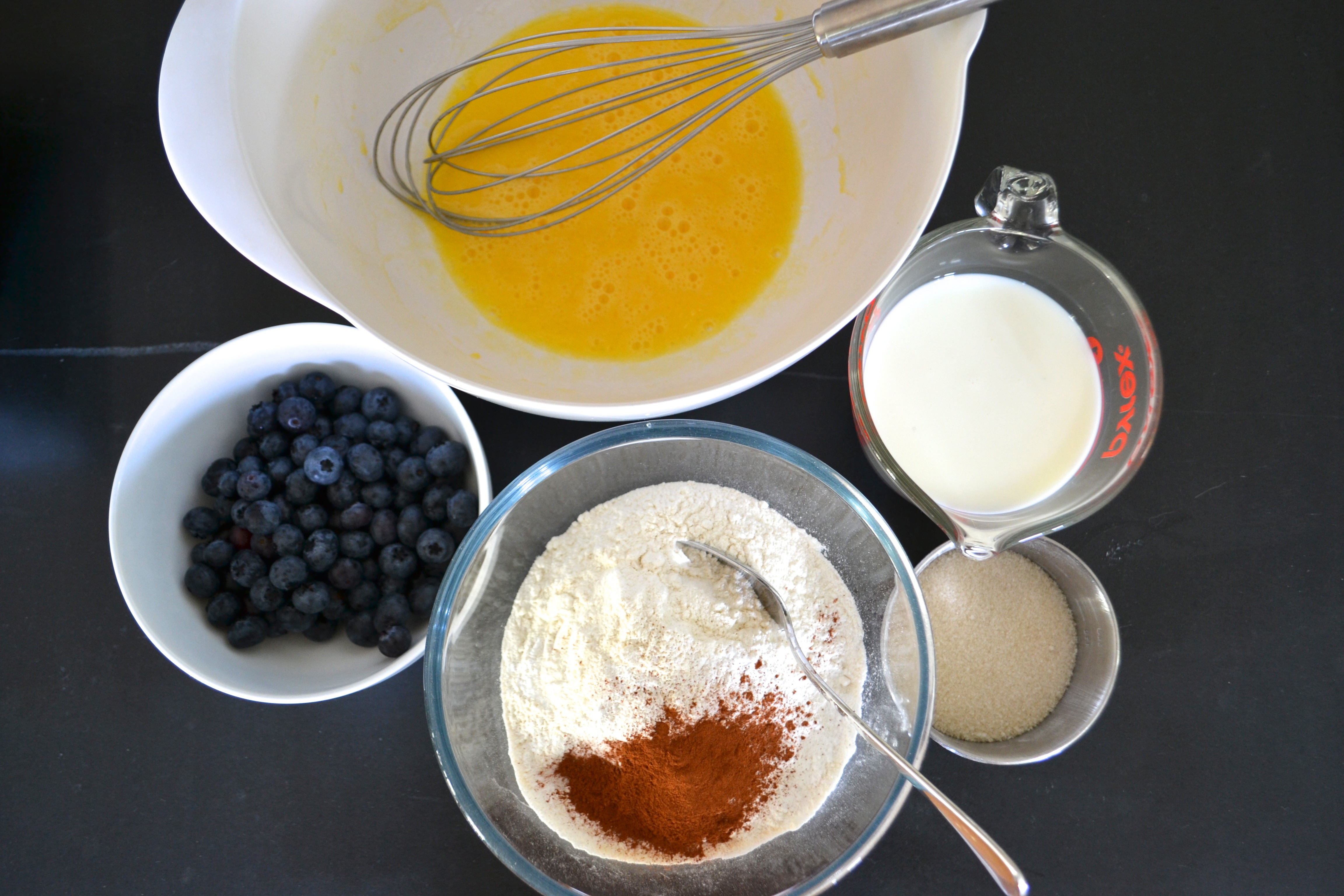
blueberry muffinsThese easy to prepare, delicious muffins are perfect with eggs on a weekend morning, and the leftovers make great afternoon snacks or a treat while out hiking or biking. This recipe is so easy, my kids share in the preparation.

I do not make these gluten-free, although you can certainly substitute ingredients and adjust the recipe accordingly. Even though I’ve been eating mostly gluten-free, I don’t believe in going to extremes unless one needs to–say, for instance, if you are actually allergic to gluten.

I think fresh blueberries work best, but if you don’t have them handy, you can use frozen blueberries. Just be sure to stir them into the batter without thawing them, otherwise your muffins will turn completely purple.

Ingredients:

1 cup all-purpose flour, regular or gluten-free*

1 cup whole-grain spelt flour

1/2 cup evaporated cane juice (cane sugar)

2 1/2 tsp. baking powder

1/4 tsp. baking soda

1/2 tsp. sea salt

1 tsp. ground cinnamon

1 cup milk (regular, or non-dairy, such as almond, coconut, etc.)

1/2 tsp. pure vanilla extract

1/2 cup butter or coconut oil, melted

2 eggs

1 cup fresh blueberries

blueberry muffin mixPreparation:

Preheat oven to 400 degrees F (200 C). Butter or line a standard 12-cup muffin tin.

In a medium bowl, toss together the dry ingredients (this does not include the blueberries).

In a sightly larger bowl, lightly beat the eggs. Whisk in the milk(s), vanilla extract and butter and/or oil. Add the dry ingredients and stir until just blended. Fold in the blueberries.

Spoon into the prepared muffin tins, until evenly distributed between all 12 (roughly three-quarters full). Bake until a toothpick inserted in the center of a muffin comes out clean, approximately 15-20 minutes. Let cool in the tins for 5 minutes. These are best served warm, but as I mentioned, they make for great snacks, too. Store thoroughly-cooled leftover muffins–if you have any–in an airtight container. They will keep for several days.

Enjoy!

*Note about all-purpose flour: I have been using Einkorn flour in recipes where I would normally use regular all-purpose flour. Einkorn is considered an ancient grain (often called “nature’s original wheat”) that has never been hybridized. In fact, the brand I use, Jovial, claims Einkorn is the same as it was more than 12,000 years ago. If you’re gluten-free or have been reading the papers lately, you know that studies suggest it’s not gluten in and of itself that’s causing so many problems; it’s the gluten in the majority of grains grown today–most of which have been tinkered with for hundreds of years.

To make this recipe gluten-free, use 2 cups gluten-free flour(s) in place of the regular all-purpose and spelt. I like to use 1 cup all-purpose gluten-free flour (e.g., Bob’s Red Mill), 1/2 cup almond flour, and 1/2 cup buckwheat flour.

cleaning 1Most people think they need an arsenal of products to get their home really clean. Unfortunately, many people buy more products than they actually need, and they often buy products that contain unnecessarily harsh and toxic ingredients, such as formaldehyde and other chemicals that release  volatile organic compounds (VOCs), which have both short- and long-term health effects.

You only need a few essentials to get your home really clean while avoiding potentially toxic chemicals  and other substances that can harm you and your family’s health as well as our environment.

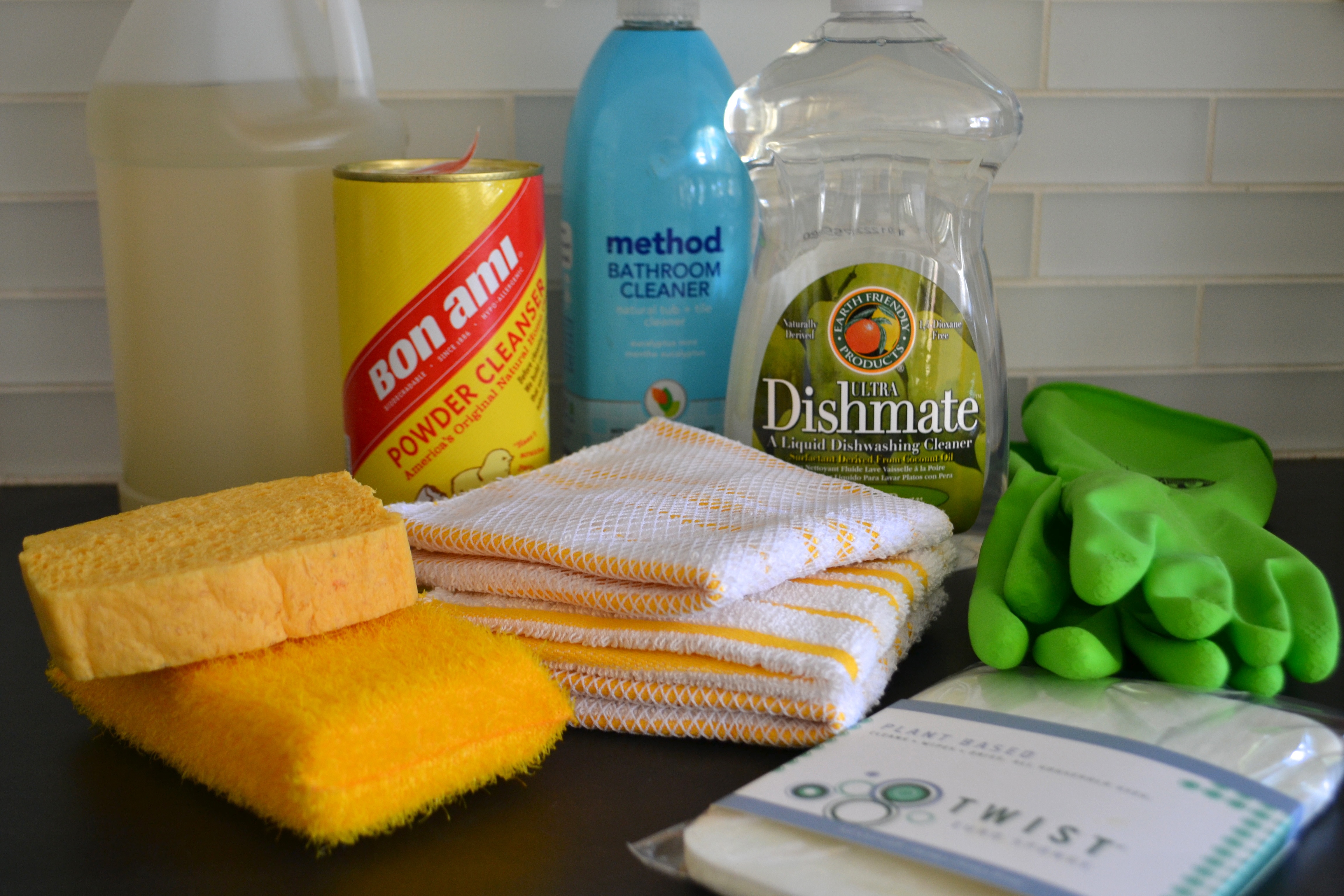
1. I can’t say enough about plain unfiltered or distilled white vinegar.* Mixed with plain water it cleans everything from windows, sinks, showers, tubs, faucet fixtures, laminate floors and mirrors. Simply dilute 1 part vinegar to 1 part water in a small bucket or spray bottle to use. Vinegar naturally kills bacteria, mold and germs. Studies have shown that even at 5-10% strength, vinegar kills roughly 90 percent of bacteria and viruses. For disinfecting cutting boards, soap scum, grime and mildew, use it full strength. For windows, simply spray on and dry with newspaper. 365 Every Day Value Distilled White Vinegar, $3.29, available at Whole Foods Markets nationwide.

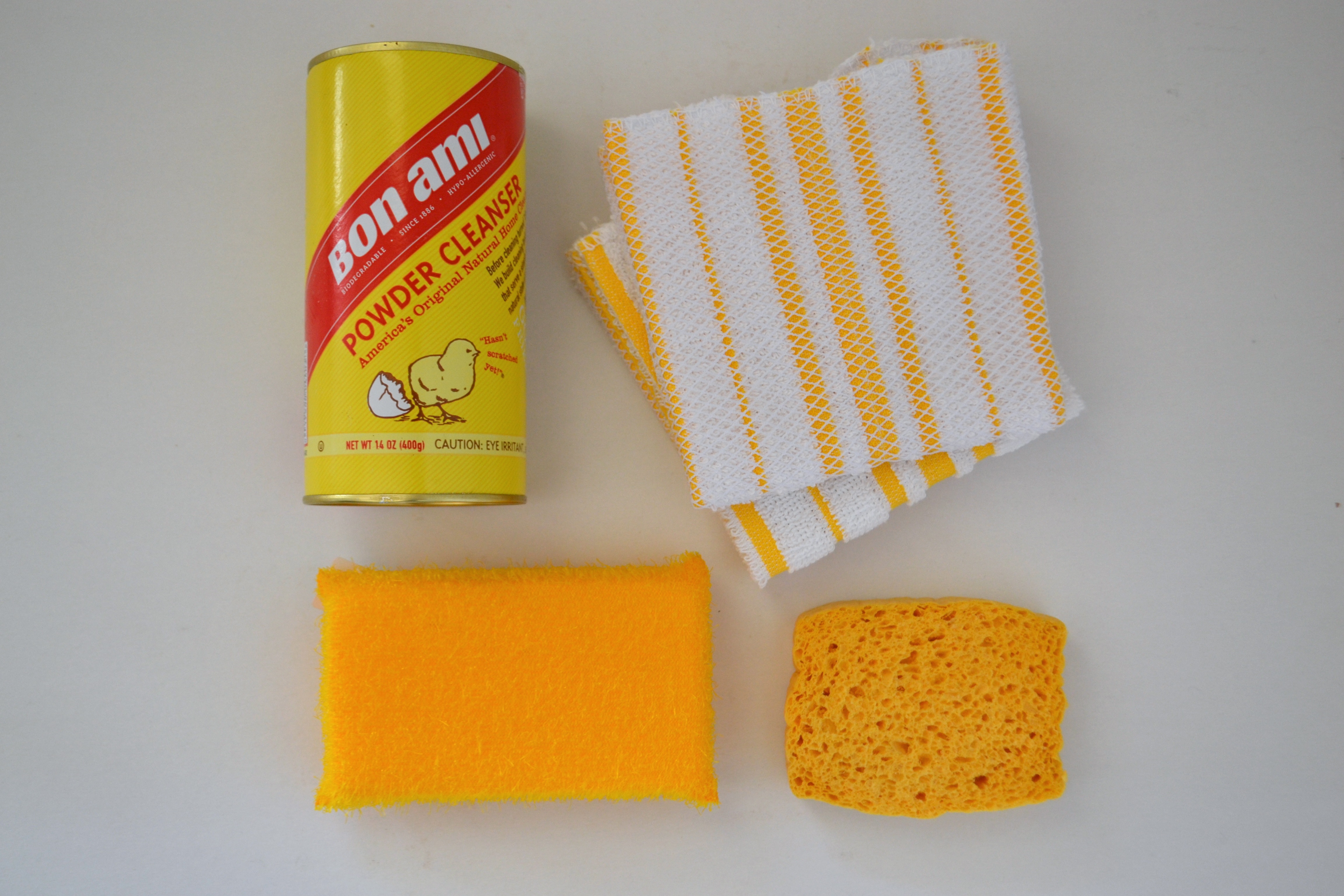
2. If you need a little more oomph for tackling stubborn mildew, soap scum and other gunk, use a tub and tile cleaner, Bathroom Cleaner, $4.99, methodhome.com or a good, old-fashioned all-natural abrasive cleanser (below), $1.69, bonami.com.

cleaning 33. Stop using paper towels, and switch to reusable cloths. These have a terry towel side and a scrubby mesh side. Scrubby Dishcloths, $6.95 for 3, crateandbarrel.com.

4. Natural cellulose and plant-based sponges are soft and incredibly absorbent. French Pop-Up Sponges (above), $7.95 for 6, crateandbarrel.com or Twist Euro Sponge (below), $1.99, twistclean.com.

cleaning 23. Dishwashing soap isn’t just for dishes. Use it to clean countertops, walls and painted wood. Ultra Dishmate Dishwashing Cleaner is fully biodegradable and made in facilities powered by 100% renewable energy, $2.99, ecos.com.

4. Simply having your hands in and out of water frequently can lead to excessively dry and chapped hands. Protect them with gloves while you wash or clean. The pair shown above is made from FSC certified natural latex and is cotton-lined. Household Gloves, $3.99, ifyoucare.com.

Think Spring!

* Since vinegar is highly acidic, it can dissolve mineral deposits and fibers. I don’t use vinegar on my stone surfaces, but I’ve read you can. Simply dilute with water and test in an inconspicuous place first.

asian slaw2I serve this salad often, pairing it with Spicy Grilled Shrimp (recipe coming soon!) or turkey sausages and Sweet Pickled Cucumbers. It would also be a good side to a grilled tofu dish. It’s fast and easy to prepare with a great crunchy texture, and it’s an excellent source of Vitamin C and Vitamin K. (Vitamin K plays an important role in bone health. People who have taken broad-spectrum antibiotics are particularly at risk of Vitamin K deficiencies.)

This salad is essentially coleslaw but without carrots, green onions instead of white and the addition of curry and peanuts.

asian slaw1Ingredients for Salad

1/2 a small head of green cabbage, finely sliced

1/2 a small head of purple cabbage, finely sliced

3 green onions, finely sliced (the white part and a little of the green)

1/4 cup fresh cilantro leaves, roughly chopped, stems removed

2 tbsp. dry-roasted peanuts, roughly chopped (dry-roasted is a must!)

Ingredients for Dressing

1/4 cup mayonnaise

1/2 tsp. Dijon mustard

1 tsp. apple cider vinegar

2 tbsp. buttermilk

1/2 tsp. sea salt

1/4 tsp. freshly-ground pepper

2 tsp. mild curry powder

Preparation

Toss first three salad ingredients in a large bowl, reserving cilantro and peanuts.

Whisk mayonnaise in a small bowl. Whisk in mustard until fully blended. Whisk in buttermilk, cider vinegar and buttermilk until blended. Whisk in spices until combined.

Toss the salad with the dressing until evenly coated. Sprinkle the cilantro and chopped peanuts over the top. Serve immediately.

Enjoy!

Golden Potato Fish Cakes

fish cake 2I cook these regularly for my kids, but last weekend I served them to my husband for breakfast with softly fried eggs and a little hot sauce. They were delicious and an excellent way to have a savory breakfast and give the sweet a break.

As a side note, I like preparing these fish cakes for my children because they won’t just tuck in to a fillet of fish, and I am always looking for ways to get more healthy protein into them. They appear to share my slight aversion to “flesh,” so I typically incorporate chicken, beef, pork and fish into more complex dishes, or at least dishes that don’t just resemble a slice of meat.

For this recipe, try Petrale Sole, Tilapia, or any other relatively light fish. Salmon also works well.

Ingredients

1/2 lb Petrale Sole (see comment above)

Olive oil or ghee

1 tsp mixed dried herbs, such as oregano, basil and parsley*

1 egg, lightly beaten

1-2 medium-sized potatoes, such as yellow finn

2-3 tbsp bread crumbs (regular, whole wheat or gluten-free)

1 1/2 tbsp ground golden flaxseed

1 garlic clove, crushed

1/2 tsp sea salt

1/4 tsp ground pepper

1/2 cup whole-grain spelt flour**

Cut lemon

Directions

Cut the potato(es) into quarters, leaving on the skin. Put in a pan and cover with water. Boil under tender. Drain. Chop into 1/2-inch cubes, although some will mash down while you’re cutting which is fine.

Heat a cast-iron or other skillet on medium heat. Add a teaspoon olive oil or ghee. After the oil or ghee has melted, lay in the fish fillet(s). Cook until done but still very moist.

Combine all the ingredients except the flour in a large mixing bowl. Stir until well combined. It may seem a little wet and sticky, but that’s ok.

Heat a large cast-iron or frying pan over medium heat. Add a little olive oil or ghee and swirl to coat. Make sure there is enough “fat,” to coat the pan just by swirling (not pushing a spatula around) otherwise your fish cakes will end up too dry.

Put the flour in a small, low bowl. Form 1 rounded soupspoonful of potato/fish mixture into a patty 2 1/2-3 inches in diameter and 3/4-inches thick. Place in the flour and flip to coat. Place in the pan and repeat until all the mixture is used up. Cook for 5-7 minutes then flip the cakes with a spatula and cook an additional 4-5 minutes until golden brown on both sides. Add a little more oil or ghee if needed. Allow to cool slightly on a plate covered with a paper towel.

Squeeze a little lemon juice over the cakes just before serving. Serve warm with cocktail or tarter sauce for a lunch or dinner. For breakfast or brunch, serve the cakes topped with fried eggs and hot sauce. For a fancier brunch option, serve them topped with poached eggs and a simple hollandaise sauce.

These keep for several days in the refrigerator in an airtight container, and can easily be reheated in an oiled pan over medium-low heat.

Enjoy!

*Fresh dill is also a great choice, but the flavor is too strong for my kids so I use the other three spices listed.

**If you are gluten-free, you can obviously substitute the spelt with a GF option. However, many GF flours add more stickiness. I haven’t experimented with GF flours yet for this recipe, but would love to receive feedback from anyone who does.

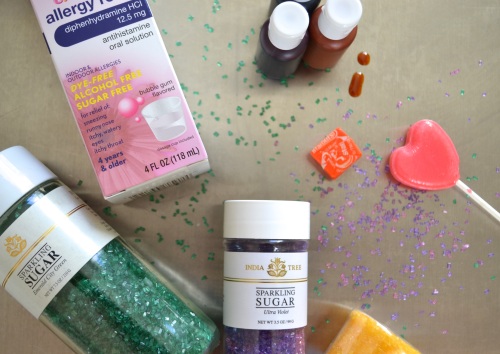
colorings

Naturally and artificially colored products, and dye-free labeling

Two recent outings with friends prompted me to want to research and write about the safety of artificial coloring in our foods.

On the first outing, an obviously health-conscious mom declined to give her son a red velvet-flavored cupcake because she didn’t want her boy “affected by the red dye.”

The second outing–just one week later, was with some good friends who, knowing I can be very strict about sugar, apologized for the amount of sugary snacks they had on hand for the kids. I can be a real pain about sugar, but it was my realization that many of the snacks they were referring to also contained artificial dyes that left me wanting to know more–for myself and my children and to share with others who might be just as curious.

Of course, some of you may remember hearing about the original health scares involving artificial colors. Orange No. 1 dye was banned in 1950 after numerous children fell ill from eating their Halloween candy which contained the dye. Later studies suggested the dye was toxic. But perhaps more notorious was Red No. 2. The FDA banned it in 1976 based on studies that suggested it was carcinogenic.

Today, food coloring–natural and artificial, can be found in products ranging from crackers and candy to sauces and beverages. Coloring is sometimes added to enhance natural colors or to adjust natural variations in color. Coloring is also used to combat color loss from exposure to light or temperature changes. And coloring is often used to add color to colorless foods or to make foods seem more “fun.” Examples are numerous and include Kellogs Fruit Loops, Jell-O brand mixes, Pepperidge Farm Colored Goldfish, some Kraft Macaroni & Cheese dinners, Florida oranges and Minute Maid Lemonade. For example, Pepperidge Farm Goldfish Colors contain several artificial dyes including Blue 2, Red 40, Red 3  and Blue 1, and colored M&Ms contain Blue 1, Yellow 5, Yellow 6 and Red 40. Of course the products I’ve listed represent only a tiny fraction of the products that contain artificial colors, and only “foods” that contain synthetic dyes. If you include candy–most of which I do not consider to be “food,” synthetic colors abound. In fact, nearly all mass-produced candy that has a color other than dark brown (from chocolate) contains synthetic dyes.

Are these artificial colors safe, particularly for developing brains and bodies, such as those of our children?

There have been numerous studies over the years linking artificial food coloring and attention deficit hyperactivity disorder (ADHD), but the results of those studies were often considered inconclusive, in part because artificial dyes are often used in conjunction with other artificial ingredients, such as preservatives. This made it difficult to determine if the increased hyperactivity diagnosed in children in the studies was attributable to the artificial coloring or the preservatives, or a combination of the two.

Recent FDA Ruling

In March of 2011, after decades of claiming artificial coloring agents were safe, the Food & Drug Administration asked a panel of experts to review the body of evidence and advise on potential policy changes. Prior to this, the FDA had stood firm on its position that artificial dyes are completely safe.

A year earlier, the science-based consumer advocacy group, Center for Science in the Public Interest (CSPI) proposed to food safety regulators a ban of eight of the nine artificial dyes currently approved by the FDA. The group also petitioned to have–in lieu of a ban–a warning on products containing artificial dyes. The suggested verbiage: “artificial colorings in this food cause hyperactivity and behavioral problems in some children.”

In April of last year, the expert panel appointed by the FDA concluded there is insufficient proof that foods containing artificial colorings cause hyperactivity in most children, and that these foods do not need to carry a special warning label as suggested by the CSPI. However, the agency scientists determined that while the average child may be unaffected by artificial dyes, children predisposed to behavior problems may see their symptoms worsen by eating food with synthetic color additives.

What surprised me most in my research is that FDA testing has concluded that several commonly used food dyes contain small amounts of carcinogens, and yet these are still permitted in the U.S. One of these is Red 40–the most commonly used food coloring in the U.S. today according to my research. And Yellow 5 has been proven to cause allergic reactions in people with aspirin allergies. Another artificial food dye, Yellow 6, has been shown to cause kidney and adrenal gland tumors in lab mice during FDA tests. Despite these findings, the FDA has concluded that Yellow 6 “does not pose a significant risk to humans”–and this is the third most widely used food dye in the U.S. today.

Then again, I guess those of you who regularly read my blog know I’m not a huge fan of the FDA. There are too many to list chemicals that our FDA allows that have already been banned in the EU. In fact, foods sold in the EU that contain synthetic dyes must carry a warning label on the packaging. How have American food giants, such as Kelloggs, KRAFT and General Mills responded? They have eliminated synthetic dyes in their products sold into the EU. If we were sitting around my dinner table right now, enjoying a glass of wine and a fine meal, and I continued with this thread, here is where I would launch into a tirade about the incredible, nearly unchecked power of U.S. industry lobbying groups which cripple the FDA and make much of function worthless.

And I would be remiss if I didn’t also mention that artificial food colorings are primarily derived from coal tar and petroleum products. I guess the fact that they’re carcinogenic when ingested shouldn’t come as a big surprise given their origin.

Options

So what to do? For starters, eliminate artificial dyes from most if not all the food you allow your children to eat. Artificial dyes don’t enhance flavor; in fact, they can increase bitterness, prompting manufacturers to add more sugar to compensate. When did we (or anyone for that matter) decide that some of our foods needed to be turquoise blue or hot pink? Why can’t a lemon-flavored drink be flavored with real lemon, and its color be that of real lemonade–that is, nearly clear? Why shouldn’t our crackers look cracker like–that is, wheat colored? And if a drink doesn’t look like it’s strawberry flavor suggests it should, why not add a little beet or pomegranate juice?

I’ll admit, natural food coloring dyes aren’t cheap, so if I were to allow artificial color anywhere in my children’s lives, I’d make the concession for cake frostings at birthday parties. Both Whole Foods Markets and Trader Joe’s refuse to sell products that contain artificial dyes, and both chains purportedly carry all-natural food coloring options. (I say “purportedly” because while I’ve read this in several places, my local Whole Foods carries natural options, but my Trader Joe’s does not.)

There are also several natural food coloring options available on-line, such as India Tree, and Maggie’s Naturals. The India Tree colors are incredibly vibrant (a little goes a long way) and are all derived from natural vegetable color. In addition, India Tree has beautiful, naturally-colored sugar sprinkles for decorating cakes, cupcakes and cookies. In fact, those gorgeous plummy-purple colored sprinkles on my gluten-free birthday cake were from India Tree, and the sprinkles are relatively inexpensive.

Stay true to your colors!

Cooking Without Limits

Food Photography & Recipes

Selma's Table

Life doesn't have to be perfect to be wonderful - stories and recipes from a wonderful life...