Feeds:
Posts
Comments

Panzanella – Bread Salad

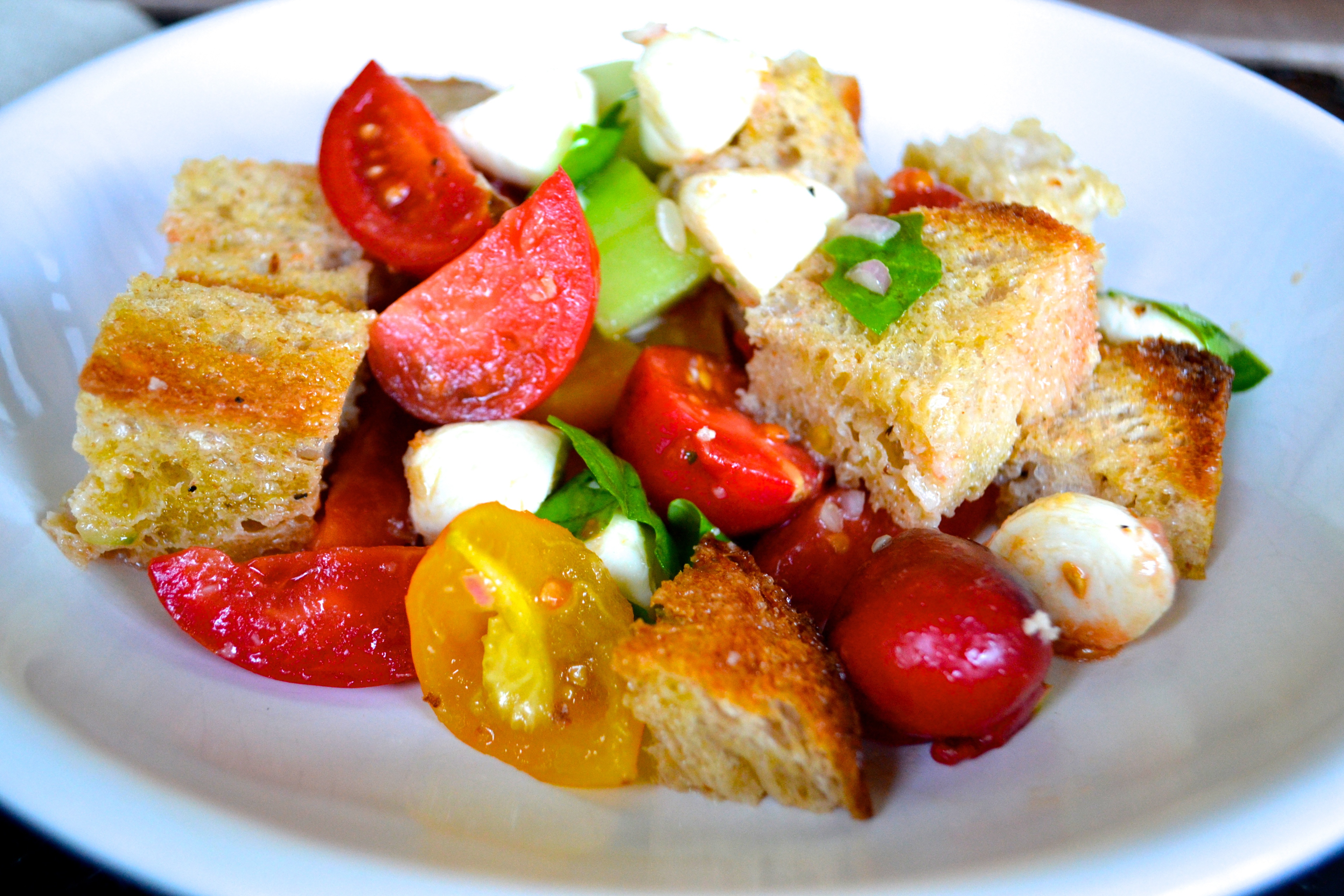
panzanella closepanzanella basketI meant to share these photos and this recipe a few weeks ago. My family and I went to our favorite organic farm and picked two big boxes of several varieties of heirloom tomatoes. They tasted like candy–actually better. And we ate them every day for two weeks.

My in-laws were visiting from the Netherlands, where you can’t get tomatoes like these–at least I could never find anything close to these when I lived there. We ate our hand-picked bounty with just a sprinkling of coarse-ground sea salt or served them in salads with a touch of balsamic vinegar to play off the incredible sweetness.

I also made panzanella, or bread salad, twice during my in-laws’ visit, because my father-in-law declared the salad to be “incredibly delicious,” and it’s always nice to please one’s father-in-law.

I realize tomatoes like these are no longer available in some parts of the United States and northern Europe. But since we’re still enjoying a blissful “Indian summer” here in Northern California, I figured I go ahead and share this simple and crowd-pleasing recipe.

Ingredients

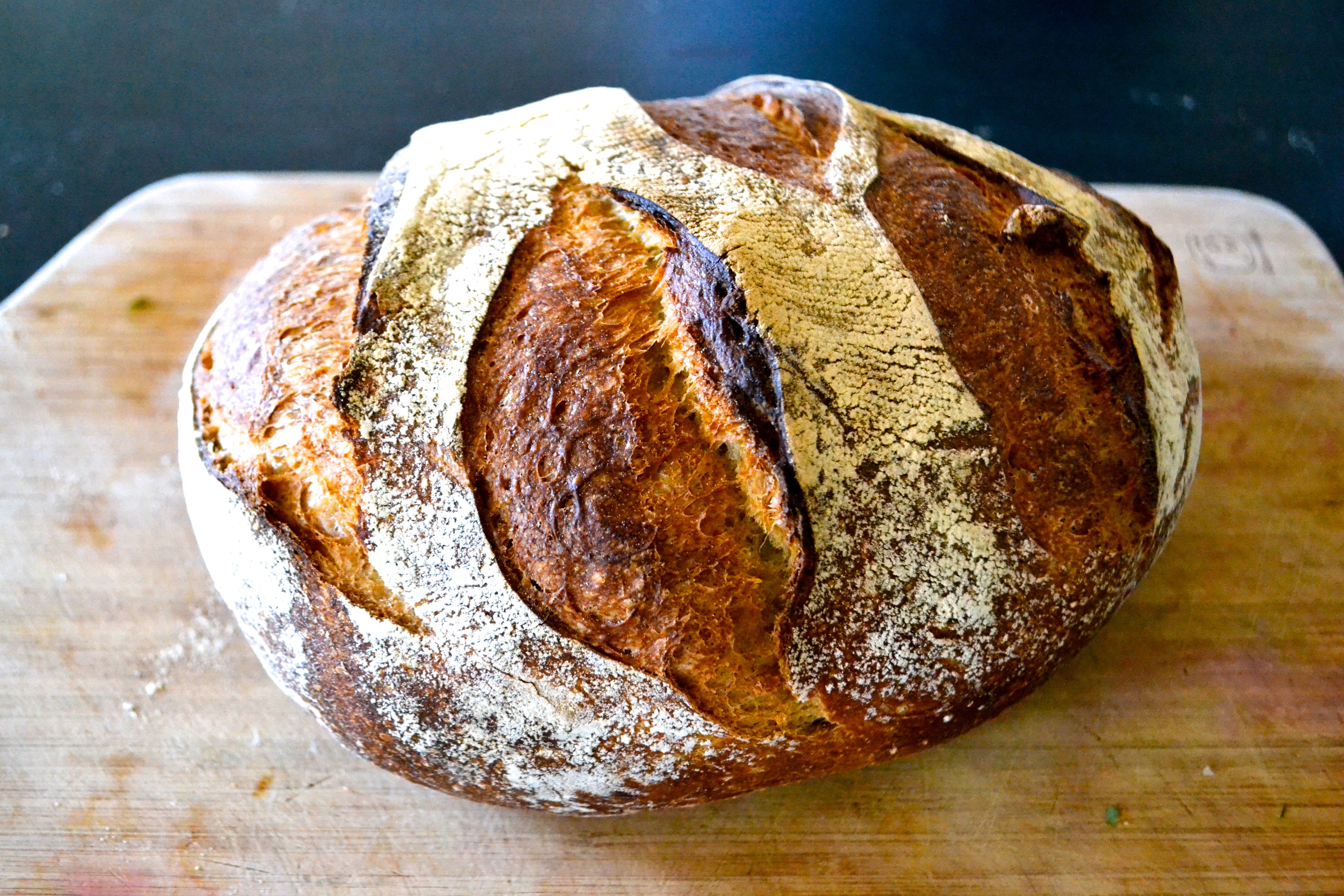
1 loaf pain levain

2-3 cloves garlic, crushed

2 lbs heirloom or roma tomatoes; sliced into halves or quarters depending on size

1 8 oz container fresh mozzarella balls (buffalo if you can get it)

1 large English cucumber, peeled, seeded and cut into 1/2-inch thick slices

1 small red onion, sliced in quarter rounds (optional)

1 handful fresh basil leaves

1 shallot, finely minced

1/4 cup sherry vinegar (red wine vinegar is OK if you can’t find sherry)

3/4 cup plus 2 tbsp extra-virgin olive oil, divided

1 1/2 tsp Dijon mustard

Sea salt and fresh-ground pepper to taste

panzanella loafpanzanella slicesPreparation

Preheat the oven to broil.

Slice the loaf of bread into 1-inch thick slices. Using a bread knife, cut some of the crust away–maybe 30 percent. Lay slices on a large baking sheet. Brush with 2 tbsp of olive oil. Sprinkle with a little sea salt and a grind or two of pepper. Rub in the crushed garlic. Broil until edges begin to brown, about 30 seconds depending on your broiler. Do not burn! Slice the bread into 1-inch chunks, and toss into a large salad or mixing bowl.

Cut the mozzarella balls in half. Add to the bread. Add in the tomatoes and cucumbers (and red onion if using). Tear the basil leaves and add.

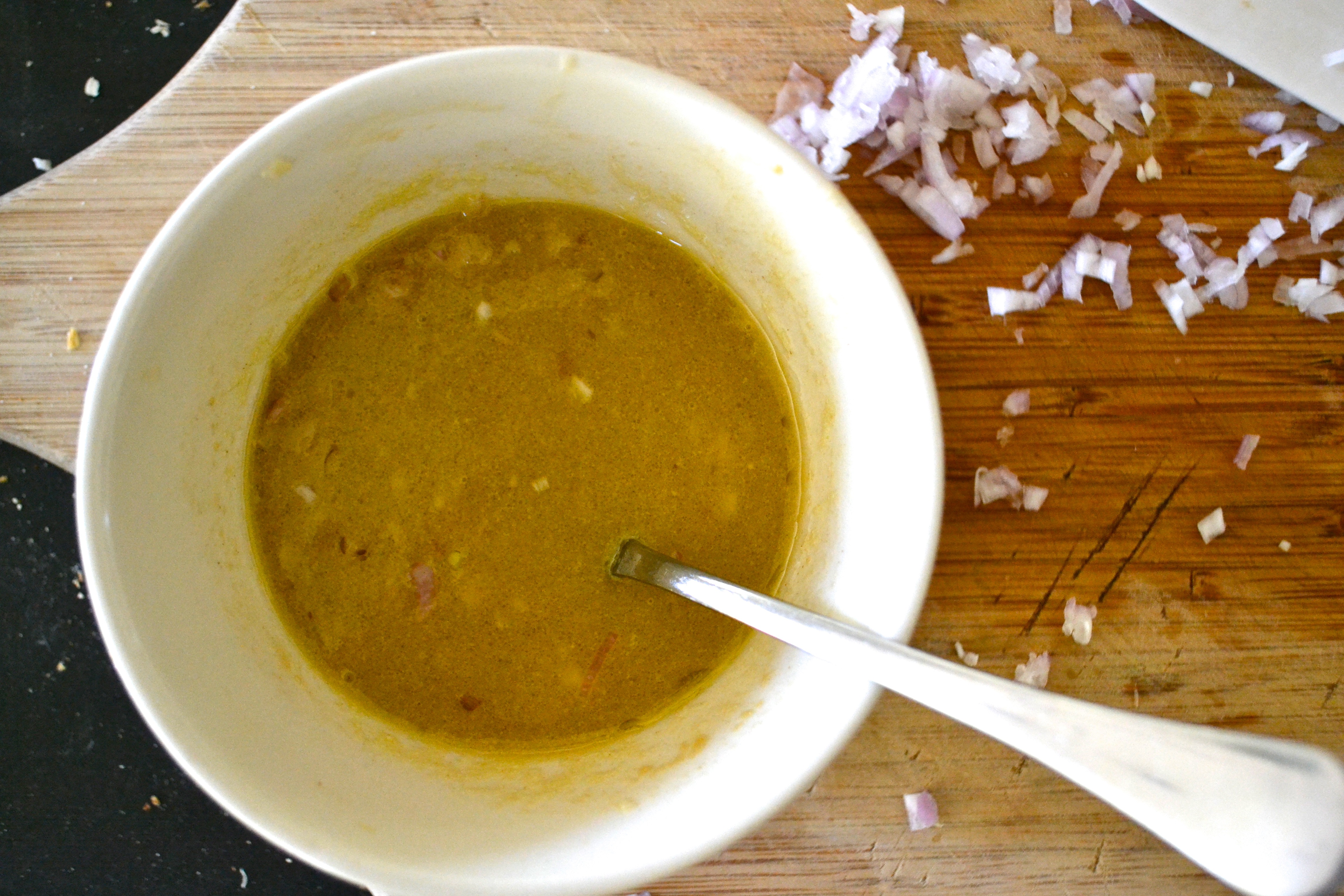
panzanella dressingIn a small bowl, whisk together the shallot, vinegar, and mustard. Continue whisking while gently pouring in the olive oil. Season with salt (about 1/2 tsp) and pepper and adjust to your liking. Toss the salad with the dressing and serve immediately.

This salad is designed to be served at room temperature, but I think it’s best when the bread is still warm from the oven and still crusty in a few places.

Enjoy!

panzanella above

fried riceLast week was one of the busiest weeks of my year… One of my other passions (aside from being a mother/household CEO and blogging) is the foundation I helped start three years ago–Empowered by Light. A small group of us, passionate about renewable energy and still idealistic enough to think we can change the world, got together, tapped our personal and professional networks to raise some money, and started delivering solar-powered LED lights to schools in a very remote part of western Zambia. This year we replaced three old and inefficient diesel generators at a high school serving 600+ students with a 106-panel solar field and battery storage system.

We’ve been lucky in that we’ve attracted some relatively famous people to our cause. Actor and environmentalist, Adrian Grenier (star of the hit HBO series, Entourage) co-hosted our event in 2011. Josh Fox, the director of the Oscar-nominated documentary Gasland traveled to Zambia with my husband and another board member that year. Actor and activist, Mark Ruffalo (The Avengers, The Kids Are All Right, Shutter Island, etc.) co-hosted our event last year, and this year traveled with our team to Zambia for the commissioning of the solar micro grid at the high school.

And last Friday was our annual fundraising event, which I organize each year. The prior two years we held a party for 200+ people, but this year we decided to hold a much smaller, more intimate event–a dinner with 25 wonderful supporters in a private residence. I didn’t necessarily expect it to be easier to plan, but I had no idea how much more work a small dinner can be! I regularly throw dinner parties, where I carefully plan the menu, shop for the ingredients and cook for hours (sometimes days). But having an event in someone else’s home, where the size of the group is just large enough that you need to bring in everything (e.g., chairs, tables, dishes, glasses, etc.) is an entirely different thing. And I didn’t even do the shopping or the cooking–just the selecting of dishes! I likened the whole process to planning a wedding, but on a shoe-string budget since we’re a small non-profit.

When I experience a particularly busy period, I often find myself eating out more. I don’t feel like I have time to cook or the fridge is empty, so I pile the kids in the backseat and off we go. But despite the fact we try and eat healthy dishes when we eat out, such as sushi and rice and beans, it’s never as healthy as I’d like, it gets expensive, and it really doesn’t save much time.

I designed the “30 Minute Dinner Series” to give my readers ideas for quick and easy dinners for the whole family to enjoy, but in reality, when I’m super busy and super stressed, I don’t like to eat regular meals. I like to drink my meals, such as my kale shake (water, coconut milk, frozen kale, frozen berries, fish oil and dates). But my kids want and need more than a kale shake for dinner, so I also have a few kids’ favorites like black bean and avocado quesadillas and shrimp fried rice. Fast, nutritious and tasty, you can whip up these dishes in 20 minutes or less (far less time than it takes to drive to a restaurant, sit, order and receive your food).

Here’s my recipe for Fried Rice (Serves 2-3)

Ingredients

1 cup rice (white if you’re short on time or cautious about brown)

1 1/2 cups filtered water

1/2 cup frozen peas

5-6 fresh or frozen shrimp, peeled and deveined (or substitute pork or chicken from leftovers)

2 eggs, lightly beaten

Avocado oil or other high-heat stable oil

Sweet and Sour Sauce

2 tbsp sugar

1 tbsp rice vinegar

1 tbsp ketchup

2 tsp soy sauce

1-2 tsp cornstarch

Preparation*

Rinse your rice until the water runs clear. Pour in the 1 1/2 cups water. Bring to a boil. Reduce to barely a simmer, cover and cook for 15-20 minutes.

While the rice is cooking, boil a cup or two of water in a small skillet. Toss in the peas and cook on low for 5-6 minutes.

While the peas are cooking, defrost your shrimp, if frozen, by placing them in a bowl of tepid water. In a small saucepan, mix together the first four ingredients for the sweet and sour sauce (not the cornstarch). Stir in about 1/3 cup water and cook over medium heat until the sugar is dissolved and everything is blended. Put the cornstarch in a little bowl and stir in a spoonful of the sauce. Add to the saucepan and stir until blended and nicely thickened.

When the peas are done, drain them and set them aside, covered (so they don’t shrivel while you’re finishing with the other ingredients). In the same skillet, pour in a little oil and cook the shrimp over medium heat approximately 2-3 minutes each side or until opaque. Chop the shrimp into small pieces and keep warm with the peas.

Using the same skillet (fewer dishes to clean!), heat a little oil and cook the eggs on medium heat until set just as you would regular scrambled eggs.

Combine the rice, peas, shrimp and eggs and serve warm with the sweet and sour sauce on the side.

Enjoy!

*I always recommend reading through a recipe in its entirety before starting to cook. As you will see from this one, there is a lot of multi-tasking. Maybe it takes a little longer than 20 minutes the first time you make this dish, but after that, you can make it easily in the amount of time it takes  to cook the rice. And if you happen to have rice leftover from another night, you can make this dish in about 10 minutes!
prawn veg polenta aboveWhen I traveled through my no-gluten phase (which ended abruptly when my food sensitivity test suggested I can handle gluten perfectly well), I was in constant search for starch substitutes. I believe we need some, and unless you are dieting to lose weight, there’s no reason not to eat them. They’re filling and satisfying in so many ways.

Rice seems to be the number one choice for gluten-free eaters, but there’s so little nutritional value, that it’s usually my choice of last resort–unless, of course, I’m cooking an Indian dish which is nearly always best over rice. So that leaves potatoes and corn. I have a natural aversion to potatoes because I feel you need to use a lot of fat (e.g., butter, ghee, olive oil, etc.) and salt to make them tasty and give them a desirable texture (e.g., roasted, fried, etc.). Corn, on the other hand, has a natural sweetness and a unique texture and can be used in countless ways.

Polenta is perhaps the best and easiest base for any number of meats and/or vegetables. It whips up in about 20 minutes and can be molded or served soft and creamy. And you can make it soft and creamy without adding any “cream” (milk or cheese, that is). Grilled or pan-roasted fish or meats go perfectly with polenta. If you’re vegetarian, any combination of grilled or roasted vegetables make a great companion to polenta. You can also serve marinara sauce over polenta if you’re avoiding pasta.

And corn is surprisingly nutritious! Just one cup provides an impressive 16 grams of protein. Corn is also an excellent source of iron, magnesium and Vitamin B-6. (Note: 1 cup of corn also has 600 calories, so don’t indulge too often if you’re calorie counting.)

When I haven’t been able to make it to the store, I can grill or saute whatever bits are left in my fridge and serve it over polenta for a perfectly satisfying dish.

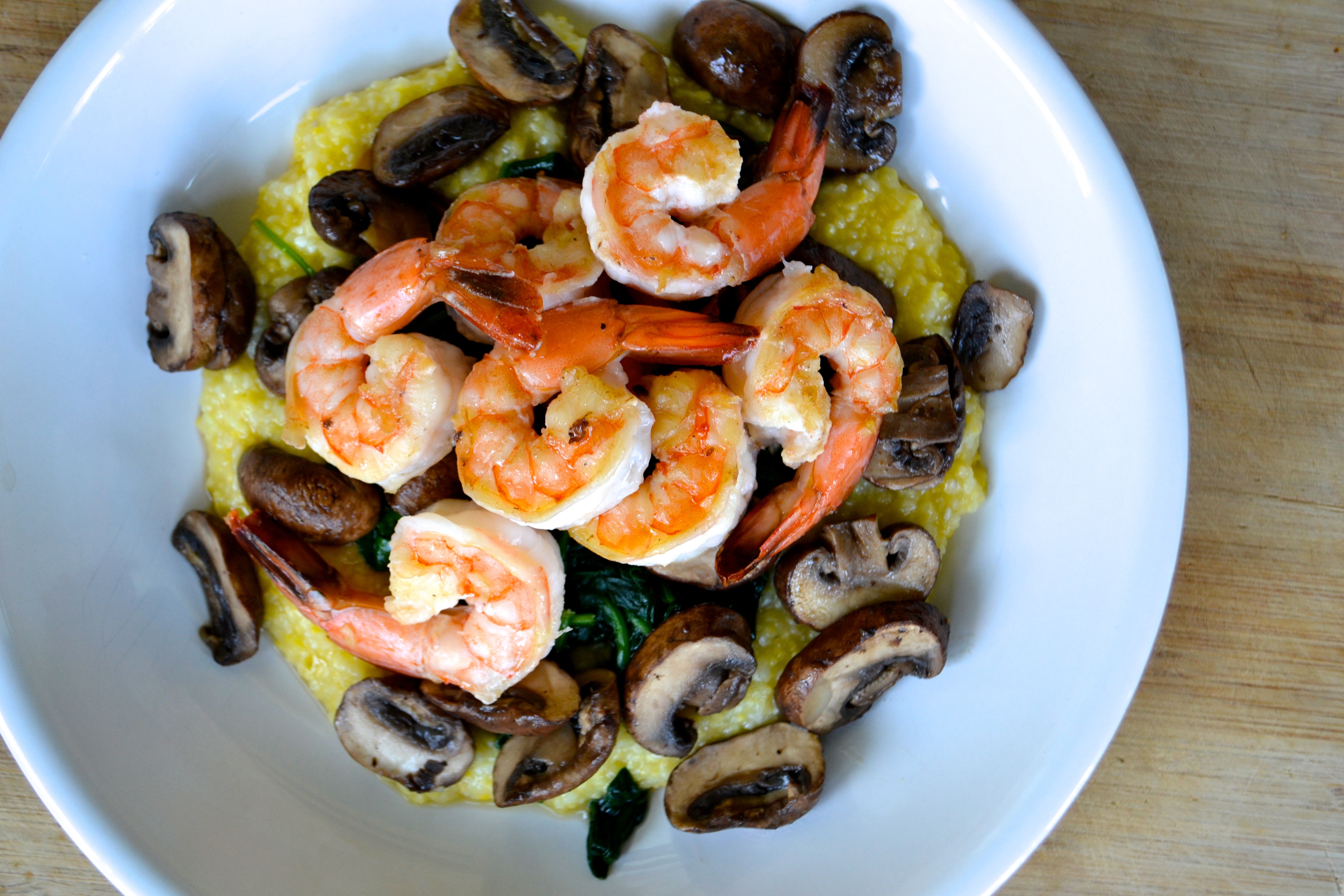
You can make this dish with prawns, mushrooms and spinach in less than 30 minutes. The only real skill required is the ability to multi-task, as you will need to monitor three burners simultaneously. It’s really not hard (I’m speaking mainly to some men here), since the polenta just does its thing with only a little stirring, and the mushrooms are pretty self sufficient, too.

prawn veg polenta closeIngredients

6 cups filtered water or 4 cups water and 2 cups milk (regular or coconut)

1 1/2 cups polenta

1 lb crimini or other mushroom

1/4 cup dry white wine*

3/4 lb prawns, shelled with tails left on and deveined

1 lb baby spinach

2-3 tbsp olive oil

2 cloves of garlic, finely minced

sea salt

fresh-ground pepper

pinch of red pepper flakes (optional)

pinch of parmesan cheese (optional)

Preparation

In a large saucepan, bring 6 cups of water (or water/milk combination) and 1/2 tsp salt to simmer over high heat.

In the meantime, heat 1 tbsp olive oil in a cast-iron or other saute pan over medium heat. Add in the garlic and cook for 2-3 minutes taking care not to let the garlic burn. Add in the mushrooms, white wine*, and 1/4 tsp free-ground pepper (and red pepper if you’re using it), and cook, stirring occasionally, until the mushrooms soften and slightly brown, about 15 minutes.

Once the water simmers, reduce the heat to low and slowly pour in the polenta, stirring constantly. Allow the mixture to cook on a gentle simmer, stirring occasionally, for about 20 minutes. Your polenta should be very thick and creamy and take effort to stir.

When the mushrooms are close to done, heat another cast-iron or saute pan over medium-high heat. Pour in 1 tbsp olive oil and swirl to coat the entire bottom of the pan. Add the prawns to the pan in a single layer. Sprinkle with 1/4 tsp salt, and cook for approximately 2-3 minutes on each side or until opaque.

When the mushrooms are done, put them in a bowl and keep warm. Using the same pan, toss in the spinach and cook until just wilted, about 5-7 minutes depending on the size of your pan.

On plates or in wide pasta bowls, serve up a good-sized dollop of polenta. Top with spinach, mushrooms and prawns. Top with fresh-grated parmesan if you’d like.

*Omit if you’re using coconut milk in the polenta.

Vegetarian? Skip the prawns. The dish still gives you a hefty amount of protein.

Vegan? Skip the parmesan and use coconut milk in place of half the water to make the polenta creamier.

Enjoy!

Budget Bath Favorites

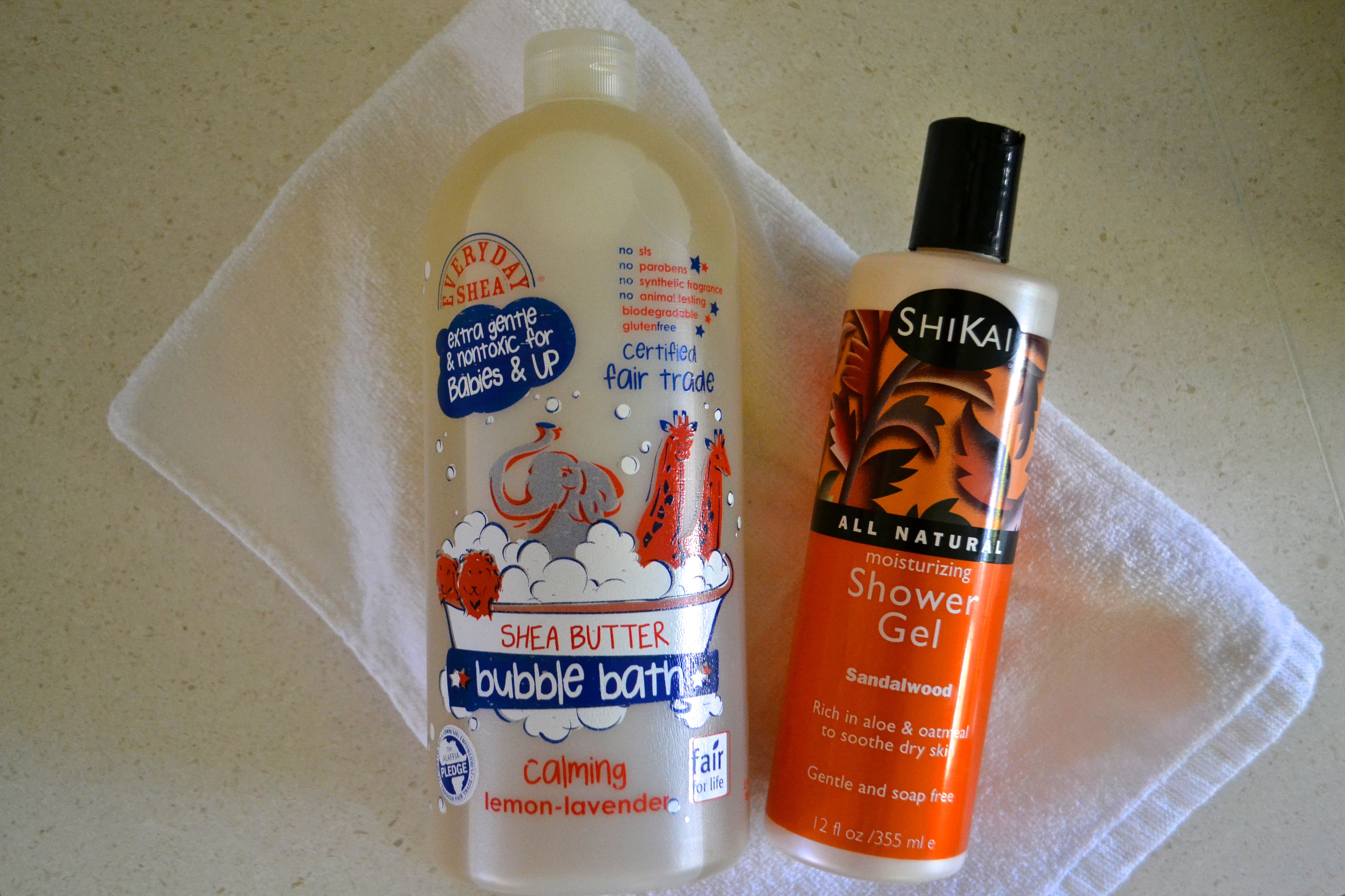
bath favoritesA few of you have been asking me to post more product recommendations; after all, I am a product junkie. However, some of my favorite products are specific to my skin type, which means my recommendations would be less useful or not at all useful to those with a different skin type than mine. (Just for the record, my skin is “mature” and combination, and my biggest complaint is sun/age spots, although a few wrinkles are starting to stick around even when I’ve stopped smiling or finished laughing.)

But here are two products that work for any skin type. I list them at “budget” because they’re very reasonably priced, but I’d use them even if I wasn’t cost-conscious.

Everyday Shea’s bubble bath “for babies and up” is made with truly all-natural ingredients, is fair-trade certified and contains shea butter to gently moisturize. It’s phthalate-free and packaged in a PVC- and BPA-free bottle–although at 32 oz, it’s more like a jug. It costs approximately $10, but you can occasionally find it for as little as $7. I like the “calming” scent, which contains lavender and lemon (because I like the idea of winding down my little ones before bed instead of amping them up). It also comes in “comforting” eucalyptus mint, which seems appropriate to use when your little one is feeling under the weather. There is also an “adult” version available in three scents, including unscented for those with extra-sensitive skin.

Moving from the bath to the shower, my personal favorite is Shikai’s All Natural, Moisturizing Shower Gel, $6-$10 for 12 oz. There are nine scents available: Cucumber Melon, Vanilla, Yuzu, Sandalwood (my favorite!), Pomegranate, Honeysuckle, Starfruit, Gardenia and Coconut–all of which are pretty amazing.

A comment about sandalwood… Years ago–at least 20, a colleague from India traveled to his home country for work and brought back a small gift for me: a letter opener made from sandalwood. I remember smelling the incredible scent even before I had unwrapped the paper covering the small wooden knife. I still have it to this day, and remarkably, it still smells amazing, just far less strong.

As many of you know, I “vet” all my products with the Environmental Working Group before recommending them, so you can imagine my shock and dismay when I read that the EWG gave my beloved Shikai shower gel a “5” (moderate hazard) because one of the ingredients it contains–cocoamide DEA, is rated as a high hazard due to issues with (non-reproductive) organ toxicity from contamination. Evidently cocamide DEA, although naturally-derived from coconut oil, is chemically-modified.

Naturally, I immediately contacted Shikai. A company representative immediately followed-up and assured me that they have been aware of the issue and have pulled all product containing cocamide DEA from their distribution centers. Furthermore, the new formulation does not contain this potentially hazardous ingredient. The Shikai representative also told me that eight out of their nine scented shower gels use only natural essential oils for fragrance, but that the sandalwood uses a “tiny amount of chemical fragrance to boost the natural sandalwood scent.” Since it’s a product you rinse off immediately (unlike lotion or a facial mask), I will happily keep using this wonderfully-smelling, very moisturizing shower gel.

Bath time!

Nourishing Mung Dal

indian meal aboveThe weather here in Northern California has started to turn. Sure, it might reach into the mid-70s  this weekend, and we’ll drive to beach to jump in the waves, but now there’s a distinct chill to the air every morning and evening. It’s been creeping up on us slowly, but I notice it most when I leave just before 8:00am to walk the kids to school. My son used to protest putting on a jacket, but now he welcomes it and keeps his hands shoved deep in his pockets while we walk.

The cold weather makes me crave warmer, heartier meals. I’ve started making a lot of simple curry dishes (which I’ll post soon), as well as some Indian favorites, like saag and masala. I also like cooking Indian food regularly now that the cold and flu season has started. All the turmeric, onions, chilies and ginger are great for boosting immunity.

This recipe is adapted from Julie Sahni from a New York Times Magazine article last December. She shared her recipes for four different dal dishes, all of which are delicious, incredibly nutritious and easy to prepare. Part of what makes them so good are the corresponding tadkas — heated ghee or oil with spices. You add the tadka at the end, and it imparts even greater flavor and warmth to the dish.

indian meal back upindian meal spicesindian meal closeChilkewali Mung Dal (Split Green Mung Beans), Mumbai-Style

Ingredients

1 cup split green mung beans*

1 tsp turmeric

1 tsp minced garlic

1/2 tsp minced and seeded hot green chili (I use serrano)

3/4 cup chopped onions

1 cup chopped tomatoes (I use canned)

1 1/2 tsp brown sugar

1 1/2 tsp sea salt

2 tbsp sunflower or other neutral oil or ghee (clarified butter) if you have it

1 tsp brown mustard seeds

2 tbsp fresh ginger, chopped

1 tsp ground cumin

3 tbsp chopped fresh cilantro

12 curry leaves (optional, and if you can find them)

Preparation

Drain the dal and comine it with the turmeric, garlic, chili, onions, tomatoes, brown sugar, salt and 4 cups water in a large saucepan. Bring to a boil. Adjust the heat so the mixture bubbles gently, and cook covered for 30 minutes, stirring occasionally. Partly uncover and continue cooking for another 15 minutes, until the dal is tender. Turn off the heat. Here, Julie recommends using an Indian mathani (wooden beater) or whisk to puree the dal for a minute. However, I skip this step and prefer the somewhat chunkier consistency.

To make the tadka, heat the oil in a small saucepan over high heat. When the oil is hot, add the mustard seeds and cover the pan. Listen for the seeds to pop and sizzle. When the popping begins to subside, add the ginger and cook until lightly browned, about 15 seconds. Add the curry leaves if you’re using them. Turn off the heat and stir in the cumin.

Pour the tadka over the dal and stir gently to combine. Garnish with cilantro and serve immediately over basmati rice or with naan. Note: I love Indian raita, but I’m usually too lazy to make it, so I simply stir in a little plain yogurt.

Happy Fall!

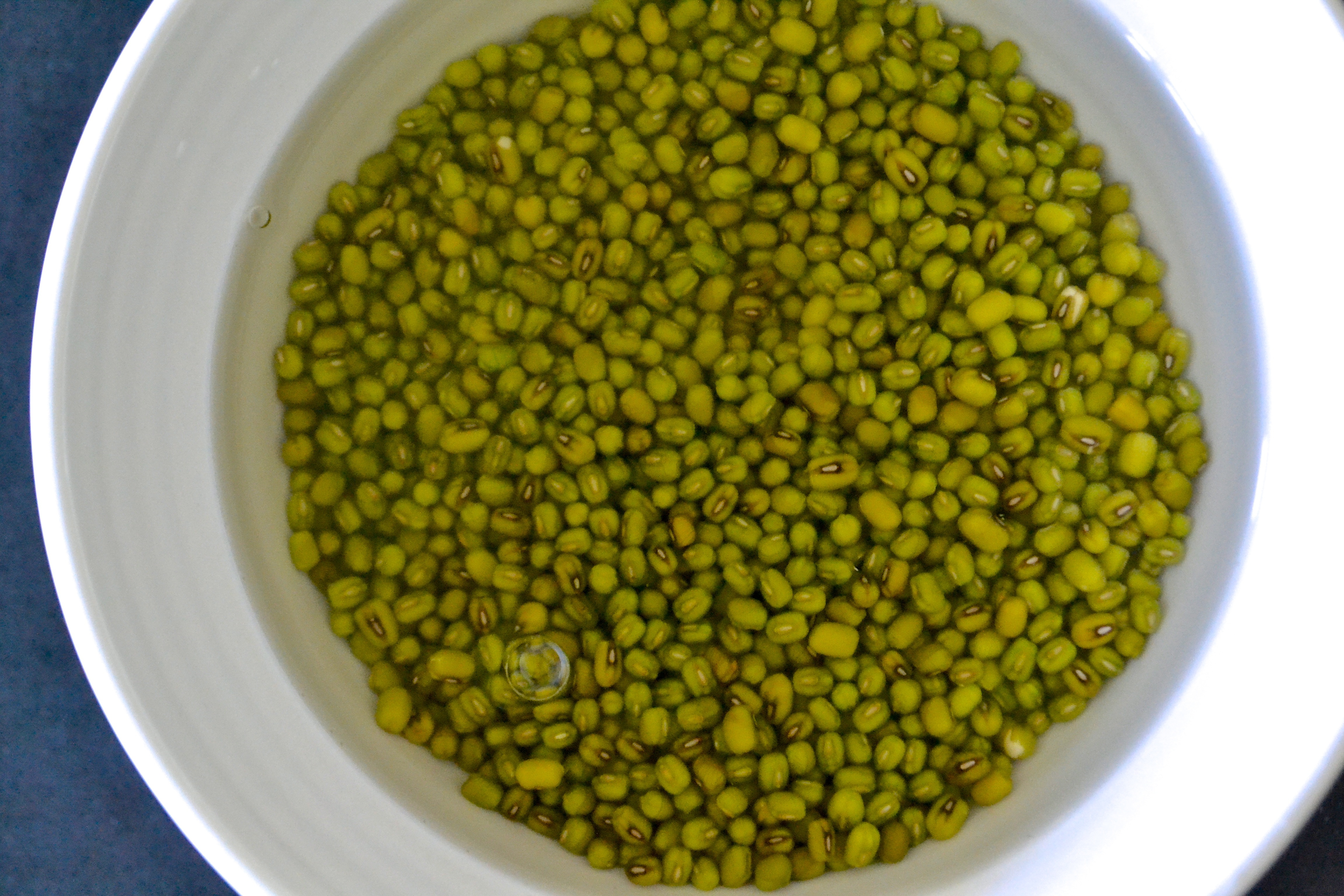
*If you can’t find split green mung beans, you can use the whole beans. Just soak them for 12 hours or overnight covered in water to which you’ve added a little apple cider vinegar. Drain them before starting to prepare the recipe.

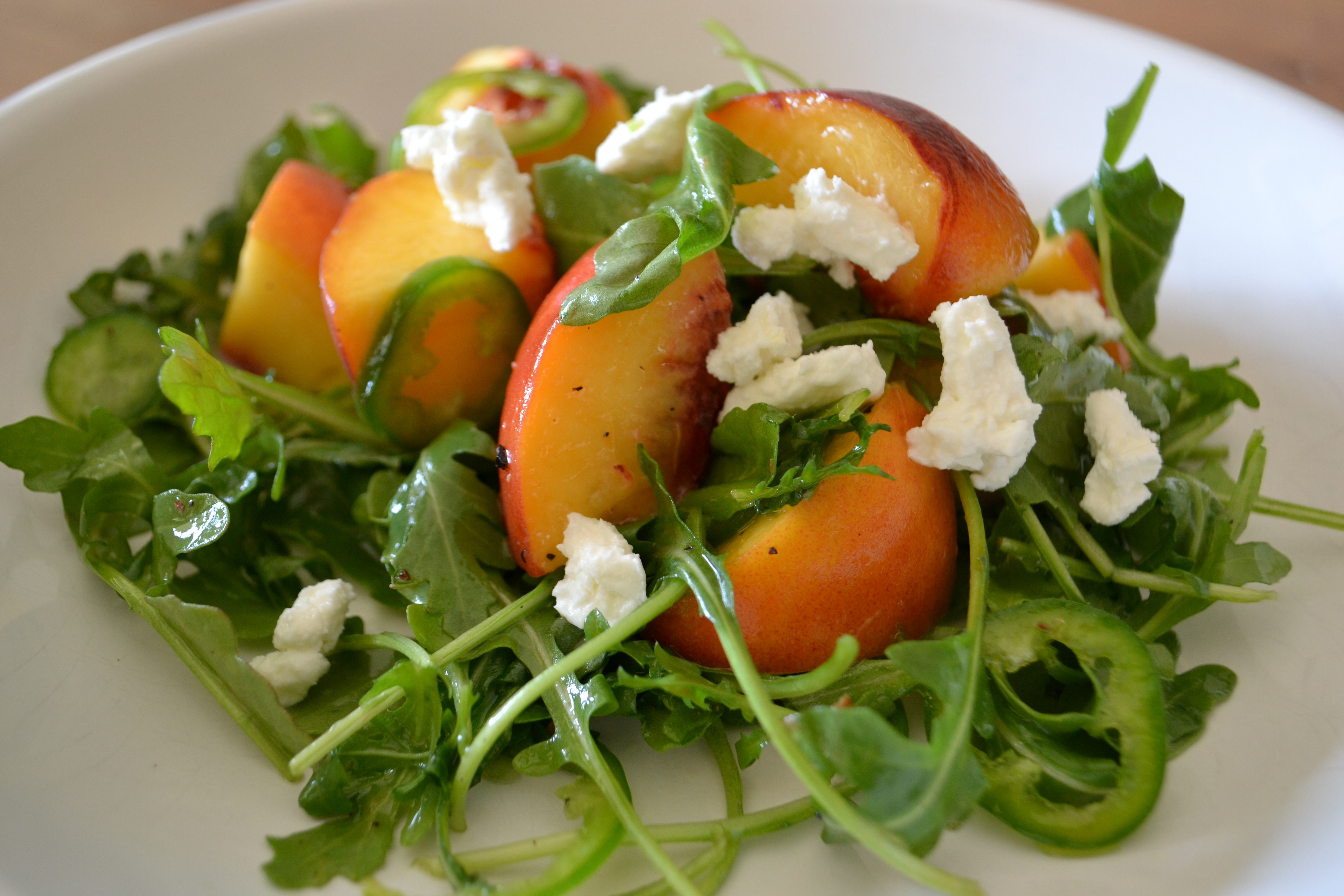
peach salad closepeach salad aboveCan you recall eating a peach so ripe and perfect that the juices dribbled down your chin, and your tongue savored each incredibly sweet bite? I simply can’t get enough of peaches at the moment. I believe they’ve even risen above raspberries to the status of “favorite.” Maybe it’s the lingering summer we’re having here in Northern California, or perhaps it’s just the association with summer. When I think of peaches, I think fresh peach pie, strolling through fruit orchards and warm afternoons. I buy them hard as apples and let them sit in a shallow bowl on my counter, checking them every day in anticipation of perfect ripeness.

I had a love/hate relationship with peaches as a child, because I had an aversion to the fuzzy skin, and because I don’t recall them tasting particularly juicy and sweet unless they were baked in a pie. (Probably because my mom tended to buy them on sale in chain grocery stores where the fruit was often unspectacular.) Of course, now, I buy gorgeous specimens from places with names like “Frog Hollow” and “Hidden Valley Grove.” How could you not like a peach from a sweet little organic farm nestled in a cozy valley–at least the image of which is conjured up in your mind with the likes of those names?

I keep longing for a peach pie, but since I’m back on my “close to no-,” but not quite no-gluten, kick, I haven’t made one. Instead, I settle for fresh-sliced chunks in my bowl of porridge with a little coconut milk to boost the creaminess. I also serve them up regularly with my kids’ meals, and watch while they make these silly expressions of ecstasy while eating the juicy chunks.

I threw together this salad using peaches, and loved it. It sports a nice combination of flavors, textures and colors, and would go very well with a flavorful meat dish, such as skirt steak in chimichurri sauce or a marinated roasted pork loin. Since I don’t eat mammals, I just enjoy the salad for it’s own sake.

Ingredients

2 ripe peaches, pit removed and cut into 1-inch chunks

4 large handfuls arugula

1 large jalapeno pepper (or a serrano pepper if you like a lot of heat)

1 1/2 tbsp champagne vinegar

1 tsp honey

1/2 tsp Dijon mustard

1/2 tsp sea salt

1/4 tsp fresh-ground pepper

1/4 cup extra-virgin olive oil

1/3 cup sheep’s milk feta, queso fresco or goat cheese

1/3 cup sliced almonds (optional)

Preparation

In a small bowl, whisk together the vinegar, honey and mustard. Whisk in the salt and pepper. While whisking, slowly pour in the olive oil until the dressing is thoroughly mixed. Set aside.

Slice the jalapeno or other pepper in very thin slices and carefully remove all seeds. Toss together with the arugula and peach chunks. Drizzle some of the dressing over the salad mixture and toss to coat. Taste and adjust accordingly. Top with the crumbled cheese (and almonds if you’re using them). Serve immediately.

Serves 4.

Happy end of summer!

We are a family of four, and three out of the four of us have become kombucha addicts. It’s supposed to be good for you–good for your gut, that is, which means good for your whole body. However, several months into this addiction, I saw a big jump in my grocery bills as a result. At roughly $4 a pop, those 8 oz bottles were beginning to take a larger than acceptable portion of our whole paycheck.

I know lots of people make their own kombucha, so I figured I’d join the movement. However, just about that time, I drank a larger-than-average-sized bottle (12 oz) of kombucha, and got a very upset tummy. My tummy wasn’t just a little gurgly, it was downright knotted up and in pain! (And as luck would have it, this happened the same day one of my dearest friends flew in from NYC, and we had a reservation at one of my favorite wine country eateries– Farmstead at Long Meadow Ranch.) Had I been the only one to drink a “bad” bottle kombucha, I would have shrugged it off. But as things stand, I know several people who have experienced a very rough day (and night!) or two due to a bottle gone bad.

water kefirSo that was the end of my relationship with kombucha…. Well, sort of. I was determined to find a probiotic drink, and I’m not a fan of regular probiotic drinks, such as kefir, since they’re made with dairy and incredibly high in calories.

By chance, I had recently read about water kefir. It was marketed as a delicious, lightly-carbonated drink rich in probiotics, and since it didn’t carry any of the bad baggage I had with kombucha, I decided it would be my fermented drink of choice. (In all honesty, water kefir is remarkably similar to kombucha.)

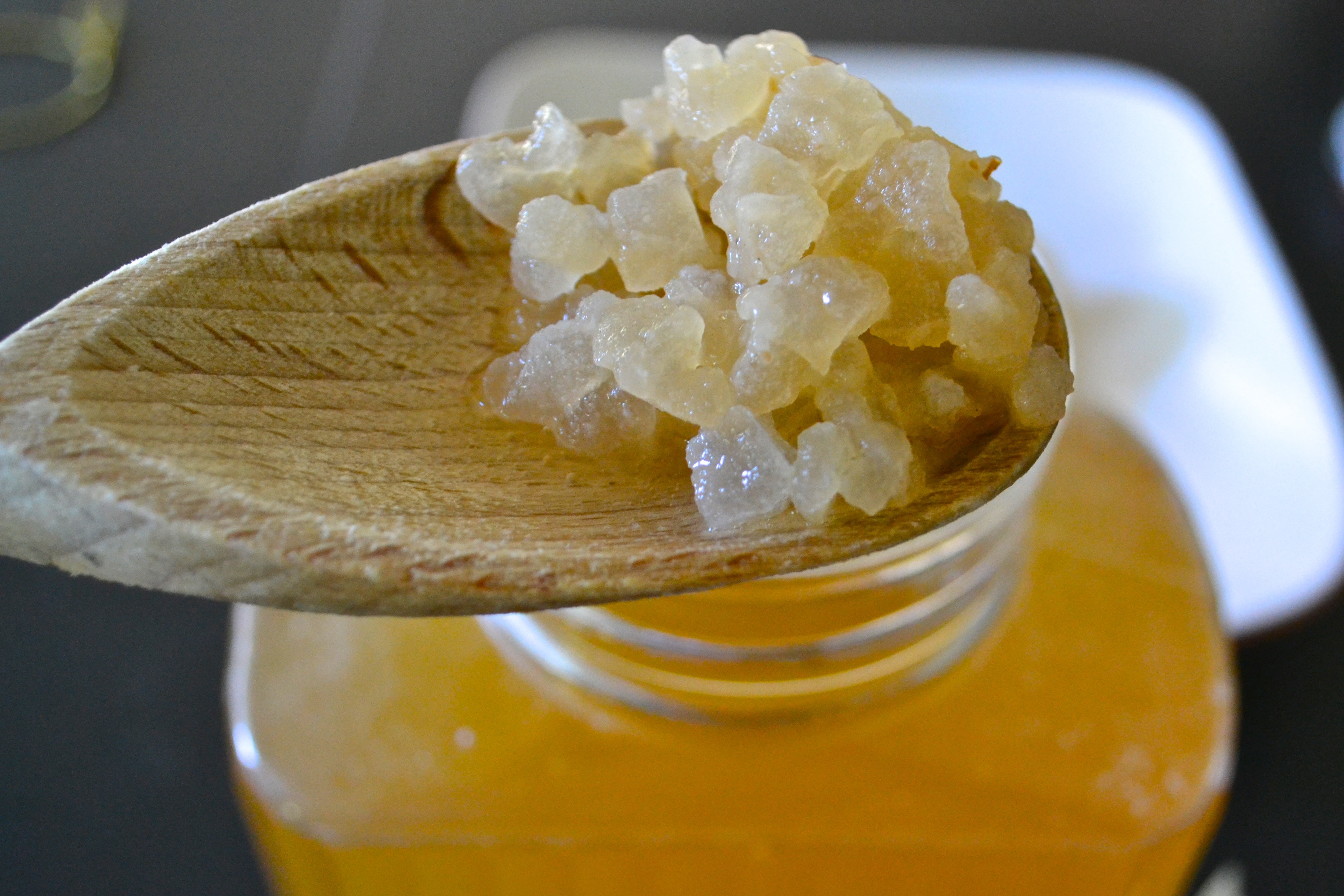
I ordered my water kefir grains from Cultures for Health, the same company from which I got my yogurt starter. Through CFH, you’ll initially spend $16.99 for the grains plus shipping, but then settle in to a joyous period of spending just pennies for quart after quart of water kefir. Once activated, the grains can be used indefinitely!

Water kefir grains after rehydration

Water kefir grains after rehydration

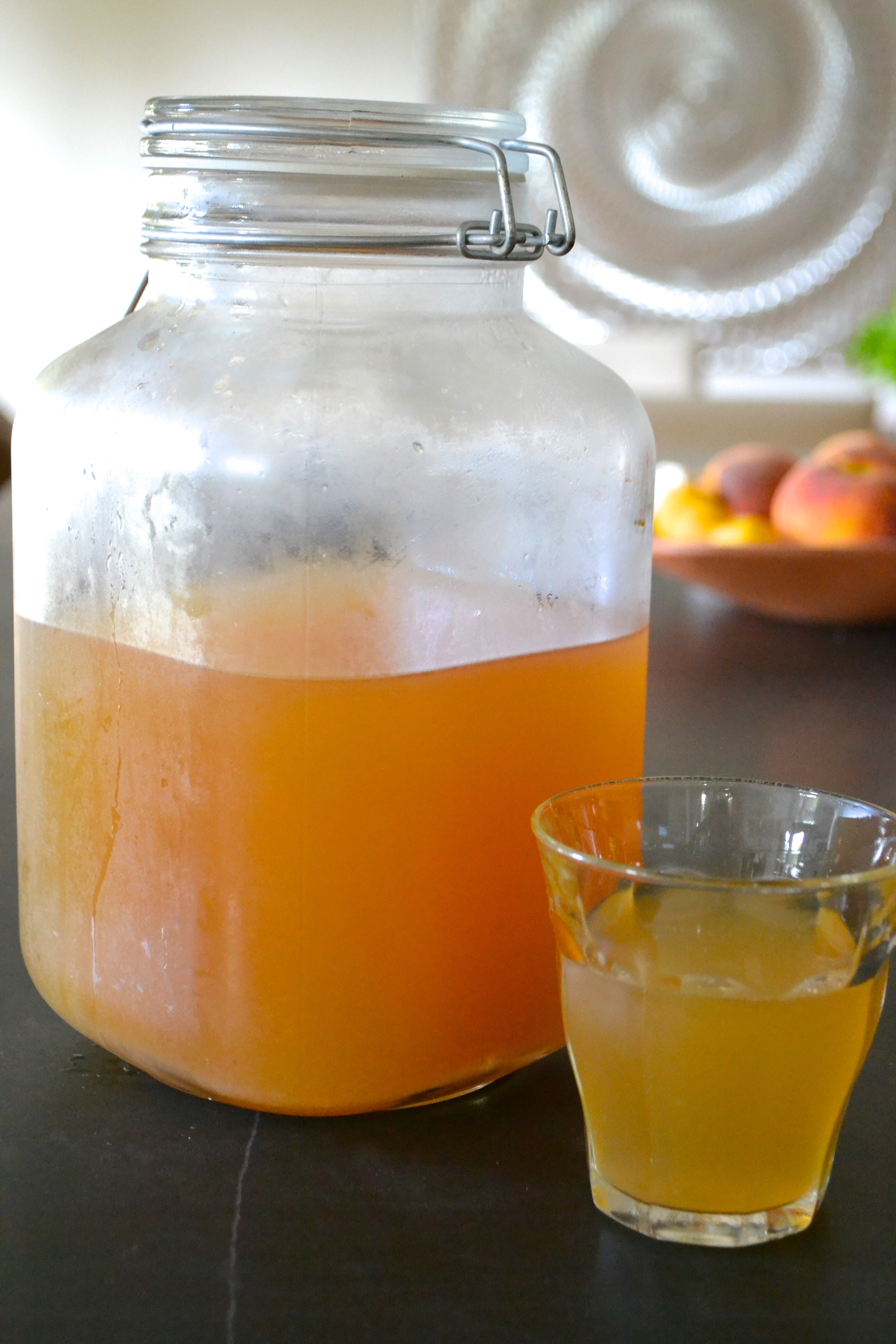
It takes me 5 minutes–read: 5 minutes–to prep two quarts of water kefir, after which, you let the grains work their magic for 48-72 hours. Then voila! You have a lightly-carbonated, refreshing drink that’s delicious as is or flavored any number of ways. (I added fresh-squeezed lemon juice to the first few batches, which made the water kefir taste just like an Arnold Palmer, but now I love it best just plain.) Two quarts lasts us several days, which is how long I ferment my water kefir, so I always have one glass jar in fermentation, and one in the fridge for drinking.

But was it too early to start rejoicing? During a recent excursion to Whole Foods, I happened to overhear an employee lamenting the high sugar content–28 grams(!!), of a particular brand of kombucha (which I won’t name here because if you’re a kombucha drinker and you’re reading this post, I’m betting you’ll take 10 seconds to look at the “nutrition label” next time you reach for a bottle). Due to my nature, I panicked and contacted CFH the second I got home, asking the sugar content of water kefir.

CFH said, “About 80% of the sugar you use in kefir will be converted to glucose, which is used by the grains for nutrition and reproduction, leaving about 20% by volume of fructose. The fructose will continue to ferment and reduce. So if you start out with about 200 calories of sugar (about 1/4 cup) per quart, you’ll end up with about 40 calories of fructose after two days.”

They cautioned that this is a very rough estimate with many variables. However, considering I let mine ferment for three days, I can safely assume there is less than 2 grams of sugar per 8 oz. Whew!

In case you decide to make your own–I really can’t stress how easy and incredibly economical it is, you might like to know that I use 1/4 cup evaporated cane juice crystals and 1/4 cup sucanat per 2 quarts of water.

To happy tummies everywhere!

allergen free cookiesAccommodating a child or friend with food allergies? Just looking for a yummy, healthier alternative to the standard cookie? These cookies are full of flavor, friendly to people with food intolerances, and contain less than half the sugar of most cookies. They’re gluten-free, dairy-free and egg-free, too, while serving up a good amount of Omega-3s (over 5,000 mg!!), thanks to the flaxseed.

I promised ages ago to share this recipe, shortly after I posted my Gluten-Free Chocolate Chip Cookies–the ones that use almond and coconut flour. Those are soft all over and have a slight “raw cookie dough feel,” but these allergen-free cookies crisp up nicely on the outside edges.

Ingredients

1/4 cup plus 1 tbsp golden flaxseed meal, divided

1/2 cup coconut oil (softened) or dairy-free vegetable shortening

1/4 cup evaporated cane juice

1/4 cup firmly packed light brown sugar

1 tsp pure vanilla extract

1/2 cup plus 1 tbsp gluten-free all-purpose flour

1/4 tsp xantham gum

1/2 tsp baking soda

1/2 tsp baking powder

1/2 tsp ground cinnamon

1/4 tsp sea salt

1 1/4 cups gluten-free rolled oats

1/2 cup raisins

1/2 cup dairy-free, gluten-free chocolate chips

Preparation

Preheat the oven to 350F. Line two baking sheets with parchment paper

Combine 1 tbsp flaxseed meal with 3 tbsp warm water. Stir to mix well and set aside. (This is your egg substitute.)

In a large bowl, using an electric mixer or wooden spoon, cream the oil or shortening with the sugars until well blended. Add the vanilla extract and flax “egg,” and mix until thoroughly combined.

In a separate bowl, whisk together the flour, remaining 1/4 cup flaxseed meal, xantham gum, baking soda, baking powder, cinnamon and salt. Whisk in the oats and nuts if using.

Add the dry ingredients to the “wet,” and mix until combined. Stir in the raisins and chocolate chips.

Scoop approximately 2 tbsp of the dough at a time. Place the dough ball on the cookie sheet and flatten slightly with the palm of your hand.

Bake for 12-13 minutes or until edges are lightly golden brown. Allow cookies to cool for 5 minutes before transferring them with a spatula to a wire rack.

Makes 18-20 cookies.

Note: No one in our home has food allergies, but as you might have read, I supposedly have a (I pray, temporary) food sensitivity to eggs. I still try to reduce our gluten intake overall, primarily because of its connection to inflammation. However, since we’re not allergic to nuts, and since most nuts provide heart-healthy fats, protein and texture, I add 1/3 cup chopped walnuts to this recipe.

Enjoy!

Fresh Pea Soup With Mint

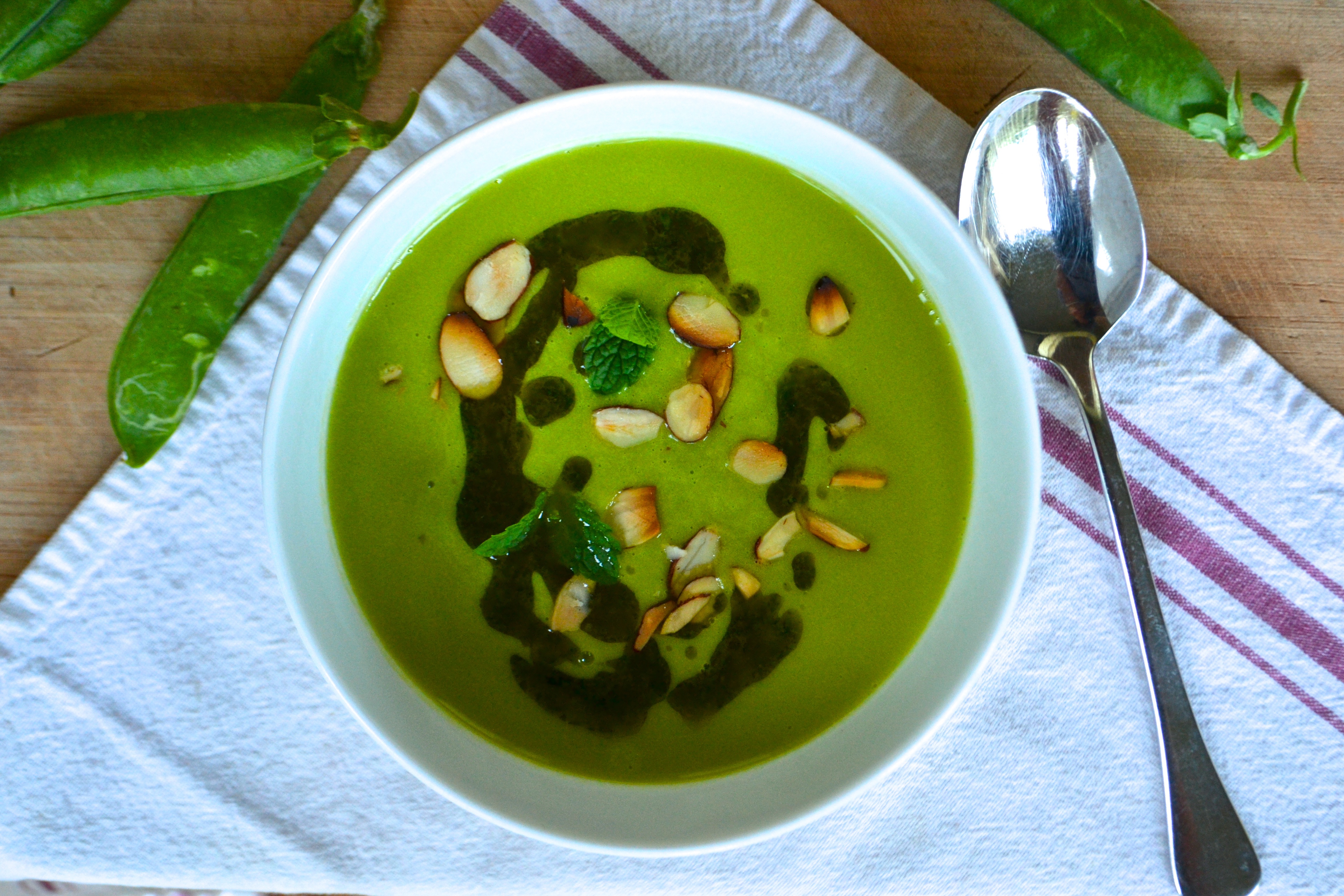
pea soup aboveMy husband and kids were away this past Sunday, so I seized the opportunity to stroll through the farmer’s market north of my town. (As much as I like taking my little ones to the market to have them see and connect with fresh produce, I have to admit, slowly picking your way through crowds of people carrying baskets and bags heavy with fruits and vegetables is considerably less stressful without young children in tow.)

dahlias

I mentioned in an earlier post that I rarely buy fresh cut flowers (see “[Un]Floral Arrangements“), but the stalls were overflowing with gorgeous dahlias–one of my favorite flowers, so I picked up a lovely bouquet to brighten the home. Peaches, plums and first of the season apples were also in abundance. I’ve been working on a low-sugar peach cake recipe, but it’s not ready yet, so stay tuned.

Many of the farmers offered bags of fresh peas and beans. I bought a big bag of English peas because there’s nothing quite so pretty as a bowl of pea soup made with freshly-shelled (not frozen!) peas.*

This recipe is simple and the presentation pretty enough to serve to guests.

Ingredients

2 tbsp butter

1 cup chopped yellow onion

1 1/4 tsp sea salt, divided

1 qt reduced-sodium organic chicken broth (or your own stock if you have it)

4 cups freshly-shelled peas

1/2 cup packed fresh mint leaves, divided

1/4 cup extra-virgin olive oil

1/4 cup toasted almond slices

Preparation

Melt the butter in a large saucepan over medium heat. Add the onion and 1 tsp salt and cook, stirring often, until soft and translucent (approximately 5 minutes). Pour in the broth and bring to a boil over high heat. Add the peas and cook until tender, about 4 minutes.

In the meantime, set aside several sprigs of tiny mint leaves (the parts at the very top of each stalk). In a food processor, whiz the remaining mint, oil and 1/4 tsp salt until finely chopped.

Puree the soup in a blender until very smooth. Ladle into soup bowls, drizzle with the mint oil, and sprinkle with almonds and reserved mint leaves.

Serve immediately, although this soup is also delicious at room temperature.

Serves 4.

Happy shelling!

*You might think me crazy for saying it, but I find shelling peas very therapeutic. It might seem mindless and tedious, but so is pushing around sand with a miniature rake in a “Zen Garden,” and thousands of people found that stress-relieving. Give it a try!

mint plant

shrimp salad aboveshrimp salad closeLooking at the photos, you might think, “That doesn’t look like a ‘salade nicoise’,” and I’d have to agree. But we tend to try and do things bigger, brighter and a little differently here in California, and this salad definitely offers big taste and big color. It’s also delicious and fast and easy to prepare. So as far as I’m concerned, it checks all the boxes.

You can serve this salad for dinner when you want to eat on the lighter side–or the Paleo side, and it also makes a wonderful lunch salad if you’re having guests to your home.

Ingredients

1 head of red baby gem lettuce or 5-7 leaves of red-leaf lettuce

1 avocado, peeled, seeded and cut into 1/2-inch cubes

1 handful haricot verts, ends trimmed

1/2 lb large prawns, shelled except tails and deveined

1/2 a red bell pepper (organic, if possible!*), seeded and cut into 1/4-inch strips

1 fully-ripe heirloom tomato, cut into 3/4-inch cubes (any will do, but yellow provides good contrast)

1/3 cup extra virgin olive oil

1 tbsp white or champagne vinegar

1 tsp Dijon mustard

sea salt and fresh-ground pepper to taste

Preparation

Put a medium-sized pot of water on the stove to boil. Add a pinch of salt. Prepare a large bowl of ice water (or water in which you’ve dumped a bunch of ice cubes). When the water in the pot reaches boiling, toss in the haricot verts. Cook for 3-4 minutes until bright green but still very firm. Remove with tongs and immediately plunge the beans into the ice water. After 30 seconds or so, remove the beans with tongs and place on a tea towel to absorb the water.

Assuming you’ve left your pot of boiling water boiling, toss in the prawns and cook for 2-3 minutes or until they are completely opaque in color. Remove with tongs and set aside.

Wash and dry the lettuce leaves and arrange on 2-4 plates or low bowls depending on whether you are serving the salad as a dinner entree, dinner side salad or lunch entree. Top with the heirloom tomato, bell pepper and avocado pieces. Cut the haricort verts crosswise in half and add to the salad. Arrange several prawns on top of each plate/bowl.

In a small bowl, whisk together the vinegar, mustard, salt and pepper. Slowly pour in the olive oil while whisking. Adjust the seasoning to taste. Drizzle the dressing over the salads and serve immediately. Note: this salad is delicious at room temperature or even cold, but I think it’s best when the prawns are still warm from their cooking.


To bigger and brighter!


*They’re not always available, but it’s important to buy organic bell peppers over conventional when possible, because bell peppers are high on the list of pesticide-laden vegetables (e.g., “The Dirty Dozen”). If you have to buy conventional, use a good vegetable-washing spray, such as Veggie Wash, to remove pesticide residue.

Cooking Without Limits

Food Photography & Recipes

Selma's Table

Life doesn't have to be perfect to be wonderful - stories and recipes from a wonderful life...