Feeds:
Posts
Comments

Archive for the ‘Tips’ Category

winter blah

It’s that time of year when the days start getting longer, the sun’s rays feel a little bit warmer, and our minds anticipate the approach of spring. It’s also that time of year that I start itching–literally and physically; itching to spruce up the garden, go to the beach and generally spend more time outdoors, and itching physically from all the dryness my hair and skin have experienced from the cold temperatures and dry, indoor heated air of winter.

Here are a few suggestions for revving up your circulation, sloughing off dull, dry skin and feeling smooth, moisturized and renewed.

I’ve never been a big believer in expensive creams and lotions, but I do believe in natural and simple products that get results.

These are a few of my favorites:

1. Use a natural-bristle “body” brush to aide your lymph nodes in eliminating toxins and boost circulation. (You can buy this type of brush in all natural products stores, including natural foods stores, as well as in many drugstores.) Simply brush your skin in small circular movements starting with the outermost extremities (hands and feet), working toward your heart as you go. Note: It’s best to do this just before your bath or shower.

2. In the bath or shower, scrub your skin smooth with a decent exfoliating body wash or scrub. I like the the walnut shell powder and almond seed meal in Queen Helene’s Organic Fair Trade Certified Cocoa Butter Body Scrub. The smell of this paraben- and SLS-free scrub will leave you skin smooth and moisturized and your mind drifting toward tropical island beaches. (At just a little over $6 a tube, this natural scrub is an amazing value!)

3. If you’re a tub person, soften skin by adding a pint of fresh milk (or 1 cup powdered milk) to the tub while it’s filling. Soften nerves, too, by adding 10-12 drops of your favorite essential oil for a total relaxing, skin-softening experience. Lavender, ylang-ylang and neroli are all good choices.

4. As soon as you step out of the bath or shower, apply a moisturizing body oil while your skin is still damp. This helps seal in moisture for longer-lasting hydration. There are numerous body oils on the market. Choose a natural blend (not one containing mineral oil!) or make your own; it’s incredibly easy. Try this recipe:

25 ml jojoba oil

25 ml almond oil

30 ml aloe vera (not the gel or juice, just pure aloe vera)

10 drops essential oil of lavender

15 drops of essential oil of ylang-ylang, neroli, rose, whatever you like.

Mix together in a 100 ml brown glass bottle. Apply as needed.

5. If the skin on your face is looking a little lackluster, apply an exfoliating and/or brightening mask 1-2 times per week. One of my favorites is Pangea Organics Facial Mask with Japanese Matcha Tea, Acai & Goji Berry. Careful you don’t scare the cat or the kids while the mask is on your face working its magic. It resembles mud with acai and goji fruit blended in, but leaves your skin feeling softer, smoother and brighter.

Another super quick and easy moisturizing mask can be found in the pantry. Honey is a great moisturizer. Spread a thin layer over freshly-cleaned, still damp skin, leave on for 3-5 minutes and rinse with tepid water.

It’s also important to avoid cleansers or toners containing alcohol, which are too drying for even the oiliest skin at this time of year. Look for moisturizers and toners with hyaluronic acid, a highly-effective humectant, which is purported to hold 100 times its weight in water. Just be sure to follow with a moisturizer if you’re using hyaluronic acid in a toner.

Happy scrubbing, soaking and slathering!

Read Full Post »

I just celebrated another birthday where I cooked for a (relatively) small group of friends in my home, and where I served this cake. (I say relatively because last year I cooked for 28 people, and afterwards felt as if I’d run a marathon.) This was probably the 9th or 10th time I’ve made this cake or a version of, and it’s always well received.

You simply can’t go wrong with this cake. It is super-moist, flavorful and nearly guilt-free. It’s also easy to prepare. But there are a couple of caveats: 1) the cake is indeed gluten-free and low-sugar, but the particular frosting I use is low-sugar because it uses flour (although just 1/8 cup instead of the tons of sugar standard buttercream frostings use); 2) the frosting requires several hours. You won’t be making it for several hours, but you need to let it sit for a couple of hours as the second of three simple steps.

Since I’m attempting to reduce the amount of gluten in my diet–not eliminate it entirely, and since my biggest concern is sugar, this cake is perfect. If you are gluten intolerant or following a strict gluten-free diet, you can easily substitute a standard buttercream or whipped frosting for the recipe posted below.

Please note: You can use butter or olive oil in the cake. Using olive oil imparts a slightly different flavor (slightly herbal), and makes the cake even moister. Now that I’ve tried it both ways, I think I prefer the olive oil version, but will probably use the butter version for the kids’ birthdays.

The following quantities are for 1 full 9-inch round. Double the recipe for two full 9-inch rounds, or three medium-height 9-inch rounds if you love fillings.

Ingredients

Juice of 1 orange plus plain yogurt to equal 1 cup (or you can use 1 cup of white wine, which my sister prefers to do)

Grated zest of 1 orange

3 eggs

1/2 cup sugar

1 tsp. vanilla

1/2 cup almond flour

1/2 cup sorghum flour

1 cup brown rice flour

1 1/2 tsp baking powder

1/4 tsp baking soda

1/2 tsp. sea salt

1 cup good quality mild-tasting olive oil or 1 cup unsalted butter, softened

Directions

Preheat over to 350-degrees Farenheit.

Prepare 9-inch cake pans by greasing, flouring and lining the bottom of each cake pan with a piece of parchment paper. (Use the bottom of the cake pan to trace a circle on the parchment paper. Cut just inside the line for a perfect fit.)

In a medium-sized bowl, mix together flours, baking powder, baking soda and salt. Set aside.

If making the butter version, beat the butter in a large bowl with a hand-held mixer until creamy. Beat in the sugar. Beat in the eggs one at a time. Beat in the orange juice/yogurt mixture and vanilla until well-blended. Stir in the dry ingredients until well-blended.

If making the olive oil version, whisk the eggs in a large bowl. Whisk in the sugar then the orange juice/yogurt mixture and vanilla. Stir in the olive oil and dry ingredients alternating one-third to one-half of each until well-blended.

Pour evenly into cake pan(s).

Bake for 35-45 minutes or until a toothpick inserted comes out clean, and the cake is springy to the touch at its center. (Mine are always golden-brown by this stage.) Cool in pans. Use a slim knife around the outer edge to loosen the cake(s) from pan. Turn out carefully and let further cool on rack(s).

Possible Fillings

My favorite during summer months is to simply macerate fresh strawberries and raspberries to which I’ve added a little lemon zest and vanilla extract. This mixture is fairly liquid and soaks beautifully into the cake layer(s).

During the cooler months I prefer to use chocolate ganache. It takes seconds to make. Here’s my recipe:

Finely chop 3 1/2 oz dark chocolate (preferably at least 70% cocoa), and place in a medium-sized bowl. Bring 1/2 cup cream to near boil. Pour over chocolate. Stir until completely melted/blended. Stir in 1 tbsp. butter and 1 tbsp. agave syrup. Let cool. (it will thicken considerably). Stir well before spreading on cake(s).

Fluffy, low-sugar frosting

(from Mel’s Kitchen Cafe)

This recipe makes enough to frost a 2-3 layer cake. Increase proportions if you plan to bake more layers or want lots of extra frosting for additional decorating.

Ingredients

3/4 cups granulated sugar
1/8 cup all-purpose flour
1 1/2 tbsp. cornstarch
1/8 teaspoon salt
3/4 cups milk (I’ve used both 2% and 4% with great results)
1 teaspoons pure vanilla extract
12 tablespoons (1 1/2 sticks) butter, cut into pieces and softened to room temperature

Directions

In a medium bowl, whisk the sugar, flour, cornstarch and salt until there are no lumps. Slowly whisk in the milk until the mixture is smooth. Pour the mixture into a saucepan. Cook over medium heat, whisking frequently increasing to constantly, until the mixture bubbles/boils and becomes very thick. This takes roughly 10 minutes.

Transfer the mixture to a clean bowl and cool to room temperature. This step is extremely important! If it is even slightly warm, the frosting won’t come together properly. On a fall day in California, this took a little over 2 hours. You can speed up the process by putting the bowl in the refrigerator. However, if you do this, be sure to take it out in time to for it to warm back up to room temperature before proceeding to the next step.

Once the mixture has completely cooled to room temperature (you will feel no trace of warmth when you place your hands around the bottom of the bowl), beat in the vanilla using a hand-held mixer on low speed. Next, beat in the butter, one piece at a time, until fully incorporated. Increase the speed to medium-high and beat the frosting for five minutes, until it is light and fluffy (approximately 5 minutes). Spread with a soft-tipped rubber spatula.

Let us eat cake!

Read Full Post »

I always approach the end of October with a bit of trepidation. Maybe there’s still some lingering memory of being scared out of my wits walking through a haunted house, or my permanent terror over the Headless Horseman of Sleepy Hollow. Of course, add to that my fear and loathing of all the sugar, food coloring and preservatives that will be dumped into my children’s bags as they hold them open in gleeful, eager anticipation of the great bounty they will amass by the end of the evening. When they were very young, we let them trick or treat at five home. Now that they’re older and can count, we end up having to take them to at least twice as many homes.

My strategy for minimizing their sugar intake has always been to allow them to each eat two pieces of candy the night of Halloween. Then one a day until the supply is gone. Of course, their supplies mysteriously disappear within a couple of days, and until last year, no one seemed the wiser.

As bad as sugar is, I hate to be the one to rain on their parade. I know how much kids look forward to this time of year. (Alas, the dressing up is only half of it.) How can parents make this occasion more than a series of giant insulin spikes and a week of suppressed immune systems?

Consider offering more natural and wholesome treats to the little skeletons, vampires and princesses that show up on your doorstep this coming week. It will set an example for other parents, and you can swap out some of what’s in your kids’ bags when convenient. All natural fruit “gummies,” natural mini-chocolate bars, animal-shaped graham crackers and crispy rice bars are excellent choices for super heroes and ladybugs alike. They taste great and don’t contain chemical preservatives, food coloring and other nasties. My choices for this year include Endangered Species All-Natural Milk Chocolate Treats, EnviroKidz Organic Crispy Rice Bars, Annie’s Halloween Bunny Grahams (honey and chocolate mix) and Annie’s Organic Bunny Fruit Snacks (in assorted flavors). All of the above items are available at most Whole Foods Markets or on-line.

Happy Trick-or-Treating!

Read Full Post »


Does it make sense to blog about hand creams in the summer when hands often get dry and beaten from too much sun and too much gardening, or wait until winter when dry indoor air and cold temperatures threaten to crack and parch even the best cared for hands? Given the fact that people say you can tell a person’s age just by looking at his or her hands, I figure any time is a good time.

Mine are constantly in warm water–doing the dishes, bathing the kids, etc., which is extremely drying. Warm or hot water and the handling of paper are the too biggest culprits when it comes to dry skin on the hands.

If you’re concerned about slowing the aging of your hands, apply sunscreen to help protect the backs of hands from premature aging caused by UVA light. If you’re mainly concerned about keeping hands smooth and supple, apply hand cream often.

My “splurge” recommendation for hand cream is Skin Food by Weleda. It’s technically not a hand cream, but I’ve been using it as such for several years because it’s so effective.  It’s not inexpensive, but it relieves any degree of dryness overnight. I tend to use it more during the winter months. I typically prefer unscented products, but Skin Food has a not-unpleasant herbal scent that smells like you’ve been in the garden. Skin Food is sold at nearly all Whole Foods Markets as well as other natural food stores, although you’ll pay about $17. You can get a better price ($11-$12) on-line.

My “steal” recommendation is Burt’s Bees Almond Milk Beeswax Hand Cream. I use it all summer. I love the smell of almonds, it’s non-greasy and it absorbs immediately–in part, due to kaolin (clay) as one of its ingredients. Burt’s Bees Hand Cream is now sold in some Safeways for $7.99. You can get it on-line but for only slightly cheaper.

To younger-looking, softer-feeling hands!

Read Full Post »

Well yes, I’m a little behind. School is officially out–at least for my kids, and we’re already into summer. My only excuse is that I’ve been incredibly busy at my other job–planning the annual fundraising party for Empowered by Light.

But even though I haven’t found time–until now–to blog, I have been testing new sunscreen products like mad.

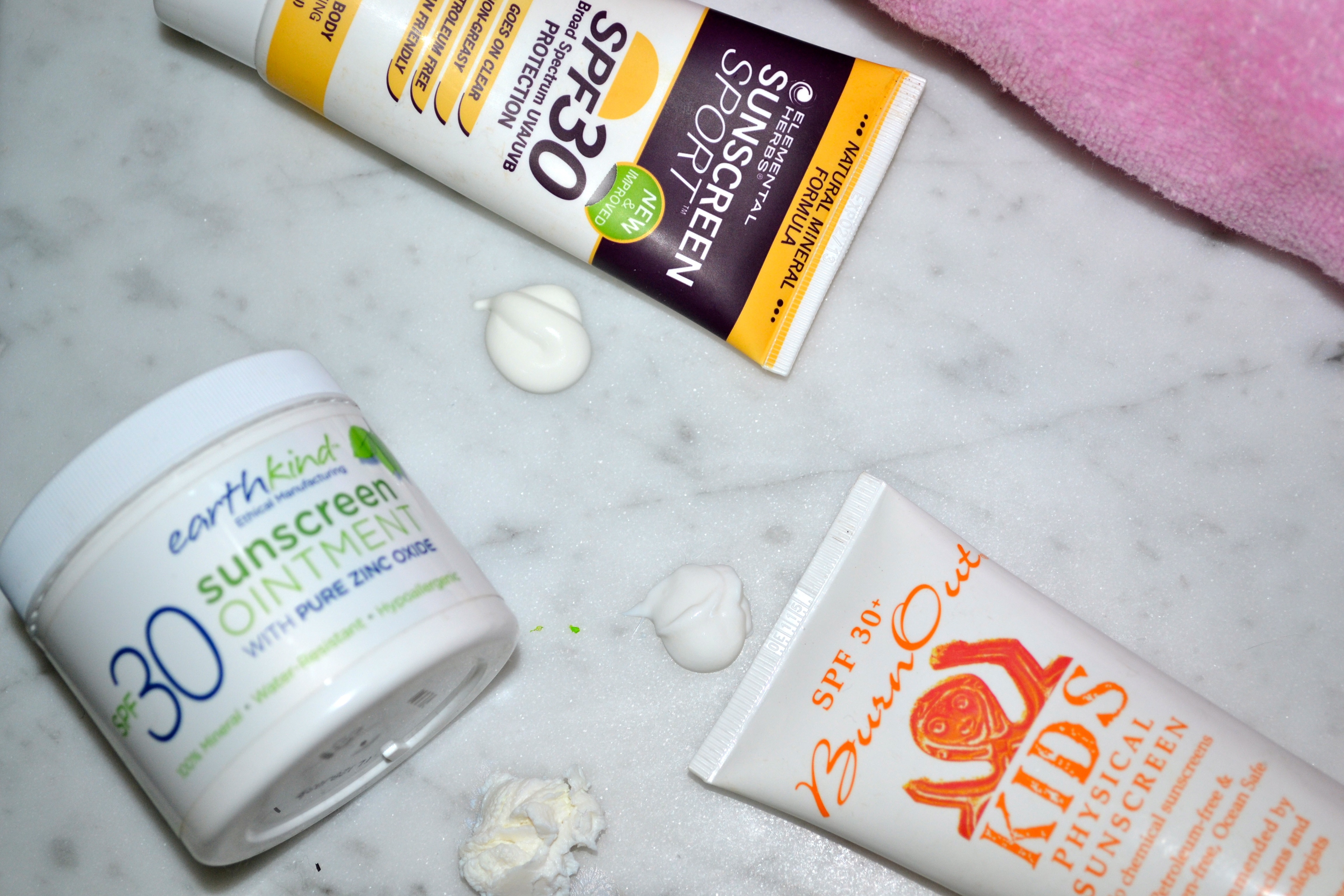
My three favorites for the whole family are Burnout KIDS (also recommended last year), Elemental Herbs Sunscreen Sport and Earthkind* Sunscreen Ointment. All three have an SPF 30 or 30+. All use zinc oxide as the sunscreen ingredient–the best for natural, broad spectrum (both UVA and UVB) protection. And all three go on virtually clear using micronizing technology, while still being free of nano-particles.

In addition to the attributes listed above, Burnout has a light, lotion-like consistency which makes it very easy to apply. Elemental Herbs has a slightly higher zinc oxide content and seems to be slightly more water-resistant. Earthkind has a great scent (reminds me of the paste I used in art class as a young child), and is very water-resistant. It doesn’t claim to be waterproof, but after coating my kids with it, and after hours of being in the water, it was still on and protecting. Of course, part of the reason for that is that it is very thick, so applying it takes a bit more effort. Earthkind is also the pricier of the three.

For myself, for any day I’m in the sun but not swimming, I use DeVita’s Solar Body Block. It’s also zinc oxide based, SPF 30+, non nano, etc., but it has a wonderful, light, whipped consistency and moisturizes my skin. The only reason I didn’t include it above is because it doesn’t seem very water-resistant, making it a poor choice for children during the summer months.

Remember, it’s best to stay out of the sun between the hours of 11:00am and 2:00pm, and it’s best to be covered by clothing that provides a SPF of 50+. You’ll also get the best protection if you apply your sunscreen well in advance of exposure. Some experts even suggest applying it the evening before. That seems a little extreme to me, but what’s important is trying to avoid waiting until the last minute so you’re not just applying sunscreen right before exposure.

Safe sunning!

*Earthkind is made by KINeSYS, but please note that other KINeSYS sunscreens use chemical UVA and UVB blockers.

Read Full Post »

Maybe it’s in poor taste to write about the evils of sugar just on the heels of the holiday season and a week before that box of Valentine chocolates appears. Then again, as I find myself with a heightened sweet tooth–after a period of undoubtedly indulging in too many holiday cookies–made with love and care by myself or a friend, I think this is the perfect time to raise awareness about how much is too much when it comes to sugar, and what the health effects are.

I constantly have people saying to me–usually in reference to what I am or am not allowing my children to eat, “A little sugar isn’t going to kill them” or “At least it’s organic sugar.” What I feel many people don’t understand is that sugar really is bad for you.

Why is sugar bad?

Most people seem to focus on the high number of calories contained in sugar or its potential adverse effects on tooth enamel. Evidently their primary concerns are weight and cavities. But I believe those are the lesser evils of sugar.

Excessive sugar in our diets leads to insulin resistance, promotes inflammation (a primary precursor to major diseases, such as heart disease and cancer), can lead to excessive weight gain, contributes to non-alcohol related fatty liver disease, may act as fertilizer for cancer cells, and may speed up aging.

In 2009, the American Heart Association (AHA) reported that the average adult in America consumes 22 teaspoons of added sugar each day, teens a whopping 34 teaspoons!

The biggest culprit in these numbers turns out to be soft drinks. A regular 8-oz soft drink contains 8 teaspoons of sugar. That is nearly the daily recommended amount of sugar for men and it’s two teaspoons over the daily recommended amount for women.

The AHA says most women should consume not more than 6 teaspoons of added sugar per day, which equates roughly to 100 calories from added sugar. The group recommends no more than 9 teaspoons, or 150 calories) for most men. (The AHA does not set recommendations for the daily amounts of naturally occurring sugars, such as those contained in fruits, vegetables and dairy products.)

If Americans followed the AHA’s new guidelines, the average person would cut their consumption of added sugar, by more than 70 percent!

The rising consumption of highly-processed foods–many of which contain high levels of sugar, has already been linked to the skyrocketing rates of obesity we’re experiencing here in the U.S

Researchers also have found that the higher in sugar a person’s diet, the lower his/her blood levels are of High-density lipoprotein, or HDL, the good cholesterol that transports dangerous cholesterol away from the arteries. Research has also shown that as dietary sugar levels rise, so do the level of triglycerides, the fat that circulates in the blood. Both low HDL cholesterol and high triglycerides significantly increase the risk for heart disease.

If higher risks of obesity and heart disease aren’t enough to scare you, experts now believe that a high-sugar diet leads to rapid aging of the skin. This happens through a natural process called glycation, in which sugar in the bloodstream attaches to proteins to form dangerous new molecules called advanced glycation end products (AGEs very appropriately, for short). The more sugar a person eats, the more AGEs he/she develops. Collagen, the protein fibers that keep skin firm and elastic, is the most vulnerable, in part because it is the most prevalent protein in our bodies. Loss of collagen and elastin results in wrinkled and sagging skin.

Sugar and immunity

Studies have shown ingesting significant quantities of sugar can reduce the ability of white blood cells to kill germs by 40 percent and that the immune-suppressing effect starts within 30 minutes of ingestion, and may last for as many as five hours. In contrast, ingesting complex carbohydrates or starches appears to have no effect on the immune system.

How to reduce your intake

Added sugar is in pretty much any food that’s been processed, including salad dressings, crackers, spaghetti sauce, breads and many peanut butters. Take yogurt for example, a single serving of Brown Cow organic yogurt (flavored) contains 27grams of sugar! I serve it only on occasion, and it’s served as a dessert.

I realize many people don’t have the time or interest to prepare all of their meals from scratch. But you can easily reduce your sugar load by simply being more aware. Read labels and make small adjustments. Here are just a few suggestions:

– Take a look at the nutrition information on the box of cereal in your cupboard. Envirokidz Panda Puffs contains 7 grams of sugar per 3/4 cup serving. Since my kids are obsessed with it, I still buy it. But I only serve it once a week, and I mix it 50/50 with Trader Joe’s Joe’s Os whole-grain oat cereal, which has only 1 gram of sugar per serving.

– Regular jams contain 12-16 grams of sugar per serving (1 tablespoon). Opt for fruit spreads like organic bionaturae fruit spreads. They contain half that amount, and the sugars are naturally occurring instead of added.

– Check the number of grams contained in your regular sandwich bread. Compare with a few others. Some “plain” whole-wheat loaves contain 8+grams per serving. Others contain less than 2.

– Serve juice–even 100% natural, unsweetened juice, on occasion only. With juice, you get all the sugar of the fruit with very little else. Your body reacts to the sugars in the juice just as it would straight regular sugar (i.e., insulation spike). Serve whole fruit instead as the fiber in fruit helps regulate blood sugar levels. Whole fruit also contains nature’s mix of vitamins, minerals, enzymes, and beneficial phytonutrients, all of which help moderate the negative metabolic effects of sugar.

– Do make your own quick breads (e.g., banana bread) and muffins, pancakes, sauces (e.g., spaghetti, pizza) and cookies since you can regulate how much sugar goes into the mix. I typically cut the amount of sugar called for in recipes by half without negatively impacting texture or taste.

– Save candy for special occasions, such as Valentine’s Day and Halloween.

In Part II, I’ll describe the different types of sweeteners and how they affect our bodies as well as our palates.

Here’s to a healthier you!

Read Full Post »

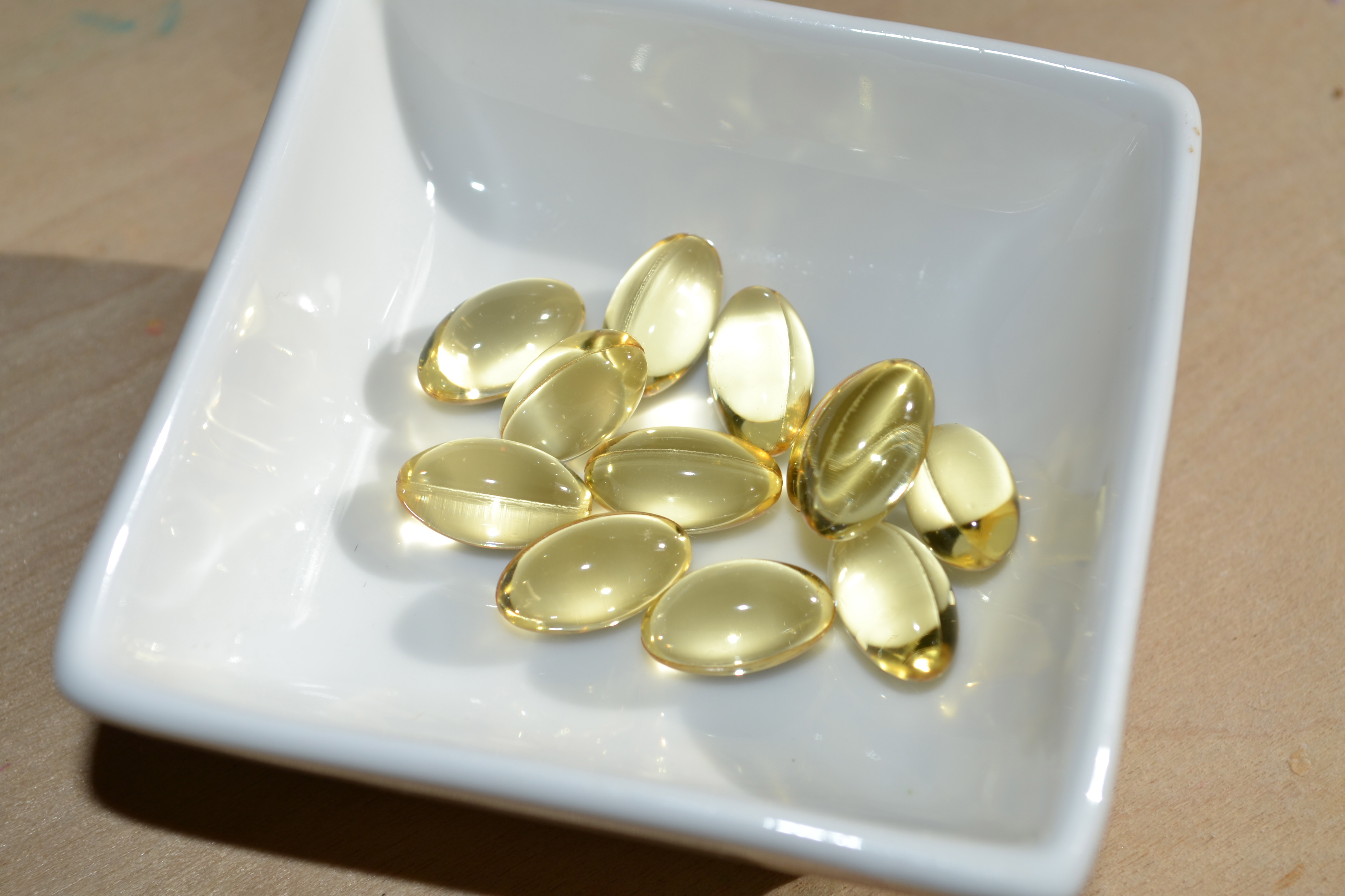
Vitamin D is a fat-soluble vitamin naturally found in very few foods, yet recent research links vitamin D deficiency to everything from osteoporosis to cancer.

Vitamin D comes in two forms for humans: ergocalciferol (vitamin D2) and cholecalciferol (vitamin D3). Vitamin D2 is synthesized by plants, while vitamin D3 is synthesized by humans when our skin is exposed to ultraviolet-B (UVB) rays from the sun. That’s why it’s often called the “sunshine” vitamin. Foods can be fortified with both forms. A significant vitamin D deficiency can result in rickets in children and osteoporosis in adults.

What does it do?

The primary function of vitamin D is to maintain normal blood levels of calcium and phosphorous, thus promoting normal bone formation. Vitamin D also helps regulate the immune system. It has been linked to maintaining a healthy body weight, the reduction of asthma symptoms—both in severity and frequency, and a reduced risk of developing rheumatoid arthritis in women. Perhaps most importantly, recent studies have shown that people who have maintained adequate levels of vitamin D over long periods have a significantly lower risk of developing cancer compared with people with chronically low levels.

Where do I find it?

Vitamin D is found in many dairy products, such as cheese, butter, cream and fortified milk. It is also found in fatty fish, such as salmon and mackerel, oysters and fortified cereals.

How much do I need?

According to the experts, 10-15 minutes of sunshine at least three times weekly is enough to meet the requirement of vitamin D for most people. Keep in mind that in order for the body to manufacture vitamin D, the sun needs to fall on significant areas of skin—such as the face, arms and legs—not covered by sunscreen. Because sun exposure increases your risk for skin cancer, may health experts recommend getting your daily dose of vitamin D during the off-peak hours (before 10am and after 3pm).

People who do not live in sunny places, who have dark-colored skin or who spend most of their time indoors, as well as elderly people, may need to take a vitamin D supplement. Remember, skin exposed to sunlight through a window doesn’t produce vitamin D.

My children’s pediatrician recommends 400-800 IU per day. My father, who lives in the Pacific Northwest, has been advised to take between 2,000 and 4,000 IU daily. In general, people over age 50 need higher amounts of vitamin D than younger people. Be sure to ask your health care provider which amount you should be taking.

Safe sunning.


Read Full Post »

It’s already more than half-way through summer, and I’m just now sharing my top sunscreen pick for this year?? That’s what happens when one starts a non-profit while taking care of two little ones full-time. The new non-profit I co-founded is for a worthy cause, so when you have a minute, click over and check it out:  Empowered by Light.

Of course I had intended to make my sunscreen recommendation in the early part of June… We have at least three more months of sun here in Northern California, so I suppose it’s better late than never.

Previously I had recommended Badger Sunscreen, SPF 30+. While it used a good amount of zinc oxide and boasted good ingredients overall with few potential irritants, I also found it left too much of a white cast–the “casper” factor as some call it.

I tried BurnOut Kids Physical Sunscreen, SPF 30+ back in May and fell in love immediately. It’s rated as one of the top sunscreens for 2011 by the Environmental Working Group, and rates a 1 on toxicity–their lowest level. It has an amazingly light “lotiony” texture and is very easy to spread. It leaves no white cast unless you put on multiple layers throughout the day. While it is not waterproof, it is water resistant. Another thing I like is the very light, almost imperceptible smell. And of course, it’s all natural and contains no nano-particles.

BurnOut also makes an Ocean Tested Physical Sunscreen, SPF 30+ that is “very water-resistant, ocean safe, ec0-sensitive, etc.” My husband’s been using this on his face and body. We can’t actually tell the different between the two products. The ingredients lists vary only slightly in the plant extracts and natural oils used, but since the price is the same, I think it’s just a matter of personal preference.

Note: I also tried thinkbaby Safe Sunscreen, SPF 30+. EWG rates it slightly higher than BurnOut in its UVA protection due to it’s slightly higher zinc oxide content (20% vs. BurnOut’s 18.6%). However, the formulation is heavier, thicker and felt very drying.

You can find BurnOut at most Whole Foods Markets as well as on-line (e.g., Amazon). The regular price is $17.99 for 3.4 oz, but I picked up several at $12.99 when Whole Foods had a sale.

Safe sunning!

Read Full Post »

If you’re like me, you’ve thought about making a few New Year’s resolutions, but haven’t necessarily nailed them down precisely. Your resolutions might include losing weight or exercising more, or maybe you’re looking to start a new hobby or pursue and old one. Well, why not help Mother Earth by throwing in a resolution to live greener this year?

No one I know lives completely “green.” Most of us fall somewhere along a very broad continuum. And that’s OK. If everyone picked just one or two things from the following list, our world and everyone in it would automatically live healthier lives.

I certainly don’t live super “green.” For example, I can be a bit of a clothes horse, and I love fashion too much to stop buying trends. But I’ve committed to buy less this year, and I keep a worm bin and chickens to feed my kitchen scraps to, and I haven’t acquired a single plastic shopping bag in too many months to remember.

Let’s be straight, since there are some people who won’t manage even one thing off the following list, why not take up their slack and commit to three or four?

25 Ways to Live Greener:

  1. Buy organic.
  2. Buy local.
  3. Carry a collapsible/reusable bag at all times so you never have to take another shopping bag home.*
  4. Power down all your electronics when you’re not actually using them.
  5. Drive less, walk more.
  6. Grow your own herbs or veggies in a garden or garden box.
  7. Recycle everything you can.
  8. Buy less to begin with.
  9. Rinse out jars (e.g., applesauce, pickles, etc.) and use them to store food instead of buying plastic containers.
  10. Turn your thermostat down at least 2-4 degrees.
  11. Don’t buy anything containing synthetic fragrance (anything other than essential oils).
  12. Don’t buy products containing sulfates or parabens.
  13. Only buy cleaning products that are biodegradable and phosphate-free.
  14. Switch to LED light bulbs. They’re the most energy-efficient.
  15. Make sure your freezer is filled to capacity. It’s more energy-efficient than a half-filled one.
  16. Only run the washing machine when you have a full load, and never wash on hot.
  17. The same goes for the dishwasher; fill it up before you turn it on.
  18. Shorten your shower and make sure you’re using a low-flow showerhead.
  19. Don’t wash your car at home. Find a car wash that recycles the water.
  20. Stop buying bottled water. Use/install a filter and use stainless steel or glass bottles.
  21. Reduce the amount of junk mail you receive. Visit http://www.DoNotMail.org.
  22. Sign-up for on-line bill pay.
  23. Don’t use chemical fertilizers or pesticides on your lawn.
  24. Have less lawn.
  25. Eat less meat, particularly beef!!

Happy New Year, and happy greener-living!

* I carry a ChicoBag in my purse at all times since it holds a ton and easily stuffs down to the size of my fist!

Photo: Bruce Irving, Flying Singer

Read Full Post »

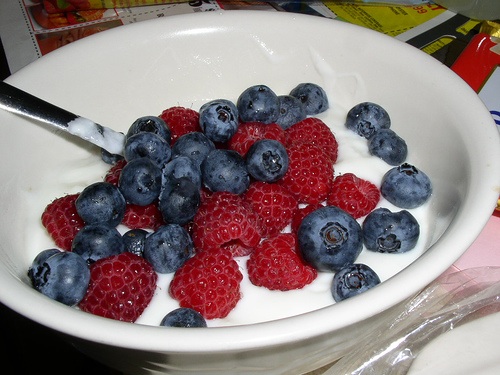
Making your own yogurt is super easy and has several benefits over store-bought yogurts: 1)It’s considerably cheaper; 2)You have complete control over its flavoring and how much sugar is in it; and 3)You don’t have to feel guilty about all those plastic tubs–recyclable or not.

To make your own yogurt you can buy an actual yogurt-making machine, or you can simply use a few items you probably already have lying around the house.

What you’ll need:

– Kerr canning or other glass jars with lids (2-4 depending on size)

– An electric heating pad

– A medium-size saucepan

– A candy/liquid thermometer

– 1 quart of milk (I use goat since it’s tends to be purer and is easier to digest)

– 2-3 tbsp. of plain (unsweetened) yogurt*

– 2-3 tbsp. powdered milk (optional)

*The plain yogurt serves as your starter. You may wish to experiment with your starter since the consistency (e.g., regular vs. Greek-style) and flavor will effect the batch of yogurt you are making.

Directions:

Slowly heat the milk in the saucepan until 180-190 degrees Fahrenheit. Set the pan in a bowl of cold/ice water until the temperature falls to about 115 degrees Fahrenheit. Stir in the 2-3 tablespoons of plain yogurt, and the powdered milk (the later gives a thicker consistency). Cover the pan with a lid or foil and place in a warm place where the yogurt will maintain a temperature of approximately 115 degrees Fahrenheit. (I set mine on a heating pad set on medium, and wrap a towel around the whole thing.) Let sit for 4-8 hours or overnight. Pour or spoon into the glass jars and refrigerate for at least 12 hours before serving.

You can flavor your yogurt with pure vanilla extract, maple syrup, honey or another sweetener, such as agave or jerusalem artichoke syrup.

Once you’ve made your first batch, make sure you reserve a couple of tablespoons for your next batch.

Happy spooning!

(Photo: Courtesy of Ashles, 2007)

Read Full Post »

« Newer Posts - Older Posts »

Cooking Without Limits

Food Photography & Recipes

Selma's Table

Life doesn't have to be perfect to be wonderful - stories and recipes from a wonderful life...