Feeds:
Posts
Comments

Archive for the ‘Recipes’ Category

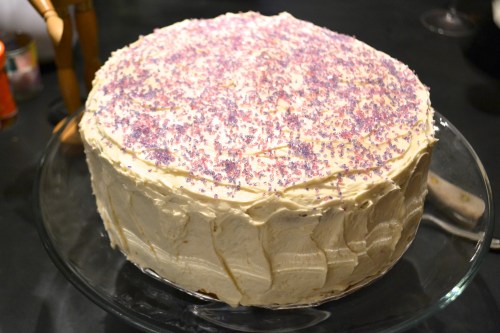
I just celebrated another birthday where I cooked for a (relatively) small group of friends in my home, and where I served this cake. (I say relatively because last year I cooked for 28 people, and afterwards felt as if I’d run a marathon.) This was probably the 9th or 10th time I’ve made this cake or a version of, and it’s always well received.

You simply can’t go wrong with this cake. It is super-moist, flavorful and nearly guilt-free. It’s also easy to prepare. But there are a couple of caveats: 1) the cake is indeed gluten-free and low-sugar, but the particular frosting I use is low-sugar because it uses flour (although just 1/8 cup instead of the tons of sugar standard buttercream frostings use); 2) the frosting requires several hours. You won’t be making it for several hours, but you need to let it sit for a couple of hours as the second of three simple steps.

Since I’m attempting to reduce the amount of gluten in my diet–not eliminate it entirely, and since my biggest concern is sugar, this cake is perfect. If you are gluten intolerant or following a strict gluten-free diet, you can easily substitute a standard buttercream or whipped frosting for the recipe posted below.

Please note: You can use butter or olive oil in the cake. Using olive oil imparts a slightly different flavor (slightly herbal), and makes the cake even moister. Now that I’ve tried it both ways, I think I prefer the olive oil version, but will probably use the butter version for the kids’ birthdays.

The following quantities are for 1 full 9-inch round. Double the recipe for two full 9-inch rounds, or three medium-height 9-inch rounds if you love fillings.

Ingredients

Juice of 1 orange plus plain yogurt to equal 1 cup (or you can use 1 cup of white wine, which my sister prefers to do)

Grated zest of 1 orange

3 eggs

1/2 cup sugar

1 tsp. vanilla

1/2 cup almond flour

1/2 cup sorghum flour

1 cup brown rice flour

1 1/2 tsp baking powder

1/4 tsp baking soda

1/2 tsp. sea salt

1 cup good quality mild-tasting olive oil or 1 cup unsalted butter, softened

Directions

Preheat over to 350-degrees Farenheit.

Prepare 9-inch cake pans by greasing, flouring and lining the bottom of each cake pan with a piece of parchment paper. (Use the bottom of the cake pan to trace a circle on the parchment paper. Cut just inside the line for a perfect fit.)

In a medium-sized bowl, mix together flours, baking powder, baking soda and salt. Set aside.

If making the butter version, beat the butter in a large bowl with a hand-held mixer until creamy. Beat in the sugar. Beat in the eggs one at a time. Beat in the orange juice/yogurt mixture and vanilla until well-blended. Stir in the dry ingredients until well-blended.

If making the olive oil version, whisk the eggs in a large bowl. Whisk in the sugar then the orange juice/yogurt mixture and vanilla. Stir in the olive oil and dry ingredients alternating one-third to one-half of each until well-blended.

Pour evenly into cake pan(s).

Bake for 35-45 minutes or until a toothpick inserted comes out clean, and the cake is springy to the touch at its center. (Mine are always golden-brown by this stage.) Cool in pans. Use a slim knife around the outer edge to loosen the cake(s) from pan. Turn out carefully and let further cool on rack(s).

Possible Fillings

My favorite during summer months is to simply macerate fresh strawberries and raspberries to which I’ve added a little lemon zest and vanilla extract. This mixture is fairly liquid and soaks beautifully into the cake layer(s).

During the cooler months I prefer to use chocolate ganache. It takes seconds to make. Here’s my recipe:

Finely chop 3 1/2 oz dark chocolate (preferably at least 70% cocoa), and place in a medium-sized bowl. Bring 1/2 cup cream to near boil. Pour over chocolate. Stir until completely melted/blended. Stir in 1 tbsp. butter and 1 tbsp. agave syrup. Let cool. (it will thicken considerably). Stir well before spreading on cake(s).

Fluffy, low-sugar frosting

(from Mel’s Kitchen Cafe)

This recipe makes enough to frost a 2-3 layer cake. Increase proportions if you plan to bake more layers or want lots of extra frosting for additional decorating.

Ingredients

3/4 cups granulated sugar
1/8 cup all-purpose flour
1 1/2 tbsp. cornstarch
1/8 teaspoon salt
3/4 cups milk (I’ve used both 2% and 4% with great results)
1 teaspoons pure vanilla extract
12 tablespoons (1 1/2 sticks) butter, cut into pieces and softened to room temperature

Directions

In a medium bowl, whisk the sugar, flour, cornstarch and salt until there are no lumps. Slowly whisk in the milk until the mixture is smooth. Pour the mixture into a saucepan. Cook over medium heat, whisking frequently increasing to constantly, until the mixture bubbles/boils and becomes very thick. This takes roughly 10 minutes.

Transfer the mixture to a clean bowl and cool to room temperature. This step is extremely important! If it is even slightly warm, the frosting won’t come together properly. On a fall day in California, this took a little over 2 hours. You can speed up the process by putting the bowl in the refrigerator. However, if you do this, be sure to take it out in time to for it to warm back up to room temperature before proceeding to the next step.

Once the mixture has completely cooled to room temperature (you will feel no trace of warmth when you place your hands around the bottom of the bowl), beat in the vanilla using a hand-held mixer on low speed. Next, beat in the butter, one piece at a time, until fully incorporated. Increase the speed to medium-high and beat the frosting for five minutes, until it is light and fluffy (approximately 5 minutes). Spread with a soft-tipped rubber spatula.

Let us eat cake!
Read Full Post »

If you’ve been following my blog for any length of time, you know I’m always looking for ways to incorporate vegetables into meals, especially those the children eat since they are less likely to simply tuck in to a kale salad or plate of braised asparagus.

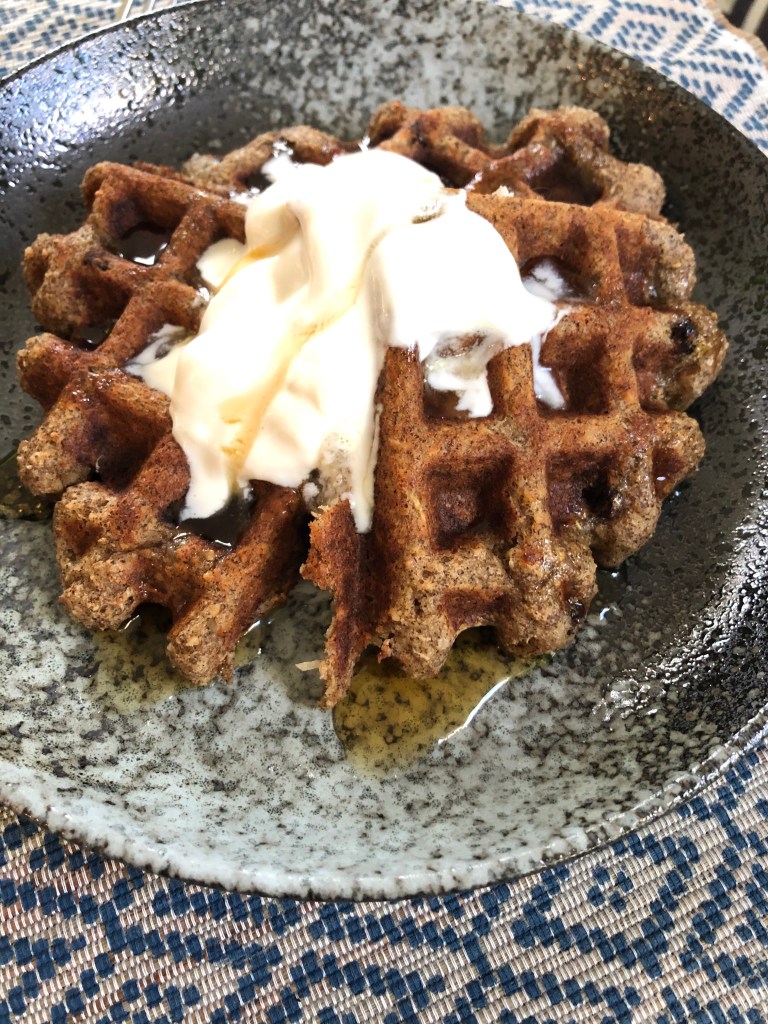
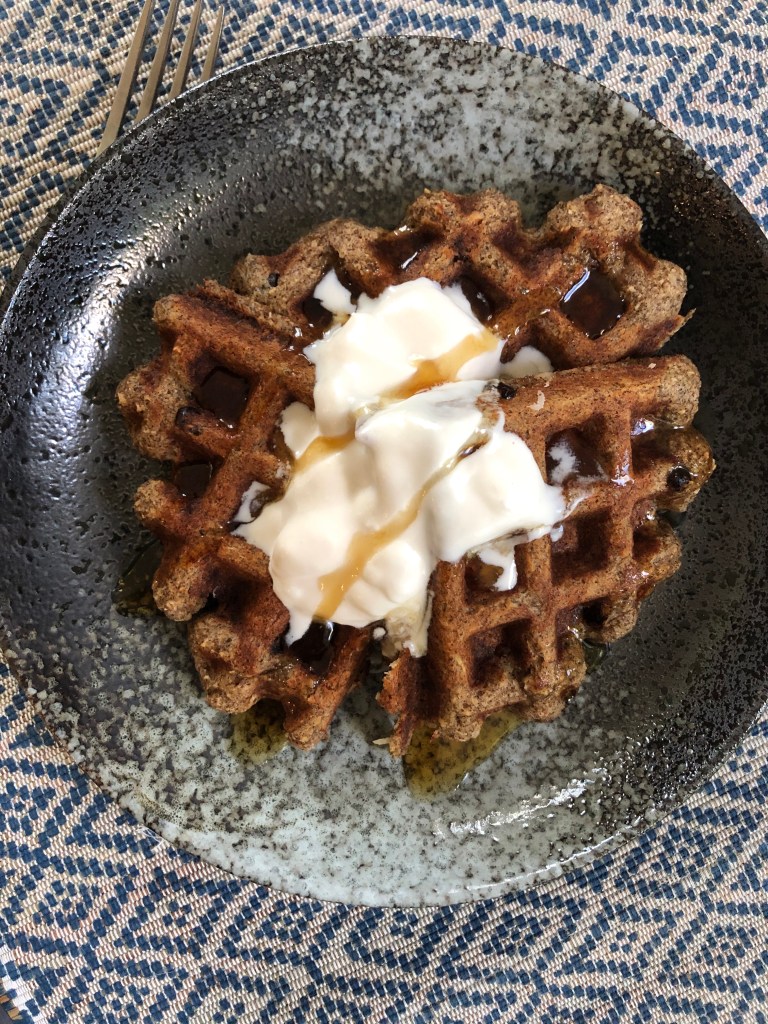
The recipe for these Carrot, Coconut, Pecan Waffles is an adaptation of a recipe from Dorie Greenspan’s “Waffles: from morning to midnight“. As always, I’ve incorporated more nutritious flours, reduced the sugar and substituted some fats. The natural sweetness of the currants and carrots combined with the slight crunchiness of the pecans and coconut make these waffles my current favorite and one of my kids’ favorites, too.

You can easily make these gluten-free. See my note (*) below.

Ingredients

1/4 cup moist, plump currants (pour boiled water over them in a ceramic or glass bowl and let sit for 5 minutes)

2 carrots, peeled and grated (about 2/3 cup packed)

1/3 cup pecans, finely chopped (I use my mini-Krups processor)

1/3 cup finely shredded unsweetened coconut

2 tbsp. coconut oil, melted

2 tbsp unsalted butter, melted

3/4 cup whole-grain spelt flour*

1/2 cup all-purpose flour

1/4 cup buckwheat flour

1 tbsp double-acting baking powder

1/4 tsp sea salt

3/4 tsp. ground cinnamon

1/4 tsp. ground ginger

1/4 cup sugar

1 cup milk (substitute almond, soy or rice if you prefer)

1/2 cup coconut milk

2 large eggs

1 tsp. vanilla extract

*Replace 3/4 cup spelt flour with 3/4 cup gluten-free all-purpose flour (I like this brand), and substitute 1/2 cup almond flour for the all-purpose.

To Make

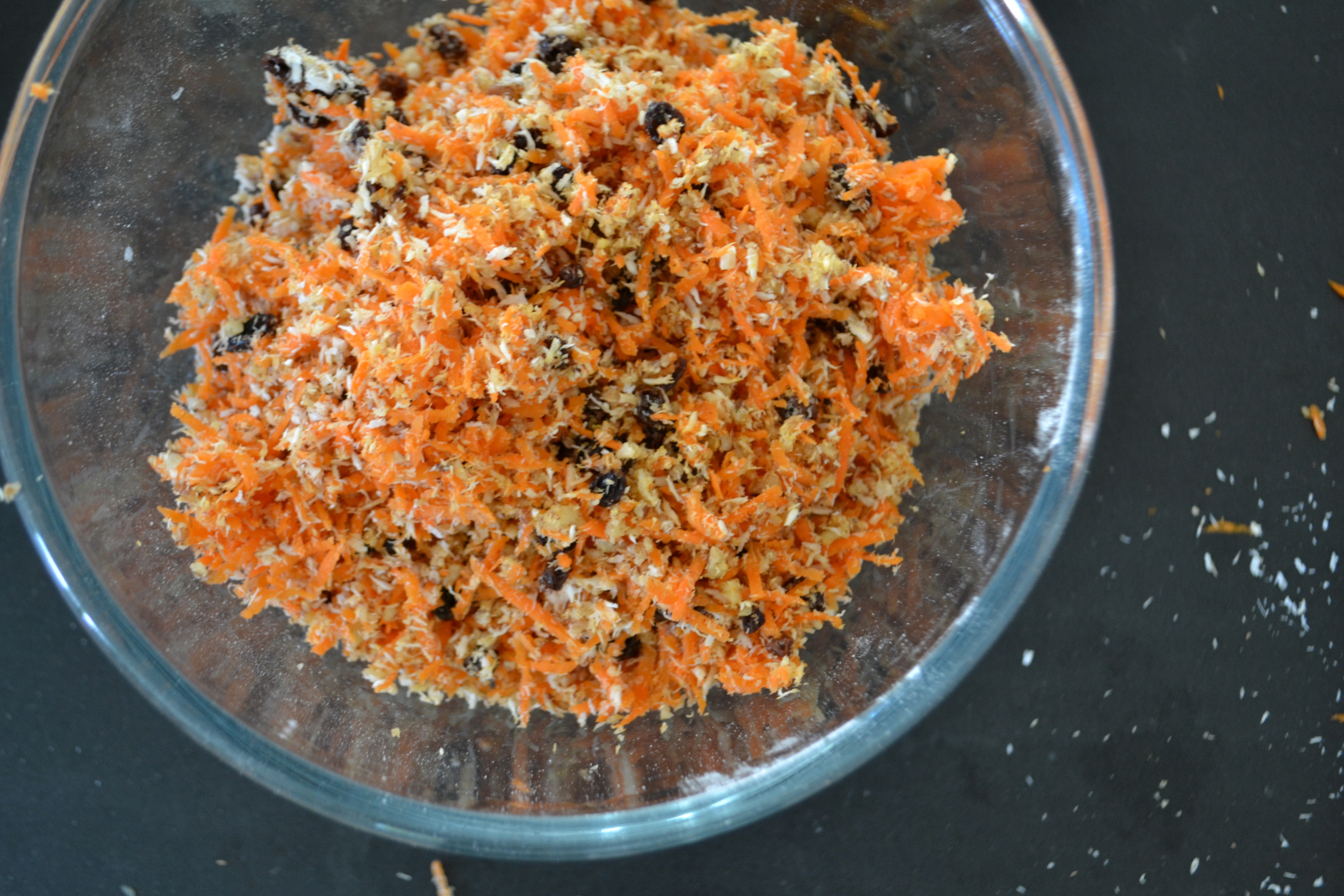
Drain currants, and pat dry with a paper towel. Toss together with grated carrots, pecans and coconuts. Set aside.

Preheat your waffle iron.

In a large bowl, stir together the flours, baking powder, salt, cinnamon, ginger and sugar. In another bowl, lightly whisk the eggs. Whisk in the milks and vanilla. Pour the liquid ingredients over the dry ingredients and stir until just combined. Fold in the carrot mixture and melted butter and oil.

Lightly butter or spray your waffle grids. Spoon out 1/2 cup of batter into each grid (depending on the size of your grids). Cook until light golden brown.

Serve with maple syrup and/or honey-sweetened plain yogurt. Makes 6-8 waffles depending on grid size.

Enjoy!

Read Full Post »

I received a version of the following recipe from my neighbor last year. Her recipe called for barley flour as the main ingredient, but I wanted to make a gluten-free version since I’m still on my gluten-free kick. (In fact, I’m currently reading “Wheat Belly” by Dr. William Davis, but more on that later.)

I was also trying to find a way to use the leftover ground almonds from my homemade almond milk recipe, and this is a perfect use.*

Ingredients

4 cups oats, pulverized

3 cups raw whole almonds finely chopped in a food processor (I use 2-second pulses on my mini-Krups until the desired consistency is reached)

1 teaspoon fine sea salt

1 teaspoon ground cinnamon

1/2 teaspoon ground cardamon (optional)

1 cup canola or coconut oil

1 cup real Vermont maple syrup or agave

Your favorite jam (apricot, raspberry and strawberry all work well)


Preparation

Preheat the oven to 350°F. Combine all the ingredients except for the jam together in a large bowl with a wooden spoon. Form into tablespoonful balls and space them evenly on cookie sheets lined with parchment paper. Using your thumb or index finger, make an indent in each cookie. Fill each indent with a small spoonful of jam. Bake until the cookies are a light, golden brown, 18-20 minutes. Do not overbake (i.e., better to be slightly under- than overcooked). Let cool before eating.

This recipe yields 40-45 cookies, but can easily be halved. You can also substitute 1/2-cup of the oats or almonds with ground coconut flakes.

*I’m ashamed to admit I had been throwing away the leftover almond meal for a while simply because I was too lazy to take the extra step of baking out the moisture in the oven. If you make almond milk, you can simply spread out the leftover ground almonds in a baking dish and bake at 175°F for 30-40 minutes. Bake on convect if you have the option.

Read Full Post »

This salad may not seem like the type of meal you associate with the cooling days, chilly nights and falling leaves. However, I spent many an evening eating this salad during the cold, dark winter months of the year I lived in the Netherlands.

My husband and I always looked forward to Friday evenings when we would head out on the bicycle–he on the seat pedaling, me sitting side saddle on the flat rack above the rear wheel, in route to “the spa.” We’d bounce over the cobblestones along the oudergracht (old canal) of our town. Unlike the American notion of a spa, spas in the Netherlands (and much of Europe) are places men and women go to relax, socialize and just hang out. Ours had a steam room, sauna and plunge pools, but mainly it was just an excuse to go somewhere really warm, don a plush bathrobe, sit by a roaring fire and eat good food.

We ordered this salad every time, and usually followed it with a really decadent creamy mousse thing with cherries known as monchoutaart. (I suspect eating a salad for dinner made us think we had license to eat a ridiculously fattening and sweet dessert.)

We still eat this salad on a regular basis. Not only does it meet my “medley of tastes, textures and colors” requirement, but it is very nutritious, substantial enough for a dinner (or heavy lunch), and it’s easy to prepare.

Ingredients

red leaf or bibb lettuce, torn into bite size pieces

2 stalks of celery, leaves included, chopped

1 medium-sized cucumber, peeled and sliced, or 3-4 Persian cucumbers if you can get them

8-10 cherry tomatoes, halved

1 leek, white and light green parts thinly sliced and washed carefully

Deli-style or similar thin-sliced roast turkey breast

cranberry sauce/jelly

Dressing:

1/2 cup olive oil

1/8 cup red wine vinegar

1/2 tsp Dijon mustard

sea salt and pepper to taste

Preparation

Of course, you can make the salad however you like, but I like to arrange the salad as follows. Put the lettuce on a plate, sprinkle the cucumber slices and tomatoes around the outside edge, sprinkle the entire thing with the sliced leaks, fold the sliced turkey in the middle, top with the cranberry sauce and drizzle all with the dressing.

Happy Fall!

Read Full Post »

Maybe it’s just one of the benefits of living in California, but stores are stocked right now with the most gorgeous, sweet, ripe heirloom tomatoes. And while I associate summer with watermelon, our stores–two weeks into autumn–are stocked with juicy, dark pink-fleshed watermelons. (We also just experienced our two hottest days of the year.)

I made this salad last weekend and served it alongside a simple, lemon and herb grilled salmon. It was delicious. Three helpings later, my only thought was, when can I make it again? It would also have been great with a thick slice of rustic bread to dip in the juices, but I’m currently taking a break from gluten.

Ingredients

2 large, ripe heirloom tomatoes, cut into 3/4-inch cubes

1/4 of a ripe watermelon, cut into 3/4-inch cubes

2 Persian cucumbers (the best!) or 1 small regular cucumber, cut into 1/4-inch slices

3-4 tbsp fresh torn or chopped basil

2 tsp fresh-squeezed lemon juice

3 tbsp olive oil

sea salt and pepper to taste

Put chopped watermelon, tomato and cucumber into a medium-sized glass or ceramic bowl. Whisk the lemon juice, olive oil, salt and pepper together in a small bowl. Pour over the watermelon and tomato mixture. Toss gently. Divide into 4-5 portions. Top with basil. Serve.

Read Full Post »

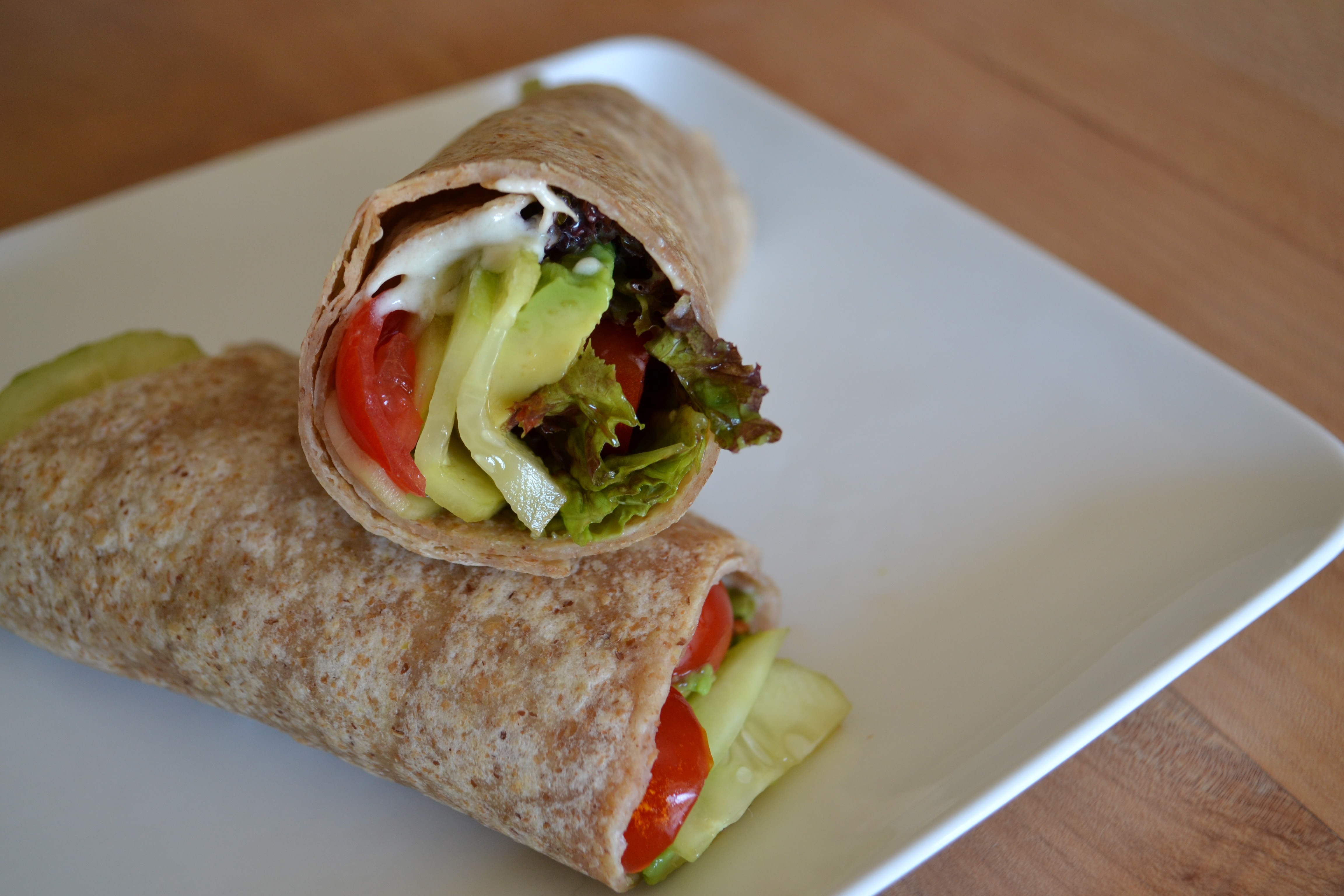
Favorite Wrap

Remember those marinated cucumbers, aka “sweet pickles” I used in my last post? This is my go-to lunch choice, and it uses the same marinated cucumbers.

This recipe is from local Marin County resident and raw-food chef, Diana Stobo–author of “Get Naked Fast” and “Naked Bliss.” While I’m not a raw-food junkie, and I regularly eat meat (fish and fowl, only), dairy and foods that contain gluten, I do think there are some wonderful benefits to be gained from eating raw foods, and Diana has many delicious, simple to prepare dishes. Although going completely raw feels overly restrictive to me, I believe periodically abstaining from dairy, meat and gluten gives the digestive system a much-needed break.

I like this wrap because once again, it’s a medley of flavors, textures and colors. (I’m starting to sound like a broken record!) It’s also surprisingly filling, takes seconds to prepare and doesn’t make me feel sleepy or slowed down like a heavier lunch can.

Ingredients

1 whole-grain spelt tortilla (or brown-rice tortilla if you’re avoiding gluten)

1/2 of a ripe avocado

4-5 cherry or grape tomatoes halved

mayonnaise or soy mayonnaise (I like Nayonaise)

2-3 leaves of red-leaf or bibb lettuce

marinated cucumbers

sea salt and pepper to taste

Warm the tortilla in a pan over medium-low heat. Lay on a board or plate. Spread with mayonnaise, season, add remaining veggies, roll and eat.

Read Full Post »

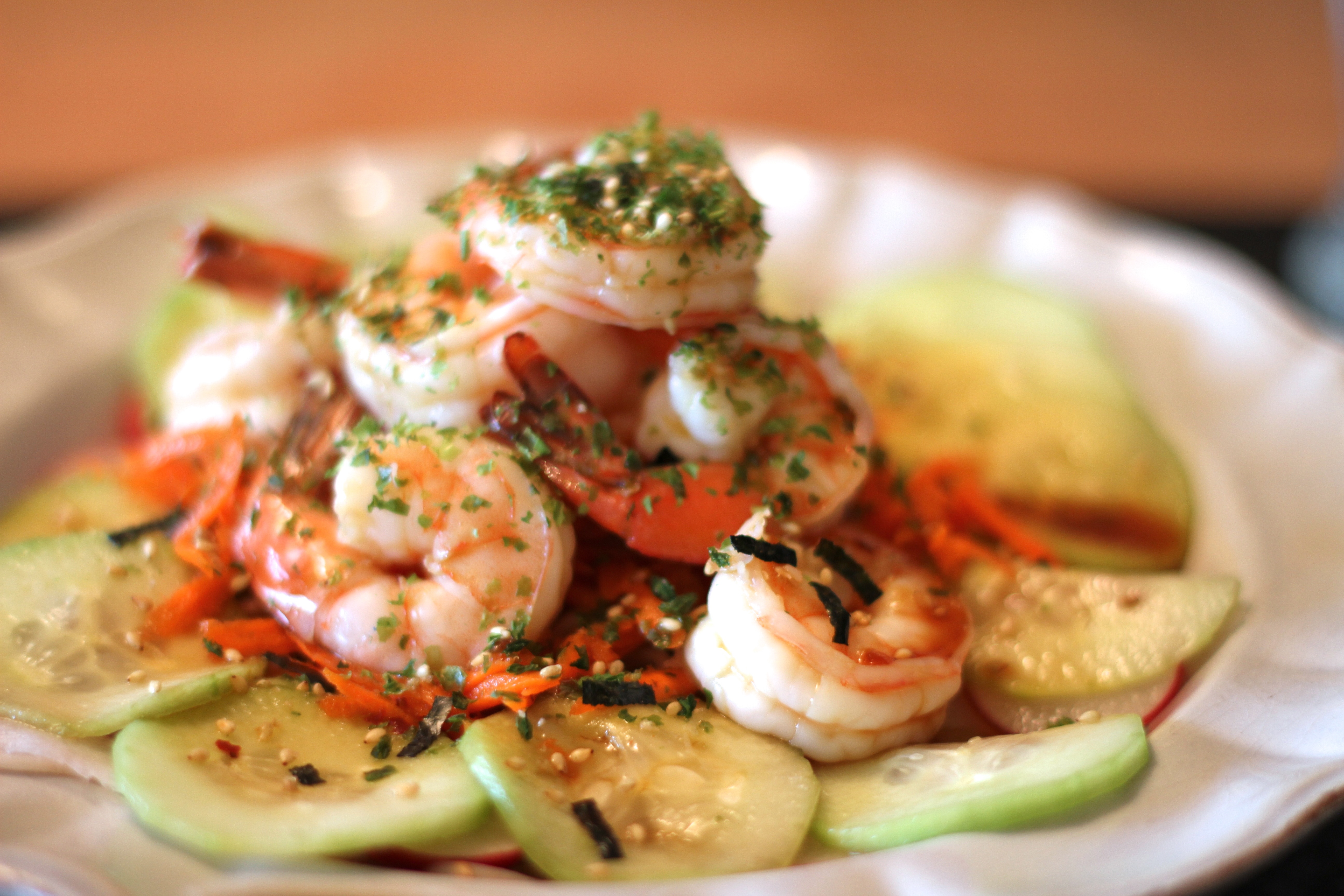
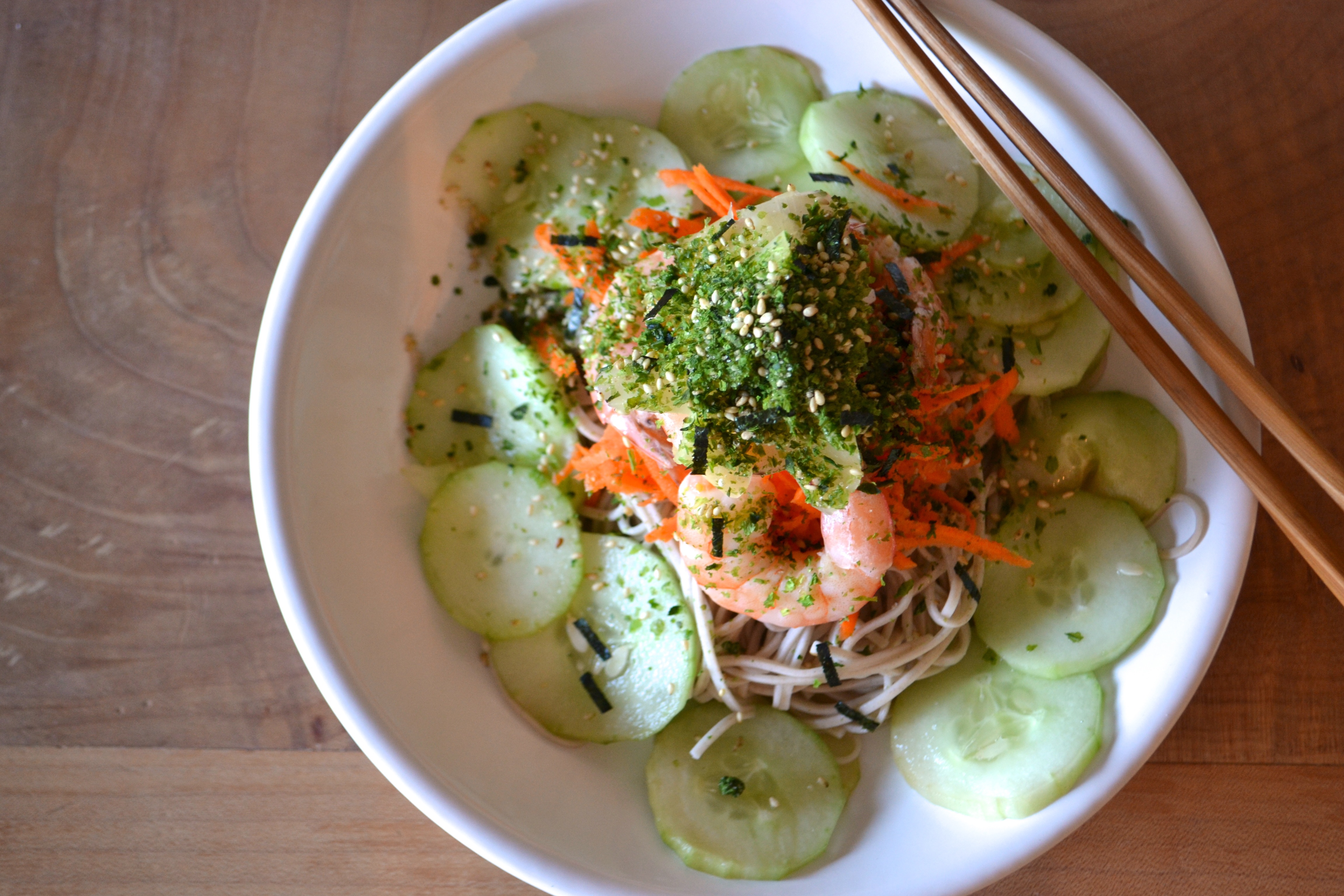
This “salad” dish is one of my favorites when I want something light and nutritious yet filling. It’s really not a salad, but I’m reluctant to call it a noodle dish since it has plenty of vegetables. A similar version was served to me in the Moss Room Cafeteria of the California Academy of Sciences. That was NOT the sort of place you would expect to find great food, but they do amazing job–particularly with their salads.

I like this dish because it boasts a medley of flavors, textures and colors, and it can be served warm or at room temperature. It’s also easy to prepare, although it’s best if you prepare the sweet pickles (or marinated cucumbers) ahead of time. I’ll typically make the sweet pickles at the start of the week and then use them for this poached prawn dish as well as one of my favorite lunches, which I’ll blog about next time.

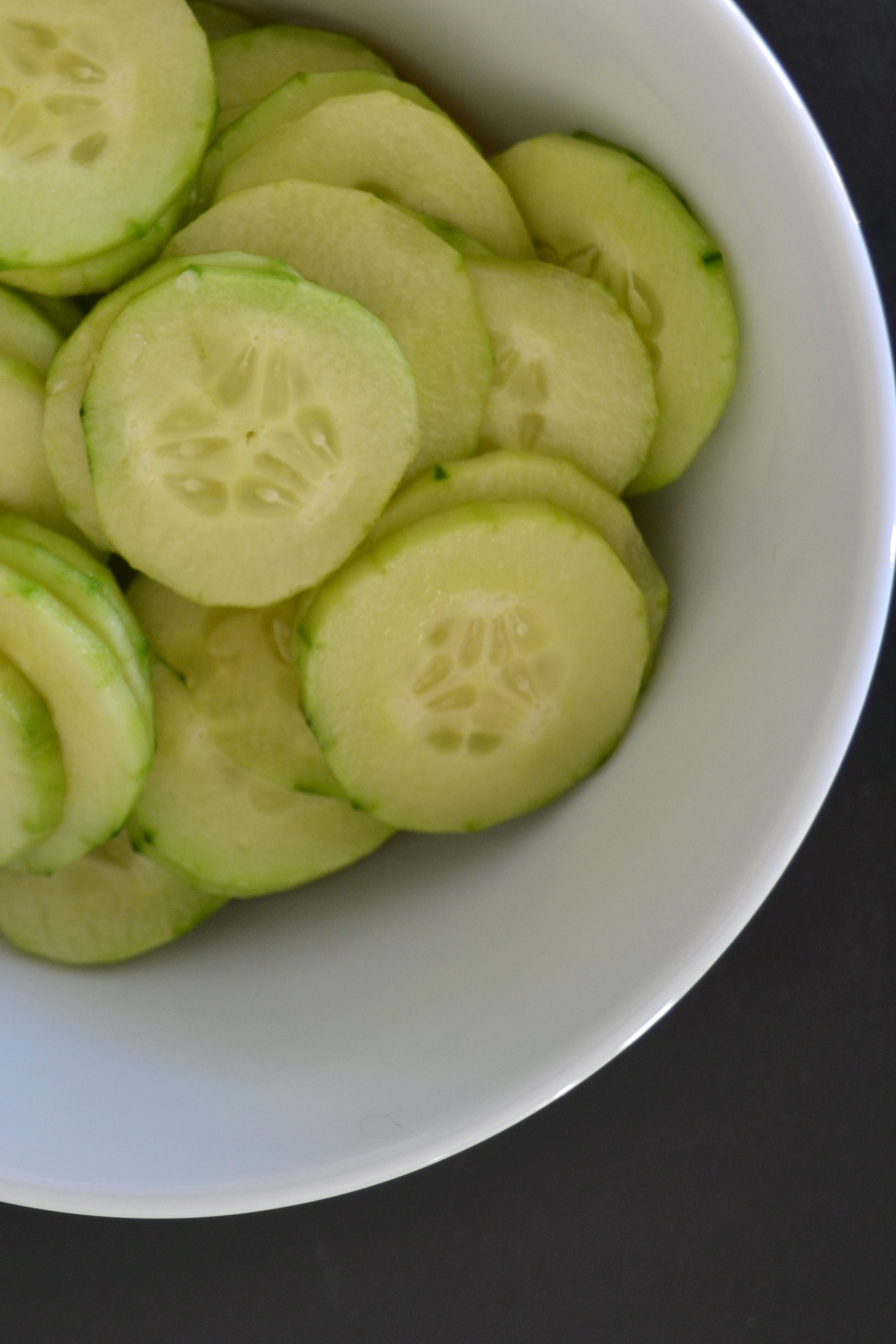
Sweet Pickles (aka marinated cucumbers)

1 medium-size cucumber, thinly sliced

1 tbsp agave nectar

1 tbsp apple cider (or rice) vinegar

1 tbsp Ume plum vinegar (available at Whole Foods Markets or asian specialty stores)

Mix all the ingredients in a glass container with a lid. Shake well, then let it marinate overnight in the refrigerator.

Now for the actual poached prawn dish…

Ingredients

2 bundles soba noodles (cooked per instructions: boil water, add noodles, cook for 4-6 minutes, drain and rinse with cold water)

2 carrots, peeled and grated

6-8 radishes thinly sliced

marinated cucumbers (recipe follows)

1/2 – 3/4 lb. raw prawns, peeled up to tails and deveined

pickled ginger (usually a small jar in the international section of a well-stocked supermarket or Whole Foods)

ponzu sauce (recipe follows)

Furikake*

Boil water in a medium-sized saucepan. Toss in prawns and cook until opaque–approximately 5 minutes. Drain. Arrange handful of noodles in a pasta bowl. Sprinkle sliced radishes and cucumbers around the outer edge. Place a small handful of grated carrot in the center of the noodles. Arrange the poached prawns on top. Top with pickled ginger. Spoon several tablespoons of ponzu sauce over the entire dish. Sprinkle furikake on the “tower.” Serves four.

Ponzu Sauce

Combine the following in a small bowl or glass jar:

1/2 cup low-sodium soy sauce

1/4 cup fresh orange juice

2 tablespoons fresh lemon juice

1 tablespoon water

1 tablespoon mirin (sweet rice wine)

1/2 teaspoon crushed red pepper

* Nori Komi Furikake is a rice seasoning made of sesame seeds, salt, sugar and seaweed. It’s available from any asian markets as it’s very common in the traditional Japanese home.

Happy eating!

Read Full Post »

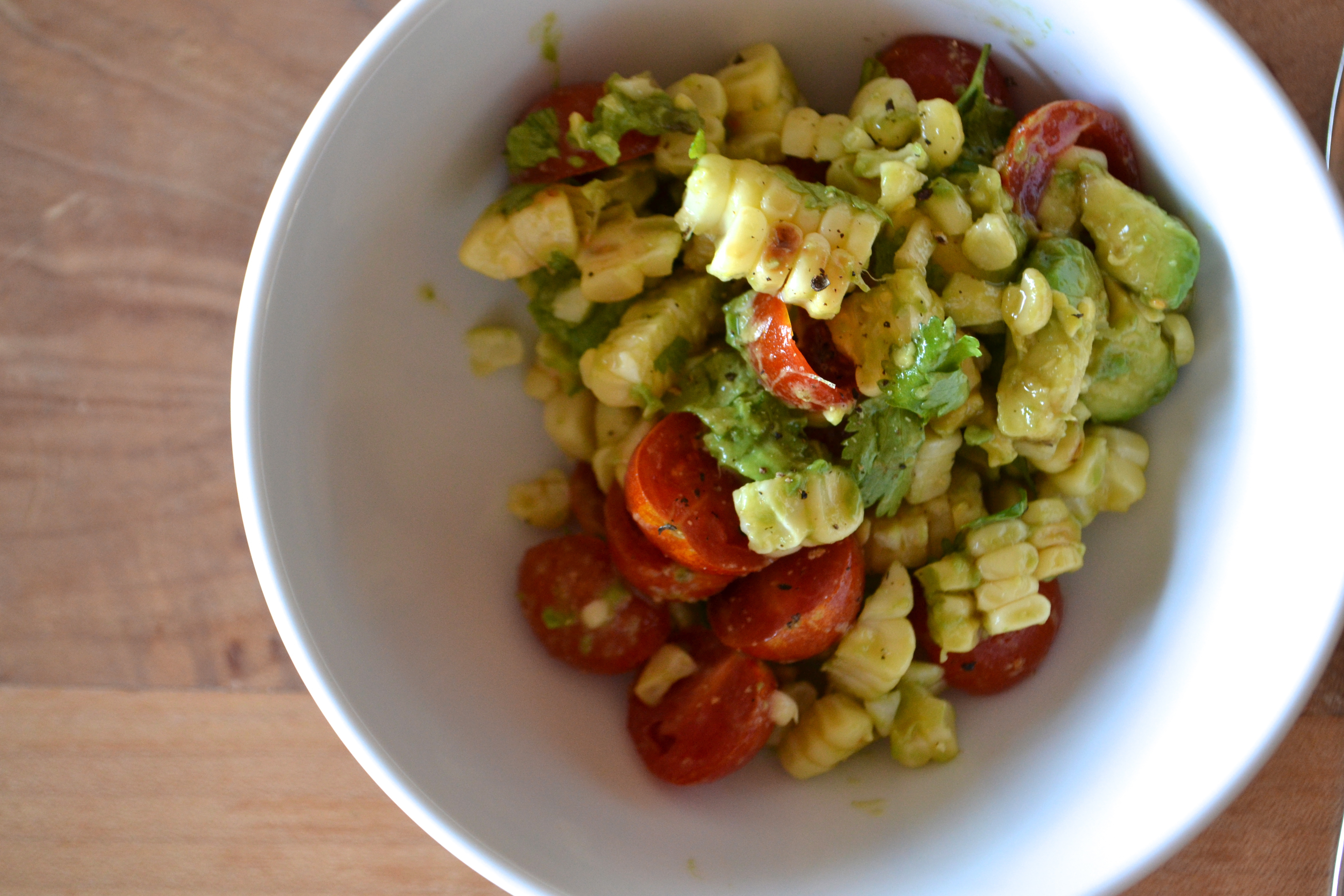
This is one of my favorite side-dish salads. It pairs well with nearly anything, and it has just the right flavor mix of sweet and savory, and the right texture mix of crunchy and creamy. I served it recently as an accompaniment to grilled skirt steak with chimichurri sauce and tonight alongside grilled lemon and thyme chicken.

It can be made whenever fresh corn is available, but I particularly like making it around this time, with summer waning and tomatoes at their best.

Ingredients

2 cups grilled corn (3-4 ears depending on size)

1 avocado, cut into 1/2-inch cubes

1 pint cherry tomatoes, halved

1/2 cup finely diced red onion

Dressing

2 tablespoons olive oil

1/2 teaspoon grated lime zest

1 tablespoon fresh lime juice

1/4 cup chopped cilantro

1/4 teaspoon sea salt

1/4 teaspoon pepper

Directions

Using a sharp knife, cut the corn off the cobs. In a large, glass bowl, combine the corn, tomatoes, avocado and onion, stirring to break up the segments of corn. Mix together the dressing ingredients in a small bowl. Pour over the salad, and gently toss to mix. Serve immediately.

Happy end of summer!

Read Full Post »


Maybe it’s the three years I spent in London–five months of which was spent pregnant and hungry, or perhaps it’s just because they’re a bit decadent, but I love scones. I love lemon scones, orange/currant scones, blackberry scones, plain scones with clotted cream and raspberry preserves–I love them all if they’re reasonably well made.

Interestingly enough, the best scones I ever had weren’t in London. They were, in fact, at the Soho Grand hotel in Manhattan many moons ago. My husband and I had just flown in from Europe, and when we finally got to our hotel room at about 1:00am, they had a small basket of fruit and two amazingly rich, warm, buttery scones waiting for us.

Of course, pretty much every time I’ve tucked into a scone, I have felt a sense of guilt knowing how unhealthy scones are. There’s virtually nothing redeeming about butter, white flour, sugar and cream. So when a mom from my daughter’s school passed around a recipe for gluten-free chocolate-chip scones made with almond flour, I decided to take a stab at making a healthy scone.

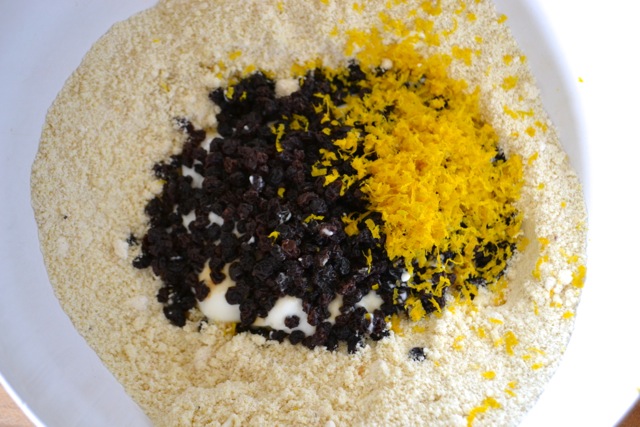
These are incredibly easy to make. They take 10 minutes or less to prepare, and only 20 minutes to bake. They have very little sugar, no cream or butter and all the healthy goodness of almonds. I serve them warm with a drizzle of honey or a bit of apricot spread.

Ingredients

2 cups almond flour

1/2 – 1 cup Bob’s Gluten-free all-purpose flour

2 T free-flowing honey (not the solid type)

1 teaspoon baking soda

3/4 cup organic yogurt

1 Tbsp canola oil

grated zest from one orange

1 tsp vanilla extract

1/2 tsp sea salt

1/3-1/2 cup currants or (1/4 cup bittersweet chocolate chips)

Preheat oven to 325 degrees. Mix everything together with a spoon. (You don’t need to worry about over mixing since there is no gluten involved.) The mixture should be thick but not dry. Add a little more yogurt if needed. Drop 1/2-cup-sized blobs onto a lightly-oiled baking sheet. Brush the tops of the scones with a mixture of one egg yolk beaten together with one Tbsp of water (not a necessary step, but does make for a nicer finish on top). Bake 18-20 minutes or until the scones have a nice golden color. Be careful NOT to over bake. Serve warm or at room temperature.

Read Full Post »

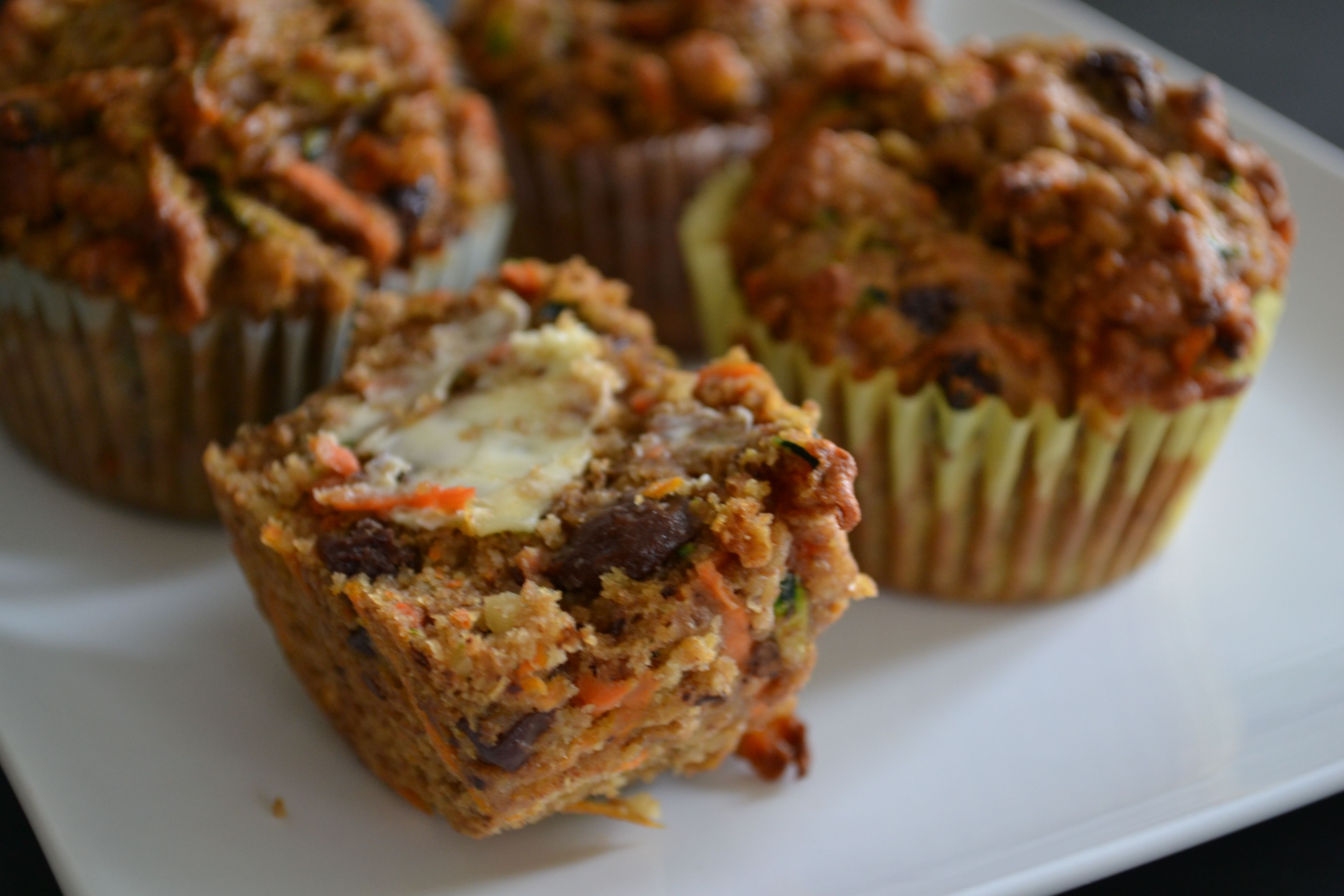
I just finished baking another batch of these moist and “meaty” muffins. Maybe it was the dreary gray outside that motivated me to make something (naturally) sweet and substantial.

I’ve been working on these over the past few weeks, ever since a good friend of mine asked me to find or create a recipe for a muffin that would be nutritious enough to substitute for breakfast for her two daughters when she didn’t have time to do the usual–pancakes, french toast, etc.

The request reminded me of a breakfast muffin I used to order (in similarly dreary gray weather) when I lived in Seattle. I remember the muffins being dense, moist and hearty with a lightly crunchy top. I don’t exactly remember them being all that healthy, but I was determined to find the right balance.

I will continue to tinker with this recipe, but based on this last batch, I think you will find that these can indeed sub for breakfast. They boast whole-grain flours, eggs, flaxseeds and wheatgerm and three (!) cups of veggies–carrot, zucchini and sweet potato. While heavy on the protein and fiber, they’re light on sugar and rely on a little oil and applesauce for moistness.

Since first attempting the muffins a few weeks ago, my kids literally beg for these at breakfast and snack time.

Give them a try and let me know your thoughts!

Morning Glory Muffins

(Recipe adapted from several I found on-line and two shared with me by friends)

1 cup barley flour

1/2 cup all-purpose flour

1/2 cup almond meal/flour

1/2 cup finely chopped walnuts or pecans (I use my Krups mini-processor)

1/4 cup wheat germ

1/4 cup ground golden flaxseed meal

1 teaspoons ground cinnamon

1 teaspoon baking soda

1/4 teaspoon baking powder

1/2 teaspoon salt

1/4 cup cane sugar

1/4 cup brown sugar

1/2 cup applesauce

1/4 cup canola oil

3 large eggs

1 teaspoon vanilla extract

1 1/2 cups grated* zucchini, lightly packed after squeezing out excess moisture

1 cup grated peeled sweet potato, lightly packed

1/2 cup grated carrot, lightly packed after squeezing out excess moisture

1/2 cup raisins (I find raisins work best, but you can try substituting other dried fruit, such as cranberries, apricots or cherries, etc.)

* Note on grating: The muffins pictured use the standard grater “setting” (as shown on the right side of the grater in the photo) but I’ve also done them with the finer grating (left side of grater in photo) and they were equally good. Experiment!

Preheat oven to 350°F. Grease a standard muffin pan or line with paper cups. Mix all dry ingredients into a medium bowl. Lightly whisk eggs, then whisk in sugars, applesauce, oil, eggs and vanilla to blend in large bowl. Mix in zucchini, carrot and sweet potato. Add dry ingredients and stir until just barely combined. Fold in nuts and raisins.

Spoon into prepared muffin tin. (Don’t worry that the batter will be higher than the edges of the muffin tin!) Bake until a toothpick inserted into center comes out clean, about 25-30 minutes.

These are delicious eaten plain, but you can also add a little dairy, such as butter or cream cheese, if you like. The muffins keep for several days in a ziplock bag or other airtight storage container.

Read Full Post »

« Newer Posts - Older Posts »

Cooking Without Limits

Food Photography & Recipes

Selma's Table

Life doesn't have to be perfect to be wonderful - stories and recipes from a wonderful life...